

Checking a Fuse Hasn’t Tripped on your Heat Pump System.

Why you can trust our content
We know the plumbing and renewable energy industry can feel overwhelming, especially with conflicting advice and outdated information online. That’s why we base everything we do on clarity, expertise, and trusted sources:


What Does This Mean?
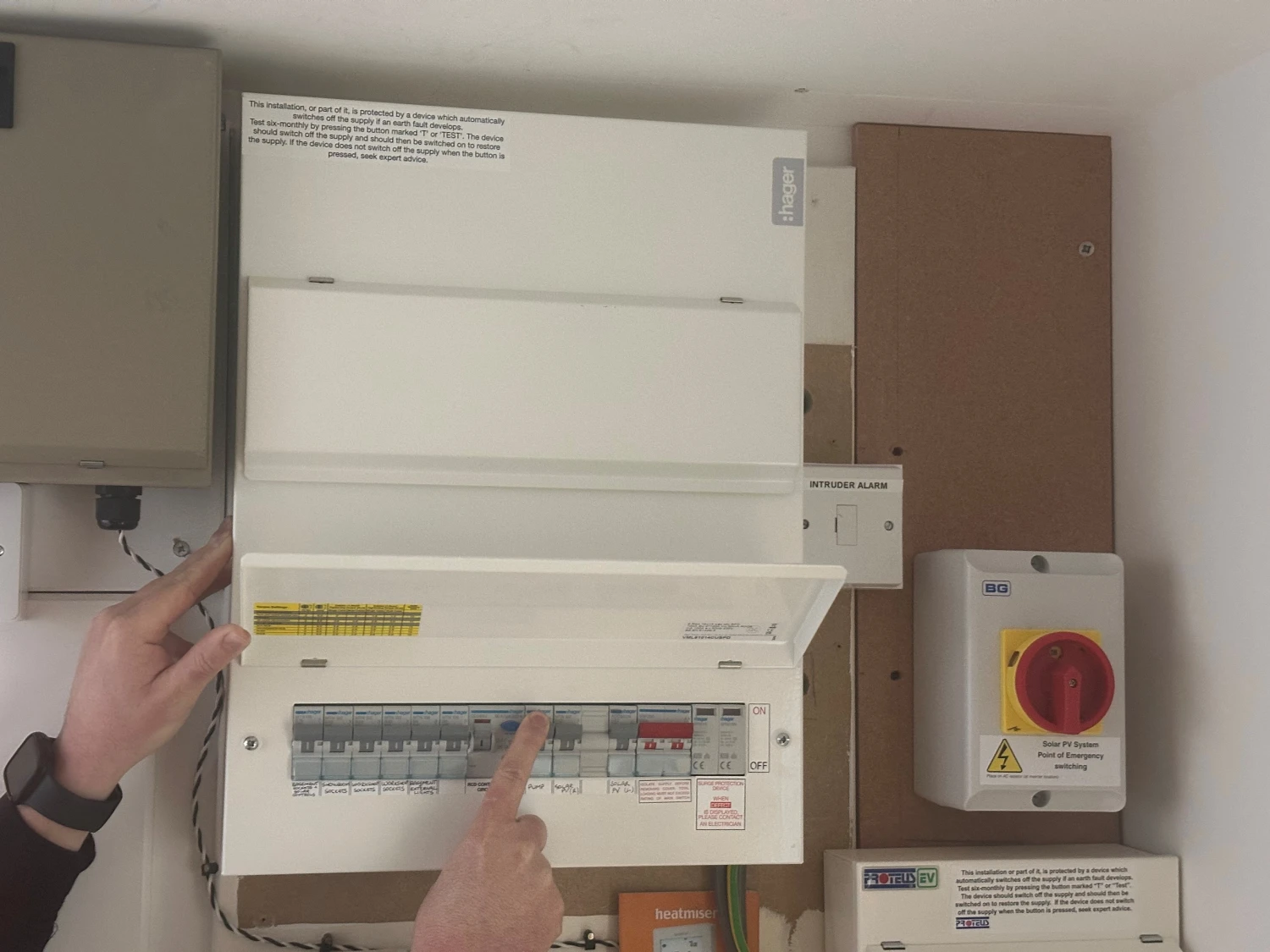
Your heat pump is powered through your home’s consumer unit (fuse box). If there’s a power surge or fault, the fuse (circuit breaker) protecting the heat pump may “trip” (switch to OFF) to keep the system safe. Checking the fuse means looking to see if this has happened.
Why Would You Do It?
- Your heat pump isn’t turning on.
- The controller or display screen is blank.
- The outdoor or indoor unit is completely dead.
- You want to rule out a simple electrical issue before calling us.
How to Check the Fuse
- Locate Your Consumer Unit: Usually in a hallway, cupboard, garage, or utility room.
- Find the Heat Pump Fuse / Breaker: It should be clearly labelled (e.g. “Heat Pump” or “Air Source”).
- Check the Switch Position: If the breaker has tripped, the switch will sit in the middle or “OFF” position.
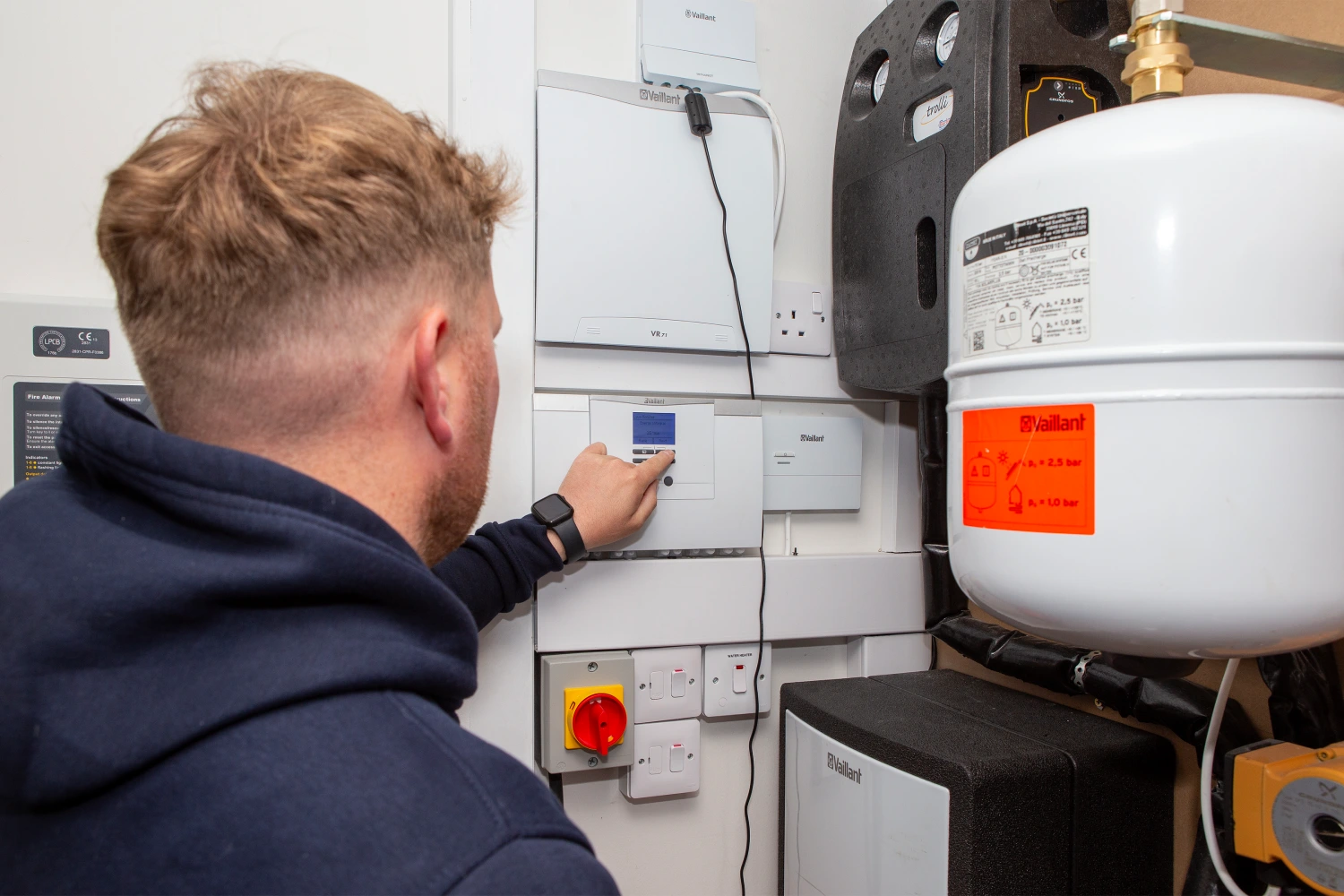
- Reset the Fuse: Push the switch firmly back to the “ON” position, then go back to your heat pump controller to see if it powers up
When to Contact Us
- If the fuse trips again after resetting.
- If you smell burning, see scorch marks, or hear buzzing from the consumer unit.
- If you’re unsure which breaker is for the heat pump.
- If the system still won’t start, even with the fuse on.
Safety Tip: Only reset the breaker once. If it trips again, this suggests a fault that needs a professional.
Related articles

Which option best describes your home?
At a glance
What Does This Mean?
Your heat pump is powered through your home’s consumer unit (fuse box). If there’s a power surge or fault, the fuse (circuit breaker) protecting the heat pump may “trip” (switch to OFF) to keep the system safe. Checking the fuse means looking to see if this has happened.
Why Would You Do It?
- Your heat pump isn’t turning on.
- The controller or display screen is blank.
- The outdoor or indoor unit is completely dead.
- You want to rule out a simple electrical issue before calling us.
How to Check the Fuse
- Locate Your Consumer Unit: Usually in a hallway, cupboard, garage, or utility room.
- Find the Heat Pump Fuse / Breaker: It should be clearly labelled (e.g. “Heat Pump” or “Air Source”).
- Check the Switch Position: If the breaker has tripped, the switch will sit in the middle or “OFF” position.
- Reset the Fuse: Push the switch firmly back to the “ON” position, then go back to your heat pump controller to see if it powers up
When to Contact Us
- If the fuse trips again after resetting.
- If you smell burning, see scorch marks, or hear buzzing from the consumer unit.
- If you’re unsure which breaker is for the heat pump.
- If the system still won’t start, even with the fuse on.
Safety Tip: Only reset the breaker once. If it trips again, this suggests a fault that needs a professional.
