

Cleaning a Strainer Valve

Why you can trust our content
We know the plumbing and renewable energy industry can feel overwhelming, especially with conflicting advice and outdated information online. That’s why we base everything we do on clarity, expertise, and trusted sources:


What Is A Strainer Valve?
A strainer valve is a small filter fitted in your heat pump pipework. It collects dirt, rust, and debris from the water circulating in your system. Over time it can get blocked, which affects performance. Cleaning it means removing and rinsing out the filter mesh so water can flow freely again. Not all systems will have this, but most fitted in the past 5 years will.
Why Would You Do It?
- To keep your heat pump running efficiently.
- If your system is showing a fault that could indicate a low flow or blocked filter.
- If radiators or underfloor heating aren’t heating evenly.
- To prevent damage to the pump and system (we always clean this stainer at your annual service)
How to Clean the Strainer Valve
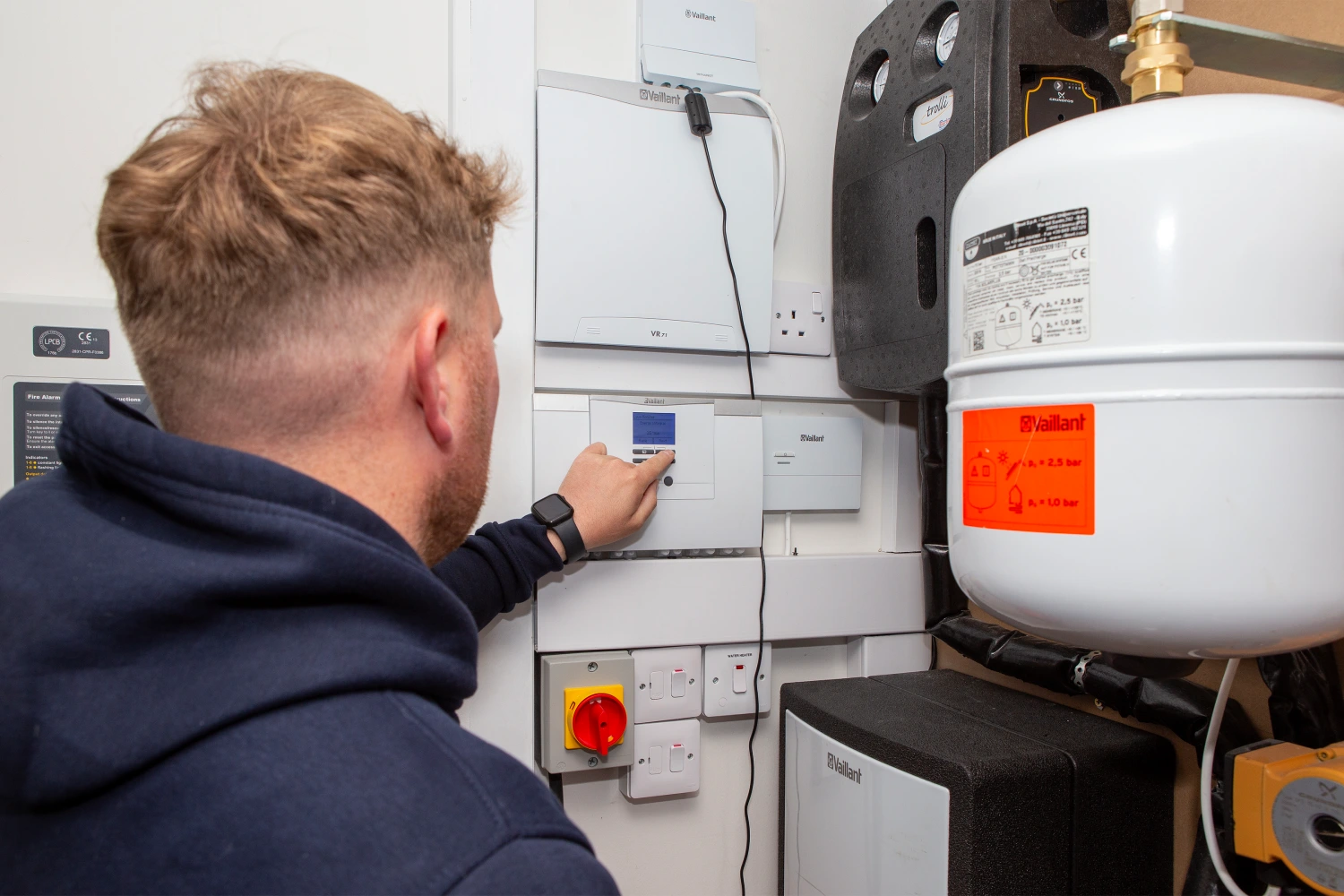
- Turn Off the Heat Pump: Use the controller to power it down, then isolate the system at the outdoor switch.
- Locate the Strainer Valve: Usually on the pipework near the indoor unit. It looks like a small brass valve with a removable cap. If it is combined with the system magnetic filter, it will be a small black or grey cylinder between pipework and will have isolation valves at either side of it.
- Prepare for Water Drips: Place a towel or container underneath.
- Remove the Cap Carefully: Unscrew the strainer cap (you may need grips/spanner). Some water will escape. If combined with the system magnetic filter there will be a specific tool left on site to remove the top cap.
- Take Out the Mesh Filter: Pull out the small mesh insert inside.
- Clean the Filter: Rinse it under running water until it’s clear of dirt and debris & check for damage.
- Reinstall the Filter & Cap: Place the clean mesh back, screw the cap on tightly, and wipe away any water.
- Turn On the Heat Pump: Once the filter is back in place, turn the outdoor isolator back ON, then power up the indoor controller.
When to Contact Us
- If you find the filter is damaged or very dirty each time.
- If the fault or warning comes back soon after cleaning.
- If water is leaking after reassembly.
- If you don’t feel confident carrying out the task.
Related articles

Which option best describes your home?
At a glance
What Is A Strainer Valve?
A strainer valve is a small filter fitted in your heat pump pipework. It collects dirt, rust, and debris from the water circulating in your system. Over time it can get blocked, which affects performance. Cleaning it means removing and rinsing out the filter mesh so water can flow freely again. Not all systems will have this, but most fitted in the past 5 years will.
Why Would You Do It?
- To keep your heat pump running efficiently.
- If your system is showing a fault that could indicate a low flow or blocked filter.
- If radiators or underfloor heating aren’t heating evenly.
- To prevent damage to the pump and system (we always clean this stainer at your annual service)
How to Clean the Strainer Valve
- Turn Off the Heat Pump: Use the controller to power it down, then isolate the system at the outdoor switch.
- Locate the Strainer Valve: Usually on the pipework near the indoor unit. It looks like a small brass valve with a removable cap. If it is combined with the system magnetic filter, it will be a small black or grey cylinder between pipework and will have isolation valves at either side of it.
- Prepare for Water Drips: Place a towel or container underneath.
- Remove the Cap Carefully: Unscrew the strainer cap (you may need grips/spanner). Some water will escape. If combined with the system magnetic filter there will be a specific tool left on site to remove the top cap.
- Take Out the Mesh Filter: Pull out the small mesh insert inside.
- Clean the Filter: Rinse it under running water until it’s clear of dirt and debris & check for damage.
- Reinstall the Filter & Cap: Place the clean mesh back, screw the cap on tightly, and wipe away any water.
- Turn On the Heat Pump: Once the filter is back in place, turn the outdoor isolator back ON, then power up the indoor controller.
When to Contact Us
- If you find the filter is damaged or very dirty each time.
- If the fault or warning comes back soon after cleaning.
- If water is leaking after reassembly.
- If you don’t feel confident carrying out the task.
