

Topping Up Heating System Pressure

Why you can trust our content
We know the plumbing and renewable energy industry can feel overwhelming, especially with conflicting advice and outdated information online. That’s why we base everything we do on clarity, expertise, and trusted sources:


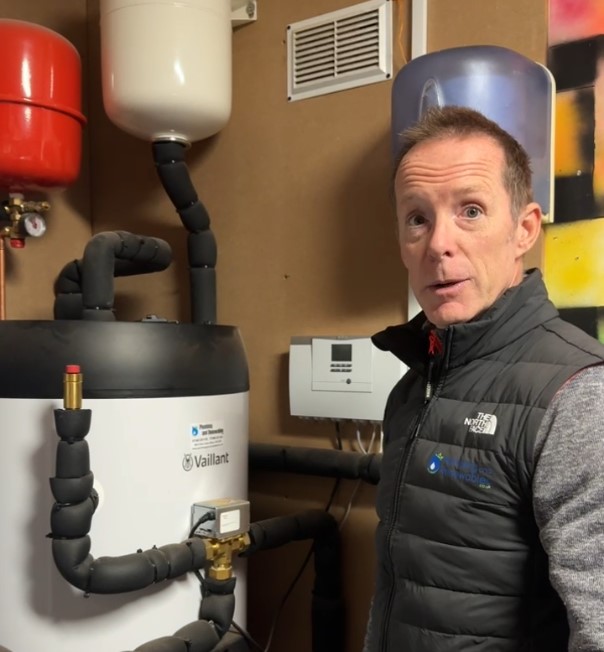
What Does “Topping Up the Pressure” Mean?
Your heat pump heating system is sealed and filled with water. For it to run properly, the water pressure needs to stay within a certain range. Topping up the pressure means adding more water into the system using the filling loop until the pressure gauge shows the correct level.
Why Would You Do It?
You may need to top up if:
- Your heat pump controller or boiler display shows “low pressure” or a fault code.
- The pressure gauge on your system is below the recommended level (about 1.0 bar when cold)
- Radiators or underfloor heating aren’t warming up properly.
How to Top Up the Pressure
- Find the Black Pressure Gauge: Usually near your indoor hot water cylinder, or on the system’s pipework.
- Locate the Filling Loop: A silver flexible hose with one or two small valves, usually on low down pipework.
- Turn Off the Heating: Wait for the system to cool slightly, so you’re not topping up when it’s hot.
- Open the Valves Slowly: Turn the filling loop valve(s) to allow water into the system, watching the pressure gauge carefully so you don’t add too much water.
- Close the Valves: When the gauge reaches the recommended pressure (1.5 bar), turn the valves back to the closed position.
- Restart the System: Switch your heat pump back on at the indoor controller, and check the pressure remains steady when the system is cold. Pressure will rise and fall as the system heats and cools, but should remain steady when cold at around the pressure you topped up to.
When to Call Us
- If the pressure keeps dropping after you top up (this could mean a leak or fault). Some systems are fitted with antifreeze valves. These are located behind the heat pump. Check for obvious signs of water dripping from these if pressure drops regularly and report to us.
- If the pressure rises too high (above 2.5–3 bar).
- If water leaks from the filling loop or pipework.
Related articles

Which option best describes your home?
At a glance
What Does “Topping Up the Pressure” Mean?
Your heat pump heating system is sealed and filled with water. For it to run properly, the water pressure needs to stay within a certain range. Topping up the pressure means adding more water into the system using the filling loop until the pressure gauge shows the correct level.
Why Would You Do It?
You may need to top up if:
- Your heat pump controller or boiler display shows “low pressure” or a fault code.
- The pressure gauge on your system is below the recommended level (about 1.0 bar when cold)
- Radiators or underfloor heating aren’t warming up properly.
How to Top Up the Pressure
- Find the Black Pressure Gauge: Usually near your indoor hot water cylinder, or on the system’s pipework.
- Locate the Filling Loop: A silver flexible hose with one or two small valves, usually on low down pipework.
- Turn Off the Heating: Wait for the system to cool slightly, so you’re not topping up when it’s hot.
- Open the Valves Slowly: Turn the filling loop valve(s) to allow water into the system, watching the pressure gauge carefully so you don’t add too much water.
- Close the Valves: When the gauge reaches the recommended pressure (1.5 bar), turn the valves back to the closed position.
- Restart the System: Switch your heat pump back on at the indoor controller, and check the pressure remains steady when the system is cold. Pressure will rise and fall as the system heats and cools, but should remain steady when cold at around the pressure you topped up to.
When to Call Us
- If the pressure keeps dropping after you top up (this could mean a leak or fault). Some systems are fitted with antifreeze valves. These are located behind the heat pump. Check for obvious signs of water dripping from these if pressure drops regularly and report to us.
- If the pressure rises too high (above 2.5–3 bar).
- If water leaks from the filling loop or pipework.
