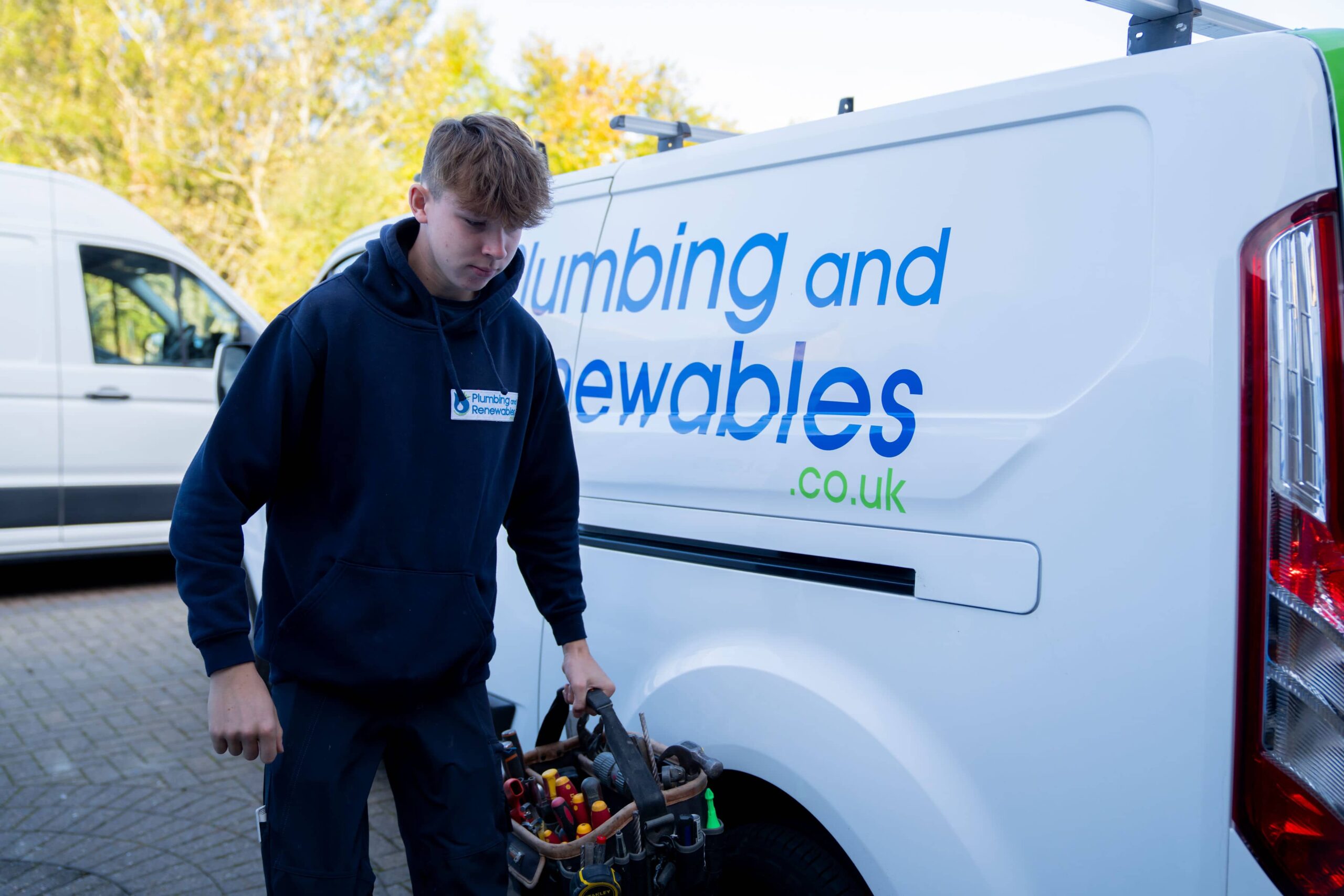

Heat Pump Fitters vs General Heating Engineers: Why Skill Matters
Choosing someone to install a heat pump is different from choosing an engineer for a routine boiler repair or heating service.

Why you can trust our content
We know the plumbing and renewable energy industry can feel overwhelming, especially with conflicting advice and outdated information online. That’s why we base everything we do on clarity, expertise, and trusted sources:


At a glance
There is certainly overlap in the skills involved, but air source heat pumps have their own design, installation and commissioning requirements.
That does not mean a general heating engineer cannot work with heat pumps. In fact, a heating background can be extremely valuable. The important question is whether the person carrying out the work has the right knowledge and practical experience for the particular system being proposed.
If you are considering an air source heat pump, Plumbing & Renewables can discuss your property, explain the installation requirements and help you understand what a suitable system could involve.
Why is installing a heat pump different from installing a boiler?
A conventional boiler produces heat at relatively high temperatures and transfers that heat into the property’s heating and hot water systems. An air source heat pump generally works most efficiently when delivering heat at lower temperatures over longer periods.
That difference affects the way the entire heating system needs to be considered.
A heat pump installation can involve assessing:
- The heat loss of individual rooms
- Existing radiators or underfloor heating
- Insulation levels
- Flow temperatures
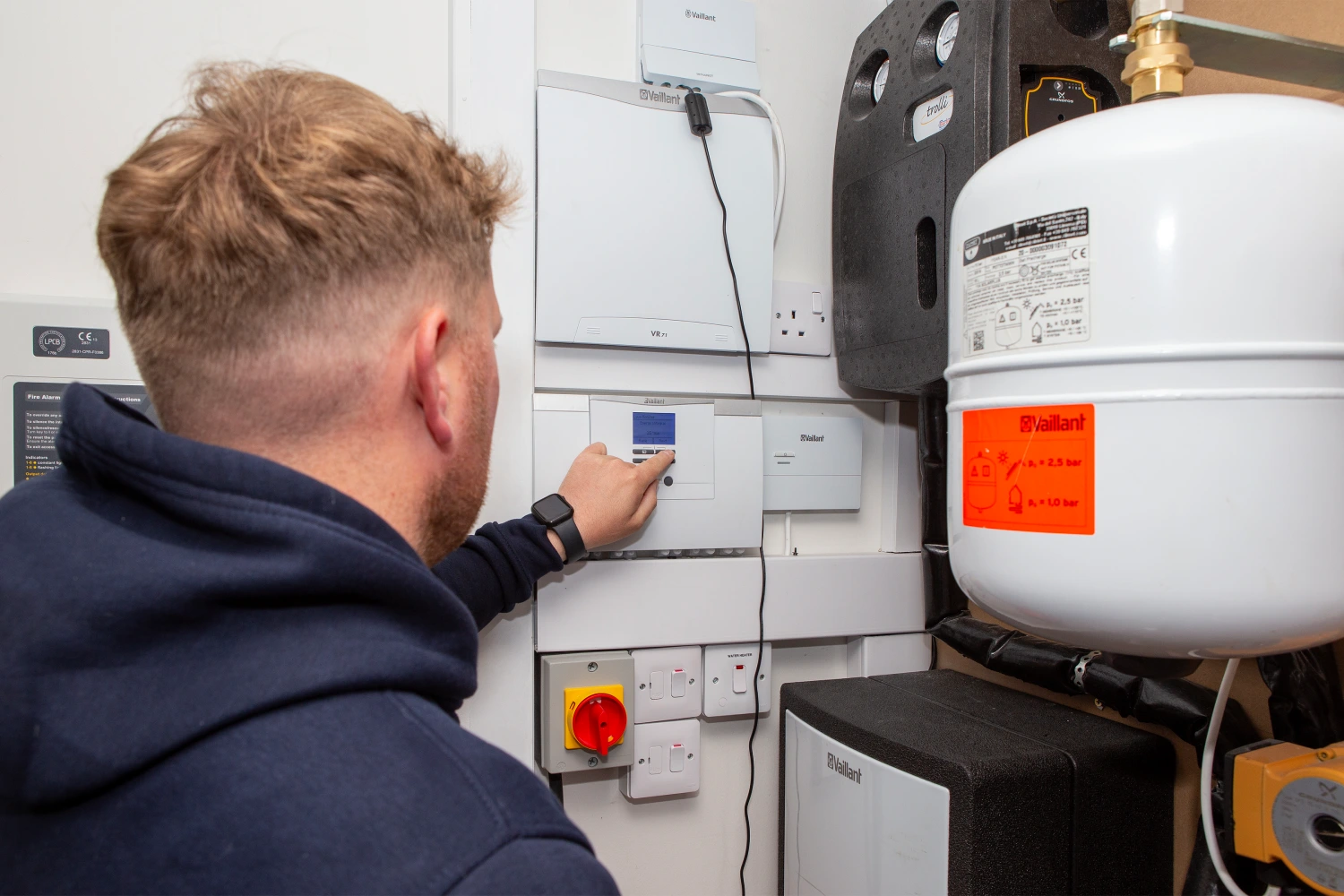
- Hot water requirements
- Pipework
- Controls
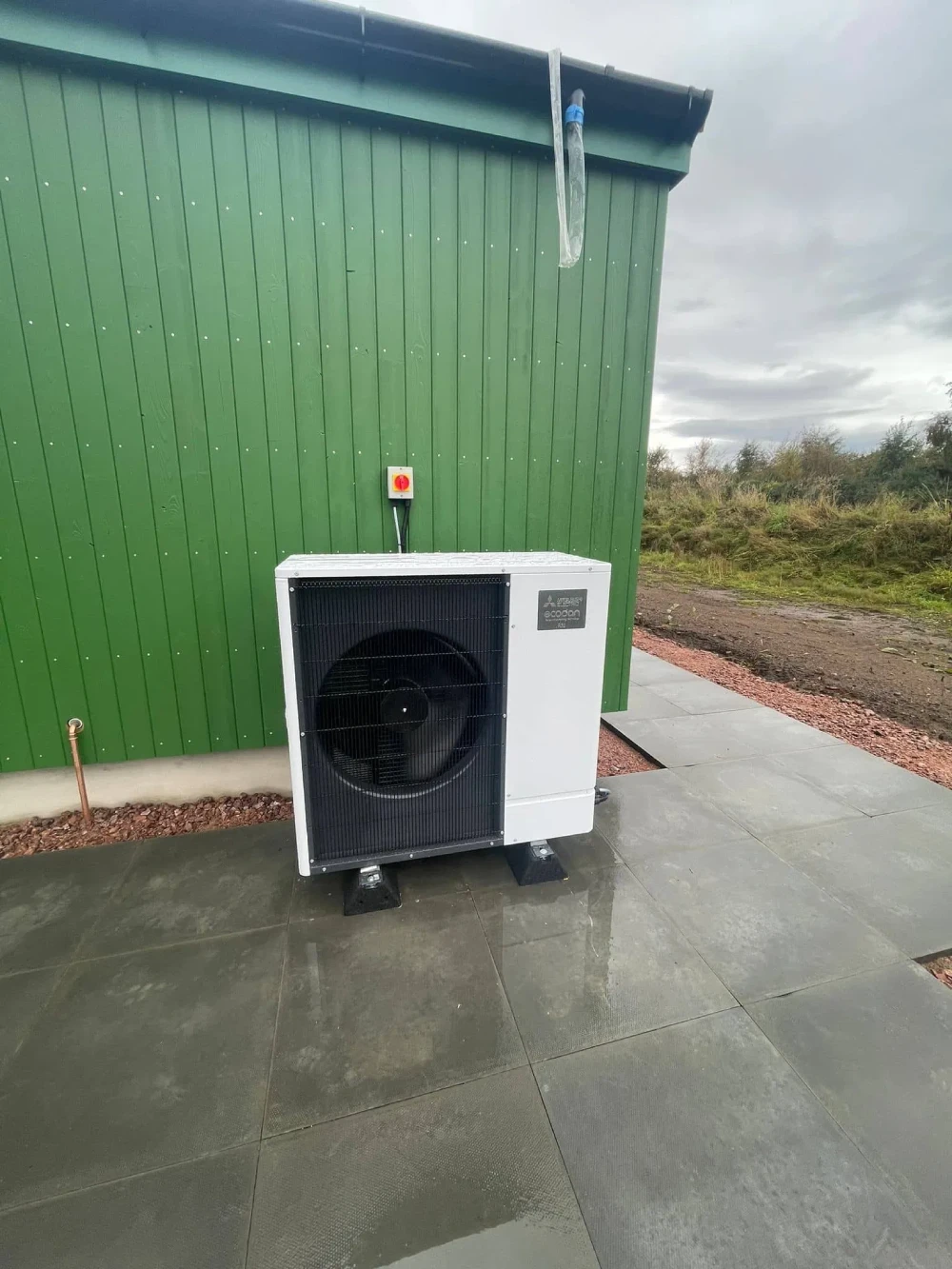
- Outdoor unit positioning
- Electrical requirements
- Available space
A boiler replacement may sometimes be relatively straightforward where the existing system is suitable. A heat pump installation often requires a much broader assessment of how the property uses and distributes heat.
This is why specialist knowledge can make such a difference.
What does a heat pump installation specialist actually do?
A heat pump installation specialist should understand more than how to connect the equipment.
The work begins with establishing what the property needs. Heat-loss calculations can help determine the heat output required, while the existing heating system needs to be assessed to see whether it can deliver the required heat at suitable operating temperatures.
The installer then needs to select appropriate equipment and design the system around the property.
During installation, this can involve:
- Positioning the outdoor unit appropriately
- Installing or adapting pipework
- Connecting the heat pump to the heating system
- Installing hot water equipment where required
- Setting up controls
- Making electrical connections where applicable
- Checking system performance
- Commissioning the system
- Explaining operation and maintenance to the homeowner
A poor decision at the design stage can affect the system long after the installation team has left.
Does a heating engineer need specialist heat pump experience?
Not necessarily in every situation, but relevant experience is highly desirable.
A heating engineer may already have excellent knowledge of radiators, pipework, heating controls and domestic heating systems. Those skills provide a strong foundation.
However, heat pumps introduce additional considerations. The installer needs to understand how heat loss, system sizing, flow temperature and heating emitters work together.
For example, a property may technically be capable of being heated by a particular heat pump, but existing radiators might not provide sufficient heat at the intended flow temperature. Simply connecting the heat pump without addressing that issue could result in an uncomfortable home or inefficient operation.
An experienced installer is more likely to identify these issues during the planning stage.
How can homeowners compare an air source heat pump fitter in Elgin?
When comparing an air source heat pump fitter Elgin homeowners are considering, look beyond the number on the quotation.
Ask each installer similar questions so you can compare their approach.
| Question to ask | What the answer can tell you |
| Do you carry out heat-loss calculations? | Shows whether system sizing is based on the property |
| How do you assess existing radiators? | Indicates whether the whole heating system is being considered |
| Why have you recommended this heat pump? | Helps you understand the equipment selection |
| What flow temperature have you designed for? | Gives insight into expected system operation |
| What preparation work is required? | Identifies potential additional costs |
| Who commissions the system? | Clarifies responsibility for final checks |
| What documentation will I receive? | Shows how the installation will be handed over |
| What happens after installation? | Explains the level of ongoing support |
The quality and clarity of the answers can be more revealing than a polished brochure.
What skills should a specialist heat pump installer have?
A competent installer needs a combination of heating knowledge, renewable technology understanding and practical installation ability.
Important areas include:
- Heat-loss assessment
- System sizing
- Hydraulic design
- Radiator and emitter assessment
- Heat pump controls
- Hot water systems
- Electrical considerations
- Refrigeration principles where relevant to the system
- Commissioning
- Fault finding
- Customer handover
The installer should also understand the manufacturer’s installation requirements and relevant industry standards.
This combination of skills is one reason it is worth asking about actual heat pump experience rather than assuming that general heating experience automatically covers everything required.
Which option best describes your home?
It just takes 2 minutes
And then you can book a free consultation
Is a specialist always better than a general heating engineer?
Not automatically.
The title someone uses is less important than their actual competence, certification and experience.
A general heating engineer who has undertaken appropriate heat pump training and regularly completes these installations may be an excellent choice. Equally, someone presenting themselves as a specialist should still be able to demonstrate relevant credentials and explain their design process.
The goal is not to choose a particular job title. It is to choose an installer with the right capabilities for the project.
If you are weighing up different installers, Plumbing & Renewables can help you understand which parts of a proposed heat pump system deserve closer attention before you make your decision.
What can go wrong when heat pump installation is treated like a boiler replacement?
One common problem is focusing on the appliance rather than the system.
For example, a homeowner might receive a quotation for a heat pump based mainly on property size. Yet two homes with the same floor area can have very different heat requirements because of their construction, insulation, windows, layout and heating systems.
Another issue can be inadequate consideration of existing radiators.
If radiators were originally selected for a high-temperature boiler system, they may need to be assessed for operation at the lower temperatures commonly associated with heat pumps. Some may be suitable, while others could require replacement.
Outdoor unit positioning also deserves attention. The location needs to work practically for the property while allowing the equipment to operate appropriately and be accessible for maintenance.
Why does commissioning matter?
Installation does not end when the pipework is connected.
Commissioning involves checking and setting up the system so that it operates as intended. Controls, temperatures, flow rates and other system parameters may need to be checked and adjusted.
The homeowner should also receive an appropriate handover explaining how the system works.
This is particularly important for heat pumps because their operation can differ from what a homeowner may be accustomed to with a boiler. Understanding controls and heating patterns can help prevent unnecessary adjustments that work against efficient operation.
What should you look for in an installer before accepting a quote?
A strong installer should be willing to explain the reasoning behind the proposed system.
Before accepting a quotation, check that you understand:
- What heat pump is being proposed
- Why it has been selected
- How the property has been assessed
- Whether radiators need changing
- What hot water equipment is included
- What controls are included
- Whether electrical work is included
- What preparation is required
- How commissioning will be completed
- What warranties apply
- What support is available afterwards
If these details are unclear, ask for clarification before signing.
A good quotation should reduce uncertainty, not create more questions.
A typical Elgin property example
Consider a homeowner with an older semi-detached property in Elgin who wants to move away from their existing heating system.
A general heating approach might begin with the assumption that the existing radiators and pipework can simply be connected to a new appliance. A heat pump-focused assessment takes a wider view.
The installer calculates the property’s heat requirements, checks the existing radiators, reviews insulation and considers where the outdoor unit could be positioned. Some radiators may be suitable while others may need upgrading.
The final proposal therefore reflects the actual property rather than simply providing a standard equipment package.
That extra design work can make the difference between an installation that looks good on paper and one that is properly suited to the home.
How important is local experience?
Local knowledge can be useful, particularly when an installer regularly works with properties in the same region.
An air source heat pump fitter Elgin homeowners choose may encounter a wide range of property types, from modern homes with high levels of insulation to older buildings requiring more careful assessment.
However, location should still be considered alongside technical competence.
Being nearby is convenient, but the most important factors remain appropriate certification, experience, system design, workmanship and aftercare.
If you are looking for an air source heat pump fitter Elgin homeowners can speak to about their property, Plumbing & Renewables can provide practical guidance and discuss the requirements of your proposed installation.
Final thoughts
A heat pump installation is a whole-system project rather than a simple appliance replacement. General heating knowledge is valuable, but specific experience with heat pump design, installation and commissioning can provide an important additional level of reassurance.
Homeowners should therefore assess the person behind the quotation as carefully as the equipment being offered. Ask questions, check credentials and make sure the proposed system has been designed around the property.
For homeowners in Elgin, Plumbing & Renewables combines heating knowledge with renewable energy expertise, helping customers understand the practical requirements of an air source heat pump before installation begins. A clear design process and honest advice can give you greater confidence that the system is being selected for the home rather than simply sold as a package.
Related articles

Which option best describes your home?
At a glance
There is certainly overlap in the skills involved, but air source heat pumps have their own design, installation and commissioning requirements.
That does not mean a general heating engineer cannot work with heat pumps. In fact, a heating background can be extremely valuable. The important question is whether the person carrying out the work has the right knowledge and practical experience for the particular system being proposed.
If you are considering an air source heat pump, Plumbing & Renewables can discuss your property, explain the installation requirements and help you understand what a suitable system could involve.
Why is installing a heat pump different from installing a boiler?
A conventional boiler produces heat at relatively high temperatures and transfers that heat into the property’s heating and hot water systems. An air source heat pump generally works most efficiently when delivering heat at lower temperatures over longer periods.
That difference affects the way the entire heating system needs to be considered.
A heat pump installation can involve assessing:
- The heat loss of individual rooms
- Existing radiators or underfloor heating
- Insulation levels
- Flow temperatures
- Hot water requirements
- Pipework
- Controls
- Outdoor unit positioning
- Electrical requirements
- Available space
A boiler replacement may sometimes be relatively straightforward where the existing system is suitable. A heat pump installation often requires a much broader assessment of how the property uses and distributes heat.
This is why specialist knowledge can make such a difference.
What does a heat pump installation specialist actually do?
A heat pump installation specialist should understand more than how to connect the equipment.
The work begins with establishing what the property needs. Heat-loss calculations can help determine the heat output required, while the existing heating system needs to be assessed to see whether it can deliver the required heat at suitable operating temperatures.
The installer then needs to select appropriate equipment and design the system around the property.
During installation, this can involve:
- Positioning the outdoor unit appropriately
- Installing or adapting pipework
- Connecting the heat pump to the heating system
- Installing hot water equipment where required
- Setting up controls
- Making electrical connections where applicable
- Checking system performance
- Commissioning the system
- Explaining operation and maintenance to the homeowner
A poor decision at the design stage can affect the system long after the installation team has left.
Does a heating engineer need specialist heat pump experience?
Not necessarily in every situation, but relevant experience is highly desirable.
A heating engineer may already have excellent knowledge of radiators, pipework, heating controls and domestic heating systems. Those skills provide a strong foundation.
However, heat pumps introduce additional considerations. The installer needs to understand how heat loss, system sizing, flow temperature and heating emitters work together.
For example, a property may technically be capable of being heated by a particular heat pump, but existing radiators might not provide sufficient heat at the intended flow temperature. Simply connecting the heat pump without addressing that issue could result in an uncomfortable home or inefficient operation.
An experienced installer is more likely to identify these issues during the planning stage.
How can homeowners compare an air source heat pump fitter in Elgin?
When comparing an air source heat pump fitter Elgin homeowners are considering, look beyond the number on the quotation.
Ask each installer similar questions so you can compare their approach.
| Question to ask | What the answer can tell you |
| Do you carry out heat-loss calculations? | Shows whether system sizing is based on the property |
| How do you assess existing radiators? | Indicates whether the whole heating system is being considered |
| Why have you recommended this heat pump? | Helps you understand the equipment selection |
| What flow temperature have you designed for? | Gives insight into expected system operation |
| What preparation work is required? | Identifies potential additional costs |
| Who commissions the system? | Clarifies responsibility for final checks |
| What documentation will I receive? | Shows how the installation will be handed over |
| What happens after installation? | Explains the level of ongoing support |
The quality and clarity of the answers can be more revealing than a polished brochure.
What skills should a specialist heat pump installer have?
A competent installer needs a combination of heating knowledge, renewable technology understanding and practical installation ability.
Important areas include:
- Heat-loss assessment
- System sizing
- Hydraulic design
- Radiator and emitter assessment
- Heat pump controls
- Hot water systems
- Electrical considerations
- Refrigeration principles where relevant to the system
- Commissioning
- Fault finding
- Customer handover
The installer should also understand the manufacturer’s installation requirements and relevant industry standards.
This combination of skills is one reason it is worth asking about actual heat pump experience rather than assuming that general heating experience automatically covers everything required.
Which option best describes your home?
It just takes 2 minutes
And then you can book a free consultation
Is a specialist always better than a general heating engineer?
Not automatically.
The title someone uses is less important than their actual competence, certification and experience.
A general heating engineer who has undertaken appropriate heat pump training and regularly completes these installations may be an excellent choice. Equally, someone presenting themselves as a specialist should still be able to demonstrate relevant credentials and explain their design process.
The goal is not to choose a particular job title. It is to choose an installer with the right capabilities for the project.
If you are weighing up different installers, Plumbing & Renewables can help you understand which parts of a proposed heat pump system deserve closer attention before you make your decision.
What can go wrong when heat pump installation is treated like a boiler replacement?
One common problem is focusing on the appliance rather than the system.
For example, a homeowner might receive a quotation for a heat pump based mainly on property size. Yet two homes with the same floor area can have very different heat requirements because of their construction, insulation, windows, layout and heating systems.
Another issue can be inadequate consideration of existing radiators.
If radiators were originally selected for a high-temperature boiler system, they may need to be assessed for operation at the lower temperatures commonly associated with heat pumps. Some may be suitable, while others could require replacement.
Outdoor unit positioning also deserves attention. The location needs to work practically for the property while allowing the equipment to operate appropriately and be accessible for maintenance.
Why does commissioning matter?
Installation does not end when the pipework is connected.
Commissioning involves checking and setting up the system so that it operates as intended. Controls, temperatures, flow rates and other system parameters may need to be checked and adjusted.
The homeowner should also receive an appropriate handover explaining how the system works.
This is particularly important for heat pumps because their operation can differ from what a homeowner may be accustomed to with a boiler. Understanding controls and heating patterns can help prevent unnecessary adjustments that work against efficient operation.
What should you look for in an installer before accepting a quote?
A strong installer should be willing to explain the reasoning behind the proposed system.
Before accepting a quotation, check that you understand:
- What heat pump is being proposed
- Why it has been selected
- How the property has been assessed
- Whether radiators need changing
- What hot water equipment is included
- What controls are included
- Whether electrical work is included
- What preparation is required
- How commissioning will be completed
- What warranties apply
- What support is available afterwards
If these details are unclear, ask for clarification before signing.
A good quotation should reduce uncertainty, not create more questions.
A typical Elgin property example
Consider a homeowner with an older semi-detached property in Elgin who wants to move away from their existing heating system.
A general heating approach might begin with the assumption that the existing radiators and pipework can simply be connected to a new appliance. A heat pump-focused assessment takes a wider view.
The installer calculates the property’s heat requirements, checks the existing radiators, reviews insulation and considers where the outdoor unit could be positioned. Some radiators may be suitable while others may need upgrading.
The final proposal therefore reflects the actual property rather than simply providing a standard equipment package.
That extra design work can make the difference between an installation that looks good on paper and one that is properly suited to the home.
How important is local experience?
Local knowledge can be useful, particularly when an installer regularly works with properties in the same region.
An air source heat pump fitter Elgin homeowners choose may encounter a wide range of property types, from modern homes with high levels of insulation to older buildings requiring more careful assessment.
However, location should still be considered alongside technical competence.
Being nearby is convenient, but the most important factors remain appropriate certification, experience, system design, workmanship and aftercare.
If you are looking for an air source heat pump fitter Elgin homeowners can speak to about their property, Plumbing & Renewables can provide practical guidance and discuss the requirements of your proposed installation.
Final thoughts
A heat pump installation is a whole-system project rather than a simple appliance replacement. General heating knowledge is valuable, but specific experience with heat pump design, installation and commissioning can provide an important additional level of reassurance.
Homeowners should therefore assess the person behind the quotation as carefully as the equipment being offered. Ask questions, check credentials and make sure the proposed system has been designed around the property.
For homeowners in Elgin, Plumbing & Renewables combines heating knowledge with renewable energy expertise, helping customers understand the practical requirements of an air source heat pump before installation begins. A clear design process and honest advice can give you greater confidence that the system is being selected for the home rather than simply sold as a package.