

Why Heat Pump Installation Quotes Should Be Based on Home Evidence
A heat pump quotation should tell you more than what equipment an installer intends to supply. It should show that the proposed system has been considered in relation to the actual property.

Why you can trust our content
We know the plumbing and renewable energy industry can feel overwhelming, especially with conflicting advice and outdated information online. That’s why we base everything we do on clarity, expertise, and trusted sources:


At a glance
This matters because two houses with similar floor areas can have very different heating requirements. Construction, insulation, windows, room layouts, existing radiators and hot water needs can all affect the design.
For homeowners considering heat pump installation Elgin, the strongest quotations are usually those supported by evidence gathered from the property rather than a standard package selected from limited information.
If you are considering a heat pump for your home, Plumbing & Renewables can assess your requirements and provide guidance based on the characteristics of the property.
Why can’t a heat pump be selected from floor area alone?
Floor area can provide a useful starting point, but it does not tell an installer enough to properly size a heat pump.
Imagine two homes that are both 120 square metres. One might be a recently renovated property with good insulation and modern glazing. The other could be an older building with solid walls, more heat loss and less efficient windows.
Although their floor areas are identical, their heating requirements may be considerably different.
A suitable design therefore needs to consider the factors that influence heat loss, rather than applying a simple rule such as “one heat pump size for every property of this size”.
This is why a heat pump installation quote Elgin homeowners receive should have a clear connection to the characteristics of their home.
What evidence should an installer collect?
A proper assessment can involve several sources of information.
The installer may consider:
- Property dimensions
- Room sizes
- Wall and roof construction
- Insulation
- Windows and doors
- Existing heating emitters
- Hot water requirements
- Existing pipework
- Heating controls
- Electrical supply
- Proposed heat pump location
- Outdoor access
- Any previous heating improvements
Some information can be collected during a property survey, while other details may come from plans, previous work records or discussions with the homeowner.
The more complete the picture, the better the installer can understand what the system needs to achieve.
How does heat loss affect heat pump sizing?
Heat loss is one of the key considerations when determining the heating requirement of a property.
Heat is lost through elements such as walls, windows, roofs and floors, as well as through ventilation and air leakage. The amount varies according to the construction and conditions of the building.
A heat-loss calculation helps establish how much heat the property needs under specified conditions.
This can then inform the selection of a suitable heat pump.
Oversizing is not automatically a sign of quality. Likewise, choosing a unit that is too small can create problems if it cannot provide enough heat during colder periods.
The objective is to select a system that is appropriate for the calculated requirement and intended operating conditions.
Why should existing radiators be checked?
Existing radiators are an important part of the evidence used when designing a heat pump system.
Many conventional heating systems have been designed around higher flow temperatures. Heat pumps are generally designed to operate efficiently at lower temperatures, so the ability of existing radiators to provide adequate heat needs to be assessed.
This does not mean every radiator must be replaced.
Some may be perfectly suitable. Others may need to be increased in size or replaced with more suitable emitters.
A detailed quotation should explain what the installer has found and whether any changes are recommended.
What should the installer tell you about radiators?
You should be able to establish:
- Which radiators are suitable
- Which may need replacing
- Why replacements are recommended
- What size or type is proposed
- Whether installation is included in the quotation
This level of detail makes it easier to understand the true cost of the project.
Does insulation affect the heat pump design?
Yes. Insulation can influence the amount of heat a property loses and therefore the heating requirement.
This does not mean homeowners need to completely renovate their house before considering a heat pump. However, the installer should understand the property’s current condition and take relevant information into account.
For example, an older property may have had insulation improvements in some areas but not others. The heating design should reflect the actual building rather than assuming that every room performs in the same way.
Where improvements could make a meaningful difference, a knowledgeable installer should explain them clearly rather than simply adding unnecessary work to the quotation.
If you are unsure whether your existing heating system or insulation is suitable for a heat pump, Plumbing & Renewables can help you understand which property factors should be considered before installation.
What role does hot water play in the quotation?
Heating the rooms is only one part of the system.
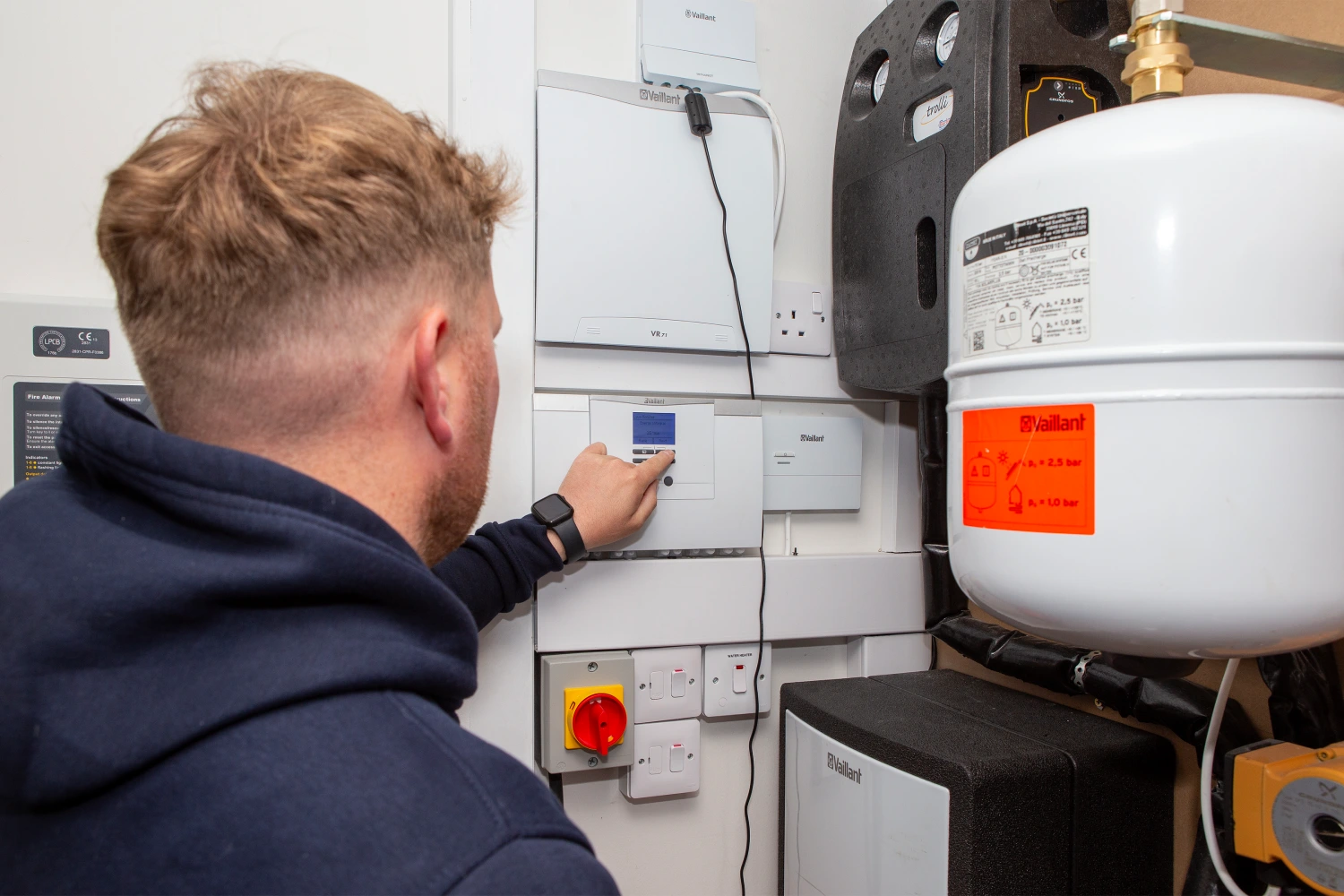
Most homes also need domestic hot water, which means the proposed design needs to account for how hot water will be generated and stored.
The quotation should identify the proposed hot water arrangement and explain whether a cylinder is included.
You should also consider:
- Cylinder size
- Available installation space
- Hot water demand
- Controls
- Pipework
- Location
- Recovery time
- Any required alterations to the existing system
If the quotation does not explain the hot water arrangements, ask the installer to clarify them before accepting the proposal.
Which option best describes your home?
It just takes 2 minutes
And then you can book a free consultation
Why does the location of the outdoor unit matter?
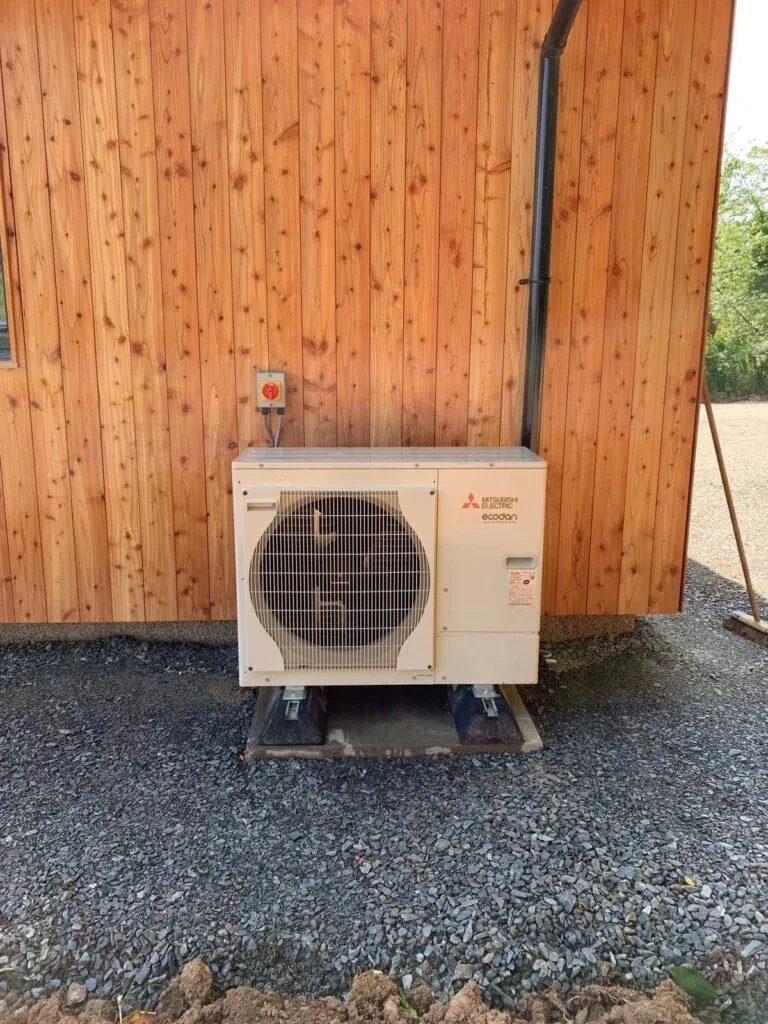
The outdoor unit needs to be positioned somewhere that works for the property and the system.
The installer may need to consider:
- Available wall or ground space
- Access for maintenance
- Airflow around the unit
- Pipework routes
- Electrical connections
- Noise considerations
- Drainage
- Planning or property-specific considerations where relevant
A quotation based on photographs alone may not identify every practical issue.
An experienced installer should consider the physical installation environment as part of the overall design.
What does a property-based heat pump quotation look like?
A good quotation should demonstrate that the installer has moved beyond generic assumptions.
For example, a homeowner in Elgin may have a traditional semi-detached property with an older boiler, mixed radiator sizes and some recent insulation improvements.
Instead of simply recommending a standard heat pump package, the installer assesses each room, checks the heating emitters, reviews hot water requirements and considers the best outdoor unit position.
The quotation then identifies the proposed heat pump, any radiator changes, hot water equipment, controls, pipework and installation work.
That gives the homeowner a much clearer understanding of what the project involves.
Can photographs and remote information replace a site assessment?
Photographs and measurements can be useful during the initial discussion, but they may not reveal every relevant detail.
A remote assessment could miss issues such as:
- Restricted access
- Pipework condition
- Electrical limitations
- Actual radiator dimensions
- Equipment positioning challenges
- Hidden installation complications
- Existing system configuration
For this reason, homeowners should understand whether a quotation is an initial estimate or a final proposal based on a proper assessment.
An heat pump installation Elgin project deserves a quotation that reflects the actual installation conditions wherever practical.
How should you compare evidence between installers?
If you obtain several quotations, ask each installer what information they used to design the system.
You can then compare whether they have considered similar factors.
| Evidence | Why it matters |
| Heat-loss calculation | Helps establish the required heating output |
| Room measurements | Supports room-by-room assessment |
| Insulation details | Influences heat loss |
| Radiator assessment | Determines whether existing emitters are suitable |
| Hot water demand | Helps determine cylinder requirements |
| Electrical assessment | Identifies potential supply requirements |
| Outdoor location | Supports practical equipment positioning |
| Installation scope | Makes the final cost easier to understand |
This approach can reveal why one quotation is higher or lower than another.
The most detailed quotation is not automatically the best, but a lack of evidence should prompt questions.
What should you do if an installer cannot explain the quote?
Ask for clarification before agreeing to the work.
A reputable installer should be able to explain how the proposed heat pump was selected and what information was used to reach the recommendation.
If the answer is simply that the system is “standard for a house this size”, ask what property-specific assessment supports that conclusion.
You should also ask whether the quotation is fixed, what assumptions it contains and which items could result in additional costs.
Clarity at this stage can prevent disputes later.
If you are reviewing a heat pump installation quote Elgin homeowners have received, Plumbing & Renewables can discuss the proposed system and help you understand what should be considered before work begins.
Final thoughts
A heat pump should be designed around the home, not simply selected from a standard price list. The property’s construction, heat loss, insulation, radiators, hot water requirements and installation conditions all contribute to the final design.
For homeowners in Elgin, asking what evidence supports a proposed system is one of the simplest ways to understand whether a quotation has been properly prepared.
Plumbing & Renewables takes a property-focused approach to renewable heating, helping homeowners understand the practical considerations before installation. A clear assessment and transparent quotation can give you greater confidence that the proposed system is appropriate for your home and your long-term heating needs.
Related articles

Which option best describes your home?
At a glance
This matters because two houses with similar floor areas can have very different heating requirements. Construction, insulation, windows, room layouts, existing radiators and hot water needs can all affect the design.
For homeowners considering heat pump installation Elgin, the strongest quotations are usually those supported by evidence gathered from the property rather than a standard package selected from limited information.
If you are considering a heat pump for your home, Plumbing & Renewables can assess your requirements and provide guidance based on the characteristics of the property.
Why can’t a heat pump be selected from floor area alone?
Floor area can provide a useful starting point, but it does not tell an installer enough to properly size a heat pump.
Imagine two homes that are both 120 square metres. One might be a recently renovated property with good insulation and modern glazing. The other could be an older building with solid walls, more heat loss and less efficient windows.
Although their floor areas are identical, their heating requirements may be considerably different.
A suitable design therefore needs to consider the factors that influence heat loss, rather than applying a simple rule such as “one heat pump size for every property of this size”.
This is why a heat pump installation quote Elgin homeowners receive should have a clear connection to the characteristics of their home.
What evidence should an installer collect?
A proper assessment can involve several sources of information.
The installer may consider:
- Property dimensions
- Room sizes
- Wall and roof construction
- Insulation
- Windows and doors
- Existing heating emitters
- Hot water requirements
- Existing pipework
- Heating controls
- Electrical supply
- Proposed heat pump location
- Outdoor access
- Any previous heating improvements
Some information can be collected during a property survey, while other details may come from plans, previous work records or discussions with the homeowner.
The more complete the picture, the better the installer can understand what the system needs to achieve.
How does heat loss affect heat pump sizing?
Heat loss is one of the key considerations when determining the heating requirement of a property.
Heat is lost through elements such as walls, windows, roofs and floors, as well as through ventilation and air leakage. The amount varies according to the construction and conditions of the building.
A heat-loss calculation helps establish how much heat the property needs under specified conditions.
This can then inform the selection of a suitable heat pump.
Oversizing is not automatically a sign of quality. Likewise, choosing a unit that is too small can create problems if it cannot provide enough heat during colder periods.
The objective is to select a system that is appropriate for the calculated requirement and intended operating conditions.
Why should existing radiators be checked?
Existing radiators are an important part of the evidence used when designing a heat pump system.
Many conventional heating systems have been designed around higher flow temperatures. Heat pumps are generally designed to operate efficiently at lower temperatures, so the ability of existing radiators to provide adequate heat needs to be assessed.
This does not mean every radiator must be replaced.
Some may be perfectly suitable. Others may need to be increased in size or replaced with more suitable emitters.
A detailed quotation should explain what the installer has found and whether any changes are recommended.
What should the installer tell you about radiators?
You should be able to establish:
- Which radiators are suitable
- Which may need replacing
- Why replacements are recommended
- What size or type is proposed
- Whether installation is included in the quotation
This level of detail makes it easier to understand the true cost of the project.
Does insulation affect the heat pump design?
Yes. Insulation can influence the amount of heat a property loses and therefore the heating requirement.
This does not mean homeowners need to completely renovate their house before considering a heat pump. However, the installer should understand the property’s current condition and take relevant information into account.
For example, an older property may have had insulation improvements in some areas but not others. The heating design should reflect the actual building rather than assuming that every room performs in the same way.
Where improvements could make a meaningful difference, a knowledgeable installer should explain them clearly rather than simply adding unnecessary work to the quotation.
If you are unsure whether your existing heating system or insulation is suitable for a heat pump, Plumbing & Renewables can help you understand which property factors should be considered before installation.
What role does hot water play in the quotation?
Heating the rooms is only one part of the system.
Most homes also need domestic hot water, which means the proposed design needs to account for how hot water will be generated and stored.
The quotation should identify the proposed hot water arrangement and explain whether a cylinder is included.
You should also consider:
- Cylinder size
- Available installation space
- Hot water demand
- Controls
- Pipework
- Location
- Recovery time
- Any required alterations to the existing system
If the quotation does not explain the hot water arrangements, ask the installer to clarify them before accepting the proposal.
Which option best describes your home?
It just takes 2 minutes
And then you can book a free consultation
Why does the location of the outdoor unit matter?
The outdoor unit needs to be positioned somewhere that works for the property and the system.
The installer may need to consider:
- Available wall or ground space
- Access for maintenance
- Airflow around the unit
- Pipework routes
- Electrical connections
- Noise considerations
- Drainage
- Planning or property-specific considerations where relevant
A quotation based on photographs alone may not identify every practical issue.
An experienced installer should consider the physical installation environment as part of the overall design.
What does a property-based heat pump quotation look like?
A good quotation should demonstrate that the installer has moved beyond generic assumptions.
For example, a homeowner in Elgin may have a traditional semi-detached property with an older boiler, mixed radiator sizes and some recent insulation improvements.
Instead of simply recommending a standard heat pump package, the installer assesses each room, checks the heating emitters, reviews hot water requirements and considers the best outdoor unit position.
The quotation then identifies the proposed heat pump, any radiator changes, hot water equipment, controls, pipework and installation work.
That gives the homeowner a much clearer understanding of what the project involves.
Can photographs and remote information replace a site assessment?
Photographs and measurements can be useful during the initial discussion, but they may not reveal every relevant detail.
A remote assessment could miss issues such as:
- Restricted access
- Pipework condition
- Electrical limitations
- Actual radiator dimensions
- Equipment positioning challenges
- Hidden installation complications
- Existing system configuration
For this reason, homeowners should understand whether a quotation is an initial estimate or a final proposal based on a proper assessment.
An heat pump installation Elgin project deserves a quotation that reflects the actual installation conditions wherever practical.
How should you compare evidence between installers?
If you obtain several quotations, ask each installer what information they used to design the system.
You can then compare whether they have considered similar factors.
| Evidence | Why it matters |
| Heat-loss calculation | Helps establish the required heating output |
| Room measurements | Supports room-by-room assessment |
| Insulation details | Influences heat loss |
| Radiator assessment | Determines whether existing emitters are suitable |
| Hot water demand | Helps determine cylinder requirements |
| Electrical assessment | Identifies potential supply requirements |
| Outdoor location | Supports practical equipment positioning |
| Installation scope | Makes the final cost easier to understand |
This approach can reveal why one quotation is higher or lower than another.
The most detailed quotation is not automatically the best, but a lack of evidence should prompt questions.
What should you do if an installer cannot explain the quote?
Ask for clarification before agreeing to the work.
A reputable installer should be able to explain how the proposed heat pump was selected and what information was used to reach the recommendation.
If the answer is simply that the system is “standard for a house this size”, ask what property-specific assessment supports that conclusion.
You should also ask whether the quotation is fixed, what assumptions it contains and which items could result in additional costs.
Clarity at this stage can prevent disputes later.
If you are reviewing a heat pump installation quote Elgin homeowners have received, Plumbing & Renewables can discuss the proposed system and help you understand what should be considered before work begins.
Final thoughts
A heat pump should be designed around the home, not simply selected from a standard price list. The property’s construction, heat loss, insulation, radiators, hot water requirements and installation conditions all contribute to the final design.
For homeowners in Elgin, asking what evidence supports a proposed system is one of the simplest ways to understand whether a quotation has been properly prepared.
Plumbing & Renewables takes a property-focused approach to renewable heating, helping homeowners understand the practical considerations before installation. A clear assessment and transparent quotation can give you greater confidence that the proposed system is appropriate for your home and your long-term heating needs.