
What Should Be Included in Your Handover, Settings and Controls Walkthrough?
The installation may be complete, but your heat pump project is not really finished until you understand how to use the system.

Why you can trust our content
We know the plumbing and renewable energy industry can feel overwhelming, especially with conflicting advice and outdated information online. That’s why we base everything we do on clarity, expertise, and trusted sources:


At a glance
A proper handover should leave you comfortable with the controls, heating and hot water settings, basic system behaviour and the documents you have been given. This is particularly important when moving from a conventional boiler to an air source heat pump, as the way the system operates can be different from what you may be used to.
For homeowners working with a renewable heating installer Elgin, the handover is the point where the technical installation becomes something you can confidently manage day to day.
If you are planning a renewable heating project, Plumbing & Renewables can explain what to expect from installation, commissioning and handover before you approve the work.
Why is the heat pump handover so important?
A handover gives the homeowner practical information about the completed system.
It should explain how the equipment has been configured and how you are expected to use the controls. It should also cover relevant documentation, warranties and what to do if something goes wrong.
A useful handover can help you understand:
- How the heating controls work
- How hot water is managed
- Which settings should normally be used
- What system indicators mean
- What basic maintenance is required
- Who to contact for support
- What warranty arrangements apply
Without this information, a homeowner may start changing settings simply because the system behaves differently from their previous heating system.
What should the installer explain about normal operation?
The first thing to understand is how the heating system is intended to operate.
Air source heat pumps can operate differently from traditional boilers. Instead of quickly raising the temperature using high flow temperatures, many systems are designed to provide steady, lower-temperature heating.
Your installer should explain what normal operation looks like for your particular system.
This can include:
- How long heating may run
- What the thermostat controls
- How the system responds to outdoor temperatures
- How hot water is scheduled
- When the system may operate more intensively
- Which settings should generally be left alone
Understanding these points can prevent unnecessary adjustments.
Which option best describes your home?
It just takes 2 minutes
And then you can book a free consultation
Which heating controls should be covered?
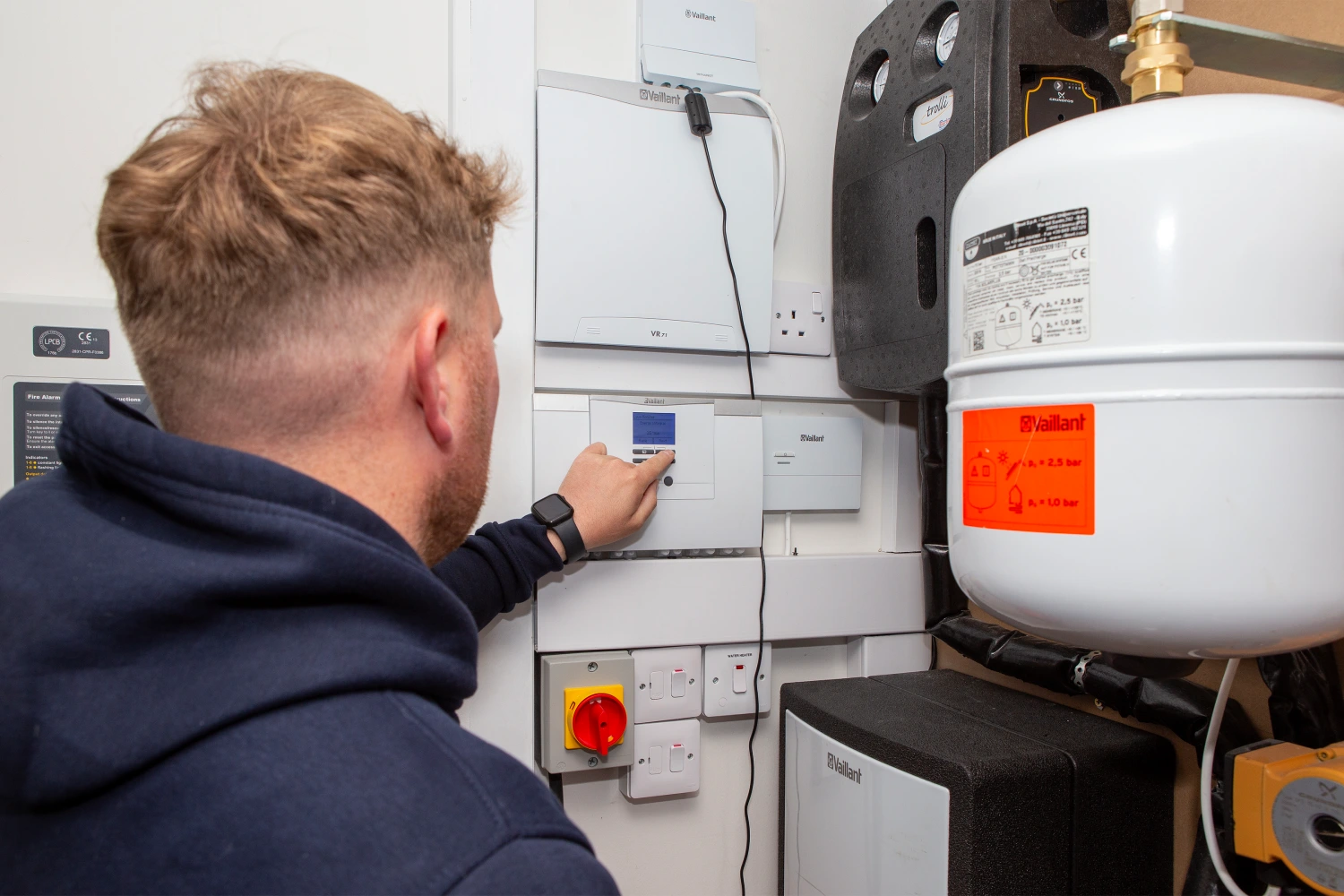
The exact controls depend on the equipment installed.
However, your handover should cover the controls you will actually use.
These may include:
| Control | What the homeowner should understand |
| Room thermostat | How to set the desired temperature |
| Heating schedule | How to programme operating periods |
| Hot water schedule | When domestic hot water is heated |
| Temperature settings | Which adjustments are appropriate |
| Operating modes | What each mode is designed to do |
| Holiday setting | How to manage heating while away |
| System display | What important indicators mean |
| Fault display | What to do if an alert appears |
You do not necessarily need to understand every technical parameter inside the system.
The important thing is knowing which controls you should use and when you should contact the installer rather than changing a technical setting yourself.
How should the installer explain hot water settings?
Hot water is an important part of many heat pump systems.
If the system includes a hot water cylinder, the installer should explain how it is heated and how the controls manage the schedule.
Ask about:
- Normal hot water temperature
- Heating schedules
- Boost functions
- Holiday settings
- Any automatic cycles
- What happens when hot water demand is high
The appropriate settings depend on the equipment and manufacturer’s instructions, so homeowners should follow the guidance provided for their specific system.
What should you know about temperature settings?
One of the biggest adjustments for homeowners moving to a heat pump can be understanding the difference between room temperature and heating system temperature.
The temperature shown on a room thermostat is not the same thing as the temperature of the water circulating through the heating system.
Your installer should explain which settings you can safely adjust and which should be left as configured.
A simple handover should leave you knowing:
- How to adjust room temperature.
- How to change heating schedules.
- How to alter hot water settings.
- Which technical settings should not be changed casually.
- Who to contact if you are unsure about system behaviour.
Does MCS certification affect the handover?
If your installation involves an MCS certified air source heat pump installer, the certification and associated requirements are relevant to the installation process and documentation.
Homeowners should ask what certification and paperwork applies to their specific project.
It is sensible to keep copies of relevant certificates and commissioning information alongside the equipment warranty and operating instructions.
Do not assume that all paperwork is identical for every installation. The installer should explain which documents apply to your system and what you need to retain.
If you are comparing a renewable heating installer Elgin, ask how the completed system will be commissioned, what documentation you will receive and what will be covered during the handover. Plumbing & Renewables can discuss these points with you before installation.
What warranty information should you receive?
Warranty information should be clear enough for you to understand what protection applies to the equipment and installation.
Ask the installer to explain:
- The equipment warranty period
- Any workmanship cover
- Registration requirements
- Maintenance conditions
- Important exclusions
- How to report a potential warranty issue
- Who should be contacted first
Keep the warranty documents somewhere safe.
If a problem occurs several years after installation, having the original documentation available can make the process much easier.
What should you know about basic maintenance?
The handover should also explain the maintenance requirements for the installed system.
The exact requirements depend on the equipment and manufacturer, but homeowners may need to understand basic checks and the recommended servicing arrangements.
Ask:
- What routine checks should I carry out?
- What should I avoid touching?
- How often should professional maintenance take place?
- Are there filters or accessible components that require attention?
- Who should I contact if I notice unusual operation?
Never assume that maintenance requirements are identical to those of a gas boiler.
What happens if the system shows a fault?
Your handover should explain what to do if the system displays an alert or stops operating as expected.
Some alerts may be straightforward to identify, while others require professional attention.
The homeowner should know:
- Where fault information appears
- What basic checks are appropriate
- When to contact the installer
- When manufacturer support may be relevant
- What information to provide when reporting a problem
Avoid repeatedly resetting a system without understanding why the fault has appeared.
If an issue persists, contact the appropriate support provider.
What documents should you keep after installation?
Create a simple folder, either physical or digital, containing the key documents associated with the system.
These could include:
- Installation quotation
- Final invoice
- Equipment details
- Operating manuals
- Warranty information
- Commissioning documentation
- Relevant certification
- Maintenance records
- Installer contact information
This information can become particularly valuable if you sell the property in the future or need to arrange warranty support.
A typical Elgin homeowner handover
Imagine a homeowner has just had an air source heat pump installed in a property with a new hot water cylinder and upgraded controls.
Rather than simply receiving the manufacturer’s manual, the homeowner is shown how the thermostat works, how to programme hot water, what normal system operation sounds like and what to do if a warning appears.
The installer also explains the warranty documents and provides the relevant commissioning information.
The homeowner now has both the paperwork and practical knowledge needed to operate the system confidently.
That is the real purpose of a good handover.
What questions should you ask before the installer leaves?
Before the team finishes, take a few minutes to check that everything is clear.
Ask:
- Can you show me how to change the room temperature?
- How do I programme the heating?
- How do I programme hot water?
- What settings should I normally leave unchanged?
- What does a fault message look like?
- Who should I contact if there is a problem?
- What maintenance is required?
- Where are my warranty documents?
- Have I received all relevant commissioning paperwork?
There is no benefit in pretending you understand something that has not been explained clearly.
If you want to work with a renewable heating installer Elgin homeowners can approach with questions about installation and aftercare, contact Plumbing & Renewables to discuss your requirements and request tailored guidance.
Final thoughts
A good handover should leave you knowing how your new heating system works, what settings you can adjust and where to turn if something goes wrong. The paperwork matters, but practical guidance is just as valuable.
For homeowners choosing a renewable heating installer Elgin, it is worth asking about the handover before installation begins. A clear process should cover commissioning, controls, warranties, documentation and ongoing support rather than treating the project as finished once the equipment is switched on.
Plumbing & Renewables can help homeowners understand the practical side of renewable heating, from installation planning through to system handover and ongoing ownership. Clear explanations at the end of a project can make a significant difference to how confidently you use your new heating system.
Related articles

Which option best describes your home?
At a glance
A proper handover should leave you comfortable with the controls, heating and hot water settings, basic system behaviour and the documents you have been given. This is particularly important when moving from a conventional boiler to an air source heat pump, as the way the system operates can be different from what you may be used to.
For homeowners working with a renewable heating installer Elgin, the handover is the point where the technical installation becomes something you can confidently manage day to day.
If you are planning a renewable heating project, Plumbing & Renewables can explain what to expect from installation, commissioning and handover before you approve the work.
Why is the heat pump handover so important?
A handover gives the homeowner practical information about the completed system.
It should explain how the equipment has been configured and how you are expected to use the controls. It should also cover relevant documentation, warranties and what to do if something goes wrong.
A useful handover can help you understand:
- How the heating controls work
- How hot water is managed
- Which settings should normally be used
- What system indicators mean
- What basic maintenance is required
- Who to contact for support
- What warranty arrangements apply
Without this information, a homeowner may start changing settings simply because the system behaves differently from their previous heating system.
What should the installer explain about normal operation?
The first thing to understand is how the heating system is intended to operate.
Air source heat pumps can operate differently from traditional boilers. Instead of quickly raising the temperature using high flow temperatures, many systems are designed to provide steady, lower-temperature heating.
Your installer should explain what normal operation looks like for your particular system.
This can include:
- How long heating may run
- What the thermostat controls
- How the system responds to outdoor temperatures
- How hot water is scheduled
- When the system may operate more intensively
- Which settings should generally be left alone
Understanding these points can prevent unnecessary adjustments.
Which option best describes your home?
It just takes 2 minutes
And then you can book a free consultation
Which heating controls should be covered?
The exact controls depend on the equipment installed.
However, your handover should cover the controls you will actually use.
These may include:
| Control | What the homeowner should understand |
| Room thermostat | How to set the desired temperature |
| Heating schedule | How to programme operating periods |
| Hot water schedule | When domestic hot water is heated |
| Temperature settings | Which adjustments are appropriate |
| Operating modes | What each mode is designed to do |
| Holiday setting | How to manage heating while away |
| System display | What important indicators mean |
| Fault display | What to do if an alert appears |
You do not necessarily need to understand every technical parameter inside the system.
The important thing is knowing which controls you should use and when you should contact the installer rather than changing a technical setting yourself.
How should the installer explain hot water settings?
Hot water is an important part of many heat pump systems.
If the system includes a hot water cylinder, the installer should explain how it is heated and how the controls manage the schedule.
Ask about:
- Normal hot water temperature
- Heating schedules
- Boost functions
- Holiday settings
- Any automatic cycles
- What happens when hot water demand is high
The appropriate settings depend on the equipment and manufacturer’s instructions, so homeowners should follow the guidance provided for their specific system.
What should you know about temperature settings?
One of the biggest adjustments for homeowners moving to a heat pump can be understanding the difference between room temperature and heating system temperature.
The temperature shown on a room thermostat is not the same thing as the temperature of the water circulating through the heating system.
Your installer should explain which settings you can safely adjust and which should be left as configured.
A simple handover should leave you knowing:
- How to adjust room temperature.
- How to change heating schedules.
- How to alter hot water settings.
- Which technical settings should not be changed casually.
- Who to contact if you are unsure about system behaviour.
Does MCS certification affect the handover?
If your installation involves an MCS certified air source heat pump installer, the certification and associated requirements are relevant to the installation process and documentation.
Homeowners should ask what certification and paperwork applies to their specific project.
It is sensible to keep copies of relevant certificates and commissioning information alongside the equipment warranty and operating instructions.
Do not assume that all paperwork is identical for every installation. The installer should explain which documents apply to your system and what you need to retain.
If you are comparing a renewable heating installer Elgin, ask how the completed system will be commissioned, what documentation you will receive and what will be covered during the handover. Plumbing & Renewables can discuss these points with you before installation.
What warranty information should you receive?
Warranty information should be clear enough for you to understand what protection applies to the equipment and installation.
Ask the installer to explain:
- The equipment warranty period
- Any workmanship cover
- Registration requirements
- Maintenance conditions
- Important exclusions
- How to report a potential warranty issue
- Who should be contacted first
Keep the warranty documents somewhere safe.
If a problem occurs several years after installation, having the original documentation available can make the process much easier.
What should you know about basic maintenance?
The handover should also explain the maintenance requirements for the installed system.
The exact requirements depend on the equipment and manufacturer, but homeowners may need to understand basic checks and the recommended servicing arrangements.
Ask:
- What routine checks should I carry out?
- What should I avoid touching?
- How often should professional maintenance take place?
- Are there filters or accessible components that require attention?
- Who should I contact if I notice unusual operation?
Never assume that maintenance requirements are identical to those of a gas boiler.
What happens if the system shows a fault?
Your handover should explain what to do if the system displays an alert or stops operating as expected.
Some alerts may be straightforward to identify, while others require professional attention.
The homeowner should know:
- Where fault information appears
- What basic checks are appropriate
- When to contact the installer
- When manufacturer support may be relevant
- What information to provide when reporting a problem
Avoid repeatedly resetting a system without understanding why the fault has appeared.
If an issue persists, contact the appropriate support provider.
What documents should you keep after installation?
Create a simple folder, either physical or digital, containing the key documents associated with the system.
These could include:
- Installation quotation
- Final invoice
- Equipment details
- Operating manuals
- Warranty information
- Commissioning documentation
- Relevant certification
- Maintenance records
- Installer contact information
This information can become particularly valuable if you sell the property in the future or need to arrange warranty support.
A typical Elgin homeowner handover
Imagine a homeowner has just had an air source heat pump installed in a property with a new hot water cylinder and upgraded controls.
Rather than simply receiving the manufacturer’s manual, the homeowner is shown how the thermostat works, how to programme hot water, what normal system operation sounds like and what to do if a warning appears.
The installer also explains the warranty documents and provides the relevant commissioning information.
The homeowner now has both the paperwork and practical knowledge needed to operate the system confidently.
That is the real purpose of a good handover.
What questions should you ask before the installer leaves?
Before the team finishes, take a few minutes to check that everything is clear.
Ask:
- Can you show me how to change the room temperature?
- How do I programme the heating?
- How do I programme hot water?
- What settings should I normally leave unchanged?
- What does a fault message look like?
- Who should I contact if there is a problem?
- What maintenance is required?
- Where are my warranty documents?
- Have I received all relevant commissioning paperwork?
There is no benefit in pretending you understand something that has not been explained clearly.
If you want to work with a renewable heating installer Elgin homeowners can approach with questions about installation and aftercare, contact Plumbing & Renewables to discuss your requirements and request tailored guidance.
Final thoughts
A good handover should leave you knowing how your new heating system works, what settings you can adjust and where to turn if something goes wrong. The paperwork matters, but practical guidance is just as valuable.
For homeowners choosing a renewable heating installer Elgin, it is worth asking about the handover before installation begins. A clear process should cover commissioning, controls, warranties, documentation and ongoing support rather than treating the project as finished once the equipment is switched on.
Plumbing & Renewables can help homeowners understand the practical side of renewable heating, from installation planning through to system handover and ongoing ownership. Clear explanations at the end of a project can make a significant difference to how confidently you use your new heating system.