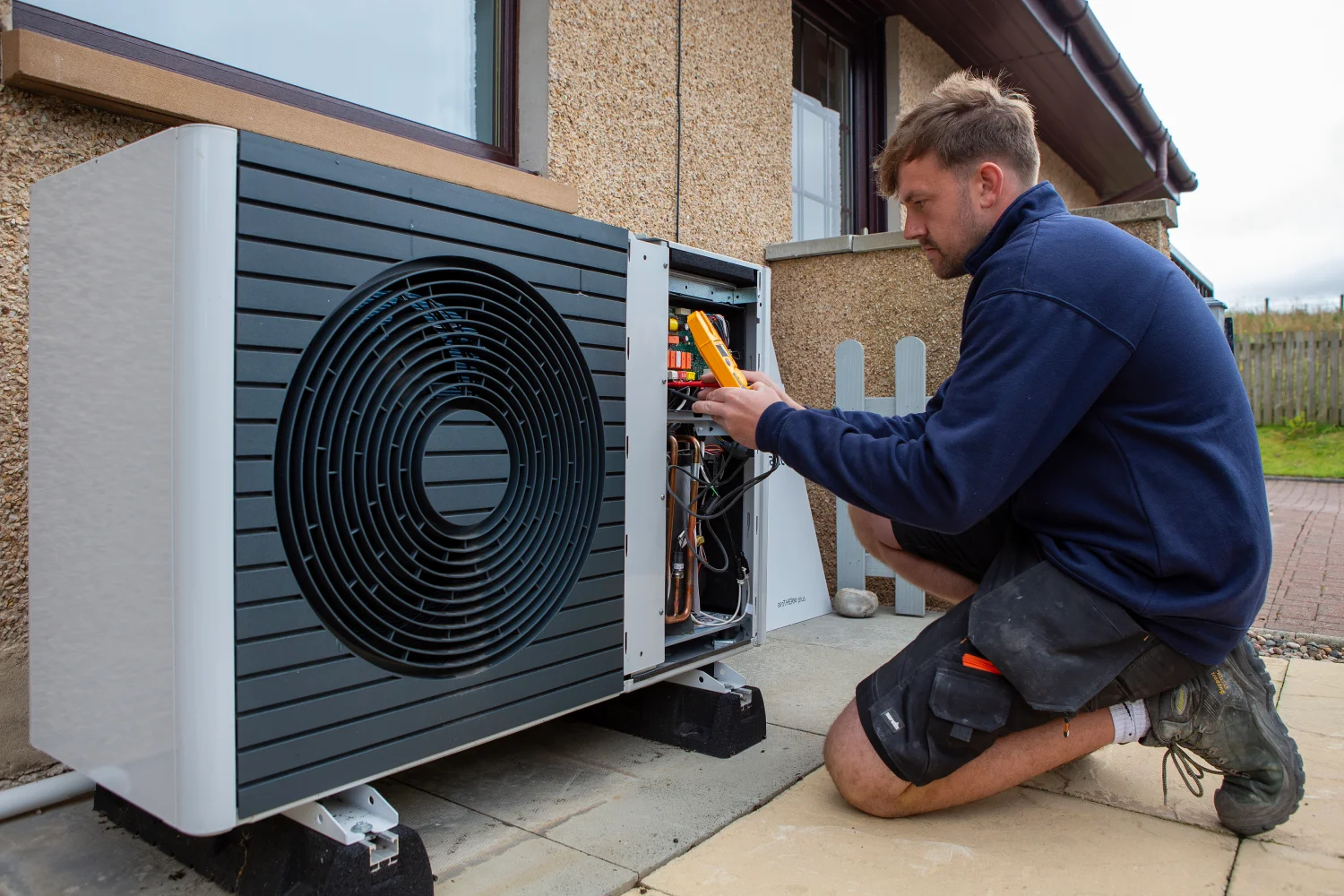

Air Source Heat Pump Prices: What Should Be Fixed Before Work Starts?
An air source heat pump is a major home improvement, so knowing the price before installation begins matters. However, a clear figure on a quotation is only useful if you also understand exactly what that figure covers.

Why you can trust our content
We know the plumbing and renewable energy industry can feel overwhelming, especially with conflicting advice and outdated information online. That’s why we base everything we do on clarity, expertise, and trusted sources:


At a glance
The final air source heat pump cost can depend on the heat pump itself, hot water equipment, controls, radiators, pipework, electrical work and the amount of preparation needed at the property.
For homeowners comparing heat pump prices, the safest approach is to establish the complete scope of work before agreeing to installation. A transparent quotation should make it clear what is fixed, what is excluded and what could potentially lead to an additional charge.
If you are considering an air source heat pump for your home, Plumbing & Renewables can assess the property and explain the proposed system and installation requirements before you commit.
What should be fixed in an air source heat pump quotation?
Before work starts, the quotation should clearly identify the equipment, installation work and agreed price.
At a minimum, look for confirmation of:
- Heat pump manufacturer and model
- Heat pump output
- Hot water cylinder specification
- Heating controls
- Radiators or other heat emitters
- Pipework alterations
- Electrical work
- Installation labour
- Commissioning
- Removal of existing heating equipment
- Warranty information
- Any exclusions
This does not mean every item will apply to every home. Instead, the quotation should make it clear which elements are included in your particular project.
A vague description such as “complete heat pump installation” leaves too much room for uncertainty.
Why should the exact heat pump model be confirmed?
Different heat pumps can have different specifications, outputs, efficiencies, controls and warranty arrangements.
A quotation should therefore identify the proposed model rather than simply stating the manufacturer’s name.
This gives you something concrete to compare if you are reviewing more than one proposal.
You can then ask the installer why that particular unit has been selected and how its output relates to the property’s heating requirement.
The quoted equipment should match the design that has been discussed with you.
Should the system size be fixed before installation?
Yes, the proposed system should be based on an assessment of the property’s heating requirement.
Heat pump sizing should not simply be determined by floor area. The installer should consider factors such as insulation, construction, windows, room sizes and heat loss.
If the proposed output changes after the quotation has been issued, ask why.
There may be a legitimate reason, such as new information discovered during a detailed survey. However, the homeowner should understand the reason for any significant change before work proceeds.
What installation costs should be clearly stated?
The installation price should cover the work required to deliver the agreed system.
Depending on the property, this could include:
| Installation element | What to clarify |
| Heat pump | Exact model and output |
| Hot water | Cylinder size and installation |
| Radiators | Whether upgrades are included |
| Pipework | New or modified pipework |
| Electrical | Connection and additional works |
| Controls | Thermostat and control equipment |
| Labour | Installation and associated work |
| Removal | Existing boiler or equipment |
| Commissioning | Testing and system setup |
| Handover | Documentation and homeowner guidance |
When comparing heat pump prices, use this information to establish whether quotations are genuinely like for like.
A lower headline price may simply exclude work that another installer has included.
Can the installation price change after the quote is accepted?
It can, depending on the circumstances and the terms of the quotation.
Unexpected conditions can sometimes be discovered during installation. For example, previously inaccessible pipework may require additional work, or an electrical issue may need attention.
However, homeowners should not be left guessing about when extra charges could arise.
Ask the installer:
- Is the quoted price fixed?
- What assumptions has the quotation been based on?
- What is excluded?
- What circumstances could result in additional costs?
- Will additional work require approval before it is carried out?
Having these points clarified beforehand can reduce the risk of unpleasant surprises.
If you have received a quotation and are unsure whether the air source heat pump cost includes everything required, speak to Plumbing & Renewables. Our team can help you understand the proposed scope and identify questions worth asking before installation.
What about home preparation?
Preparation is one of the most important areas to clarify.
A heat pump may require changes to the existing heating system. Some properties may need radiator upgrades, pipework alterations or changes to the hot water arrangement.
The outdoor unit may also require a suitable location and installation base.
Ask whether the quotation includes all identified preparation work.
If an installer believes no changes are required, that should also be clear.
This is particularly useful when comparing different proposals because one installer may have included preparation while another has treated it as a possible additional cost.
Should the outdoor unit location be agreed?
Ideally, yes.
The proposed location can affect pipework, electrical connections, access and installation complexity.
The installer should consider whether there is adequate space and access for the unit and whether the proposed position is practical for future maintenance.
If the quotation is based on a specific location, ask whether changing that location later could affect the price.
What should be fixed about hot water?
The quotation should explain how your domestic hot water will be provided.
For many properties, this involves a hot water cylinder, but the size and arrangement should reflect household requirements and available space.
Check that the quotation identifies:
- Cylinder type
- Capacity
- Location
- Controls
- Pipework
- Installation labour
Do not assume the cylinder is included simply because the quotation describes the project as a complete heating installation.
Which option best describes your home?
It just takes 2 minutes
And then you can book a free consultation
What warranty details should you check?
Warranty protection can cover different parts of the project, so ask for the details in writing.
There may be separate arrangements for:
- Heat pump equipment
- Other components
- Installation workmanship
- Controls
- Hot water equipment
Check how long each warranty lasts and who you need to contact if there is a problem.
It is also worth asking whether the warranty has any maintenance or registration requirements.
Good documentation can make it much easier to understand your protection after installation.
What should be fixed about commissioning and handover?
Installation is not complete simply because the equipment has been physically fitted.
The system should be properly commissioned and configured.
Ask what commissioning includes and whether you will receive relevant documentation after the work.
You should also receive guidance on operating the system and understanding the controls.
A useful handover can help you get comfortable with the way the heating system works and avoid unnecessary confusion later.
How should you compare two different heat pump prices?
Suppose Installer A offers a lower quotation but excludes several radiator upgrades and electrical works.
Installer B provides a higher quotation but includes those items, along with commissioning and a more detailed warranty arrangement.
At first glance, Installer A appears cheaper.
Once the quotations are adjusted to include the same work, the difference may be much smaller.
This is why heat pump prices should always be compared against the scope of work rather than the headline figure alone.
What questions should you ask before signing?
Before approving the installation, go through the quotation carefully.
Ask the installer to confirm:
- What exact equipment will be installed?
- What output has been specified?
- What work is included?
- What is excluded?
- Are radiators included?
- Is the hot water cylinder included?
- Is electrical work included?
- What happens if additional work is discovered?
- What warranties apply?
- What commissioning and handover are included?
If the answers are clear and documented, you have a much stronger basis for proceeding.
A typical homeowner scenario
Consider a homeowner in Elgin comparing two proposals.
The first quotation has a lower headline figure but simply describes the project as an air source heat pump installation.
The second is more detailed. It identifies the heat pump model, cylinder, controls, radiator upgrades, electrical work, commissioning and warranty arrangements.
The second quotation initially looks more expensive.
After checking the inclusions, however, the homeowner discovers that the first quotation does not include several items that will still be needed.
The comparison becomes much clearer once both proposals are assessed on the same basis.
If you want greater clarity before committing to an air source heat pump cost for your property, contact Plumbing & Renewables to discuss your requirements and request a detailed quotation.
Final thoughts
Understanding air source heat pump cost is not simply about finding a number that fits your budget. It is about knowing exactly what you are paying for.
Before installation begins, make sure the equipment, system design, preparation work, labour, warranties, commissioning and any exclusions are clearly documented. This makes it much easier to compare quotations and reduces uncertainty once work is underway.
For homeowners in Elgin, Plumbing & Renewables can provide clear, property-focused guidance and a detailed quotation based on the requirements of the home. Taking the time to clarify the details before installation can make the whole project more straightforward.
Related articles

Which option best describes your home?
At a glance
The final air source heat pump cost can depend on the heat pump itself, hot water equipment, controls, radiators, pipework, electrical work and the amount of preparation needed at the property.
For homeowners comparing heat pump prices, the safest approach is to establish the complete scope of work before agreeing to installation. A transparent quotation should make it clear what is fixed, what is excluded and what could potentially lead to an additional charge.
If you are considering an air source heat pump for your home, Plumbing & Renewables can assess the property and explain the proposed system and installation requirements before you commit.
What should be fixed in an air source heat pump quotation?
Before work starts, the quotation should clearly identify the equipment, installation work and agreed price.
At a minimum, look for confirmation of:
- Heat pump manufacturer and model
- Heat pump output
- Hot water cylinder specification
- Heating controls
- Radiators or other heat emitters
- Pipework alterations
- Electrical work
- Installation labour
- Commissioning
- Removal of existing heating equipment
- Warranty information
- Any exclusions
This does not mean every item will apply to every home. Instead, the quotation should make it clear which elements are included in your particular project.
A vague description such as “complete heat pump installation” leaves too much room for uncertainty.
Why should the exact heat pump model be confirmed?
Different heat pumps can have different specifications, outputs, efficiencies, controls and warranty arrangements.
A quotation should therefore identify the proposed model rather than simply stating the manufacturer’s name.
This gives you something concrete to compare if you are reviewing more than one proposal.
You can then ask the installer why that particular unit has been selected and how its output relates to the property’s heating requirement.
The quoted equipment should match the design that has been discussed with you.
Should the system size be fixed before installation?
Yes, the proposed system should be based on an assessment of the property’s heating requirement.
Heat pump sizing should not simply be determined by floor area. The installer should consider factors such as insulation, construction, windows, room sizes and heat loss.
If the proposed output changes after the quotation has been issued, ask why.
There may be a legitimate reason, such as new information discovered during a detailed survey. However, the homeowner should understand the reason for any significant change before work proceeds.
What installation costs should be clearly stated?
The installation price should cover the work required to deliver the agreed system.
Depending on the property, this could include:
| Installation element | What to clarify |
| Heat pump | Exact model and output |
| Hot water | Cylinder size and installation |
| Radiators | Whether upgrades are included |
| Pipework | New or modified pipework |
| Electrical | Connection and additional works |
| Controls | Thermostat and control equipment |
| Labour | Installation and associated work |
| Removal | Existing boiler or equipment |
| Commissioning | Testing and system setup |
| Handover | Documentation and homeowner guidance |
When comparing heat pump prices, use this information to establish whether quotations are genuinely like for like.
A lower headline price may simply exclude work that another installer has included.
Can the installation price change after the quote is accepted?
It can, depending on the circumstances and the terms of the quotation.
Unexpected conditions can sometimes be discovered during installation. For example, previously inaccessible pipework may require additional work, or an electrical issue may need attention.
However, homeowners should not be left guessing about when extra charges could arise.
Ask the installer:
- Is the quoted price fixed?
- What assumptions has the quotation been based on?
- What is excluded?
- What circumstances could result in additional costs?
- Will additional work require approval before it is carried out?
Having these points clarified beforehand can reduce the risk of unpleasant surprises.
If you have received a quotation and are unsure whether the air source heat pump cost includes everything required, speak to Plumbing & Renewables. Our team can help you understand the proposed scope and identify questions worth asking before installation.
What about home preparation?
Preparation is one of the most important areas to clarify.
A heat pump may require changes to the existing heating system. Some properties may need radiator upgrades, pipework alterations or changes to the hot water arrangement.
The outdoor unit may also require a suitable location and installation base.
Ask whether the quotation includes all identified preparation work.
If an installer believes no changes are required, that should also be clear.
This is particularly useful when comparing different proposals because one installer may have included preparation while another has treated it as a possible additional cost.
Should the outdoor unit location be agreed?
Ideally, yes.
The proposed location can affect pipework, electrical connections, access and installation complexity.
The installer should consider whether there is adequate space and access for the unit and whether the proposed position is practical for future maintenance.
If the quotation is based on a specific location, ask whether changing that location later could affect the price.
What should be fixed about hot water?
The quotation should explain how your domestic hot water will be provided.
For many properties, this involves a hot water cylinder, but the size and arrangement should reflect household requirements and available space.
Check that the quotation identifies:
- Cylinder type
- Capacity
- Location
- Controls
- Pipework
- Installation labour
Do not assume the cylinder is included simply because the quotation describes the project as a complete heating installation.
Which option best describes your home?
It just takes 2 minutes
And then you can book a free consultation
What warranty details should you check?
Warranty protection can cover different parts of the project, so ask for the details in writing.
There may be separate arrangements for:
- Heat pump equipment
- Other components
- Installation workmanship
- Controls
- Hot water equipment
Check how long each warranty lasts and who you need to contact if there is a problem.
It is also worth asking whether the warranty has any maintenance or registration requirements.
Good documentation can make it much easier to understand your protection after installation.
What should be fixed about commissioning and handover?
Installation is not complete simply because the equipment has been physically fitted.
The system should be properly commissioned and configured.
Ask what commissioning includes and whether you will receive relevant documentation after the work.
You should also receive guidance on operating the system and understanding the controls.
A useful handover can help you get comfortable with the way the heating system works and avoid unnecessary confusion later.
How should you compare two different heat pump prices?
Suppose Installer A offers a lower quotation but excludes several radiator upgrades and electrical works.
Installer B provides a higher quotation but includes those items, along with commissioning and a more detailed warranty arrangement.
At first glance, Installer A appears cheaper.
Once the quotations are adjusted to include the same work, the difference may be much smaller.
This is why heat pump prices should always be compared against the scope of work rather than the headline figure alone.
What questions should you ask before signing?
Before approving the installation, go through the quotation carefully.
Ask the installer to confirm:
- What exact equipment will be installed?
- What output has been specified?
- What work is included?
- What is excluded?
- Are radiators included?
- Is the hot water cylinder included?
- Is electrical work included?
- What happens if additional work is discovered?
- What warranties apply?
- What commissioning and handover are included?
If the answers are clear and documented, you have a much stronger basis for proceeding.
A typical homeowner scenario
Consider a homeowner in Elgin comparing two proposals.
The first quotation has a lower headline figure but simply describes the project as an air source heat pump installation.
The second is more detailed. It identifies the heat pump model, cylinder, controls, radiator upgrades, electrical work, commissioning and warranty arrangements.
The second quotation initially looks more expensive.
After checking the inclusions, however, the homeowner discovers that the first quotation does not include several items that will still be needed.
The comparison becomes much clearer once both proposals are assessed on the same basis.
If you want greater clarity before committing to an air source heat pump cost for your property, contact Plumbing & Renewables to discuss your requirements and request a detailed quotation.
Final thoughts
Understanding air source heat pump cost is not simply about finding a number that fits your budget. It is about knowing exactly what you are paying for.
Before installation begins, make sure the equipment, system design, preparation work, labour, warranties, commissioning and any exclusions are clearly documented. This makes it much easier to compare quotations and reduces uncertainty once work is underway.
For homeowners in Elgin, Plumbing & Renewables can provide clear, property-focused guidance and a detailed quotation based on the requirements of the home. Taking the time to clarify the details before installation can make the whole project more straightforward.