
Understanding the Price Impact of Home Readiness Work
One of the biggest questions homeowners ask before installing a heat pump is how much it will cost. While the equipment itself is an important factor, the overall investment also depends on how ready your home is for the new heating system.

Why you can trust our content
We know the plumbing and renewable energy industry can feel overwhelming, especially with conflicting advice and outdated information online. That’s why we base everything we do on clarity, expertise, and trusted sources:


At a glance
Every property is different. Some homes require very few adjustments before installation, while others may benefit from upgrades that improve comfort, efficiency and long-term performance. Understanding these factors before receiving a quotation helps homeowners budget more accurately and avoid unexpected costs.
If you’re researching heat pump cost elgin, it’s important to know that a professional home survey forms the foundation of an accurate quotation.
If you’re considering a heat pump, contact the Plumbing & Renewables team to arrange a professional survey. We’ll explain what your home may need before providing a tailored quotation.
Why isn’t every installation priced the same?
Unlike replacing a boiler with a similar model, installing a heat pump involves designing a heating system around the individual property.
Two homes of a similar size can have very different installation requirements because of differences in:
- Insulation levels
- Property age
- Existing heating system
- Radiator sizes
- Pipework layout
- Hot water demand
- Available outdoor space
These factors influence both the scope of work and the final quotation.
A detailed survey ensures recommendations are based on your home’s actual requirements rather than estimates.
What is home readiness?
Home readiness refers to how well your property is prepared to support a heat pump installation.
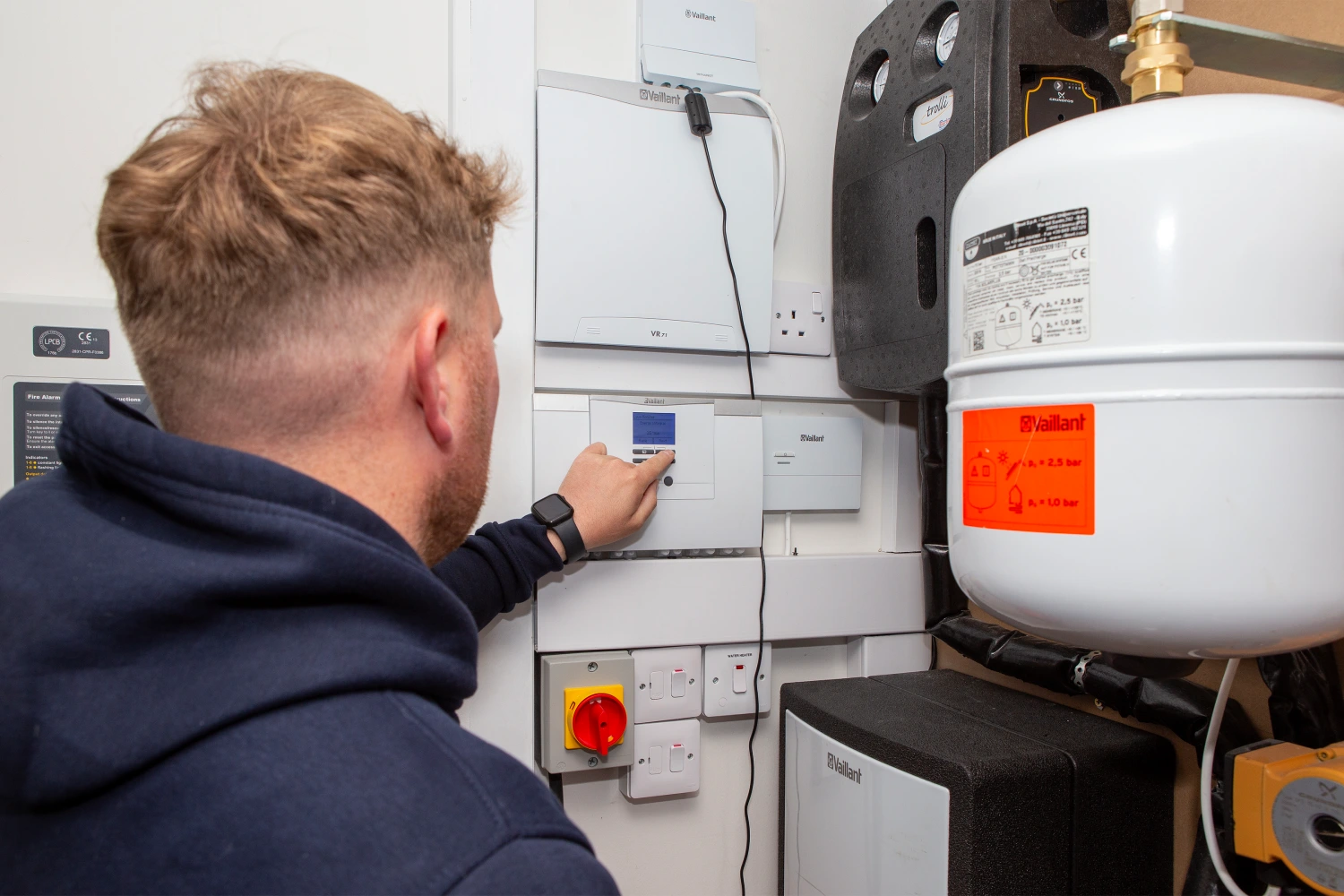
A survey considers several areas, including:
- Heat loss throughout the property
- Existing radiators
- Pipework condition
- Electrical supply
- Hot water cylinder requirements
- Space for the outdoor unit
The aim is not to identify unnecessary work but to understand what, if anything, should be improved before installation begins.
Can radiator upgrades affect the overall cost?
Sometimes.
Heat pumps operate most efficiently at lower flow temperatures than traditional boilers. This means some radiators may need to provide more heat than they currently do.
During the survey, installers assess each radiator individually.
Possible outcomes include:
- Existing radiators remain suitable
- Selected radiators are upgraded
- Additional radiators are recommended in larger rooms
Because every room is assessed separately, upgrades are only recommended where calculations show they will improve performance.
Does insulation influence installation costs?
Yes, although not always in the way many homeowners expect.
A heat pump can often be installed without major insulation work. However, improving insulation may reduce heat loss, helping the heating system operate more efficiently.
The survey may identify opportunities such as:
- Improving loft insulation
- Reducing draughts
- Upgrading glazing over time
- Addressing areas of unnecessary heat loss
These improvements are usually optional and can often be completed gradually.
Rather than increasing costs unnecessarily, they may contribute to lower running costs over the lifetime of the system.
Which option best describes your home?
It just takes 2 minutes
And then you can book a free consultation
Why is the existing heating system important?
Your current heating system influences how much work is needed before a heat pump can be installed.
The survey will assess:
- Radiators
- Pipework
- Heating controls
- Hot water cylinder
- Boiler location
- Electrical connections
Some existing components may remain suitable, while others could require upgrading.
This detailed assessment allows installers to provide a quotation that reflects the actual work required.
Can electrical work affect the quotation?
In some cases, yes.
Heat pumps require a suitable electrical supply, so the installer will check:
- Consumer unit capacity
- Existing electrical circuits
- Isolation arrangements
- General electrical condition
Many homes require little or no electrical alteration, but identifying any necessary work during the survey helps avoid delays later.
Are outdoor installation requirements included?
Absolutely.
The survey also considers the location of the outdoor unit.
Factors that may influence installation costs include:
- Distance between indoor and outdoor equipment
- Pipework routes
- Ground preparation
- Access to the installation area
- Mounting requirements
Careful planning ensures the system is positioned for efficient operation while keeping installation practical.
Understanding these requirements also helps explain why the air source heat pump cost may vary between properties, even within the same area.
Why is a professional survey worth it?
Some homeowners are tempted by quick online estimates, but these can only provide a rough guide.
A detailed survey offers a much clearer picture because it takes account of your property’s individual characteristics.
The survey helps:
- Reduce unexpected costs
- Identify essential work
- Explain optional improvements
- Improve quotation accuracy
- Support efficient system design
This gives homeowners confidence that the proposed installation has been tailored to their property.
Which home improvements offer the best long-term value?
Not every recommendation made during a survey will have the same impact on your heating system. Some improvements can make a noticeable difference to comfort and efficiency, while others may simply prepare your home for future upgrades.
A professional installer will explain which recommendations are essential before installation and which can be completed over time.
Examples of improvements that often provide good long-term value include:
- Upgrading undersized radiators
- Improving loft insulation
- Replacing outdated heating controls
- Reducing draughts around doors and windows
- Improving hot water system efficiency
By prioritising improvements that deliver the greatest benefit, homeowners can spread costs while still achieving excellent performance from their heat pump.
If you’d like a clearer understanding of what your property may need, contact the Plumbing & Renewables team. We’ll carry out a detailed survey and provide practical recommendations based on your home’s individual requirements.
Can a survey help avoid unexpected costs?
Yes.
One of the biggest advantages of a professional survey is identifying potential issues before installation begins.
Without a survey, homeowners may receive an estimate that doesn’t fully reflect the work required.
A detailed assessment helps identify:
- Heating system upgrades
- Electrical improvements
- Pipework alterations
- Outdoor installation requirements
- Optional efficiency improvements
This allows the quotation to reflect the actual scope of work, giving homeowners greater confidence when planning their budget.
Example scenario: A well-planned installation
A homeowner in Elgin wanted to replace an ageing oil boiler with a heat pump but was concerned about unexpected installation costs.
During the survey, the installer carried out room-by-room heat loss calculations and assessed the existing heating system. Most radiators were suitable, although two larger rooms required upgraded emitters. The loft insulation was also identified as an area where a relatively simple improvement could enhance efficiency.
Because these recommendations were identified before installation, the quotation clearly explained both the essential work and the optional improvements. The homeowner was able to budget confidently and complete the project without unexpected additional costs.
This demonstrates why understanding heat pump cost elgin involves much more than comparing equipment prices alone.
What should your quotation include?
A professional quotation should clearly explain how the proposed price has been calculated.
| Assessment Area | Why It Affects Cost |
| Heat loss calculations | Determines the correct system size |
| Radiator assessment | Identifies whether upgrades are needed |
| Pipework inspection | Confirms compatibility with the system |
| Electrical assessment | Highlights any required electrical work |
| Outdoor unit location | Influences installation complexity |
| Recommended improvements | Explains optional and essential upgrades |
A transparent quotation allows homeowners to understand where their investment is going and why certain recommendations have been made.
Why does planning help reduce long-term costs?
Although some home improvements may increase the initial installation cost, they often help improve efficiency over the lifetime of the system.
A properly designed installation can:
- Reduce unnecessary electricity use
- Improve indoor comfort
- Minimise future adjustments
- Support consistent heating throughout the property
- Extend the efficient operation of the system
Looking beyond the upfront air source heat pump cost helps homeowners make informed decisions that balance initial investment with long-term performance.
Final thoughts
The cost of installing a heat pump is influenced by much more than the equipment itself. The condition of your existing heating system, your home’s insulation and any preparation work all contribute to the final quotation.
A professional survey removes uncertainty by identifying exactly what your property needs before installation begins. This allows homeowners to plan confidently, understand where their investment is being made and avoid unexpected costs later in the project.
If you’re researching heat pump cost elgin, taking the time to arrange a detailed home survey is one of the best ways to receive accurate advice and a quotation tailored to your property.
Related articles

Which option best describes your home?
At a glance
Every property is different. Some homes require very few adjustments before installation, while others may benefit from upgrades that improve comfort, efficiency and long-term performance. Understanding these factors before receiving a quotation helps homeowners budget more accurately and avoid unexpected costs.
If you’re researching heat pump cost elgin, it’s important to know that a professional home survey forms the foundation of an accurate quotation.
If you’re considering a heat pump, contact the Plumbing & Renewables team to arrange a professional survey. We’ll explain what your home may need before providing a tailored quotation.
Why isn’t every installation priced the same?
Unlike replacing a boiler with a similar model, installing a heat pump involves designing a heating system around the individual property.
Two homes of a similar size can have very different installation requirements because of differences in:
- Insulation levels
- Property age
- Existing heating system
- Radiator sizes
- Pipework layout
- Hot water demand
- Available outdoor space
These factors influence both the scope of work and the final quotation.
A detailed survey ensures recommendations are based on your home’s actual requirements rather than estimates.
What is home readiness?
Home readiness refers to how well your property is prepared to support a heat pump installation.
A survey considers several areas, including:
- Heat loss throughout the property
- Existing radiators
- Pipework condition
- Electrical supply
- Hot water cylinder requirements
- Space for the outdoor unit
The aim is not to identify unnecessary work but to understand what, if anything, should be improved before installation begins.
Can radiator upgrades affect the overall cost?
Sometimes.
Heat pumps operate most efficiently at lower flow temperatures than traditional boilers. This means some radiators may need to provide more heat than they currently do.
During the survey, installers assess each radiator individually.
Possible outcomes include:
- Existing radiators remain suitable
- Selected radiators are upgraded
- Additional radiators are recommended in larger rooms
Because every room is assessed separately, upgrades are only recommended where calculations show they will improve performance.
Does insulation influence installation costs?
Yes, although not always in the way many homeowners expect.
A heat pump can often be installed without major insulation work. However, improving insulation may reduce heat loss, helping the heating system operate more efficiently.
The survey may identify opportunities such as:
- Improving loft insulation
- Reducing draughts
- Upgrading glazing over time
- Addressing areas of unnecessary heat loss
These improvements are usually optional and can often be completed gradually.
Rather than increasing costs unnecessarily, they may contribute to lower running costs over the lifetime of the system.
Which option best describes your home?
It just takes 2 minutes
And then you can book a free consultation
Why is the existing heating system important?
Your current heating system influences how much work is needed before a heat pump can be installed.
The survey will assess:
- Radiators
- Pipework
- Heating controls
- Hot water cylinder
- Boiler location
- Electrical connections
Some existing components may remain suitable, while others could require upgrading.
This detailed assessment allows installers to provide a quotation that reflects the actual work required.
Can electrical work affect the quotation?
In some cases, yes.
Heat pumps require a suitable electrical supply, so the installer will check:
- Consumer unit capacity
- Existing electrical circuits
- Isolation arrangements
- General electrical condition
Many homes require little or no electrical alteration, but identifying any necessary work during the survey helps avoid delays later.
Are outdoor installation requirements included?
Absolutely.
The survey also considers the location of the outdoor unit.
Factors that may influence installation costs include:
- Distance between indoor and outdoor equipment
- Pipework routes
- Ground preparation
- Access to the installation area
- Mounting requirements
Careful planning ensures the system is positioned for efficient operation while keeping installation practical.
Understanding these requirements also helps explain why the air source heat pump cost may vary between properties, even within the same area.
Why is a professional survey worth it?
Some homeowners are tempted by quick online estimates, but these can only provide a rough guide.
A detailed survey offers a much clearer picture because it takes account of your property’s individual characteristics.
The survey helps:
- Reduce unexpected costs
- Identify essential work
- Explain optional improvements
- Improve quotation accuracy
- Support efficient system design
This gives homeowners confidence that the proposed installation has been tailored to their property.
Which home improvements offer the best long-term value?
Not every recommendation made during a survey will have the same impact on your heating system. Some improvements can make a noticeable difference to comfort and efficiency, while others may simply prepare your home for future upgrades.
A professional installer will explain which recommendations are essential before installation and which can be completed over time.
Examples of improvements that often provide good long-term value include:
- Upgrading undersized radiators
- Improving loft insulation
- Replacing outdated heating controls
- Reducing draughts around doors and windows
- Improving hot water system efficiency
By prioritising improvements that deliver the greatest benefit, homeowners can spread costs while still achieving excellent performance from their heat pump.
If you’d like a clearer understanding of what your property may need, contact the Plumbing & Renewables team. We’ll carry out a detailed survey and provide practical recommendations based on your home’s individual requirements.
Can a survey help avoid unexpected costs?
Yes.
One of the biggest advantages of a professional survey is identifying potential issues before installation begins.
Without a survey, homeowners may receive an estimate that doesn’t fully reflect the work required.
A detailed assessment helps identify:
- Heating system upgrades
- Electrical improvements
- Pipework alterations
- Outdoor installation requirements
- Optional efficiency improvements
This allows the quotation to reflect the actual scope of work, giving homeowners greater confidence when planning their budget.
Example scenario: A well-planned installation
A homeowner in Elgin wanted to replace an ageing oil boiler with a heat pump but was concerned about unexpected installation costs.
During the survey, the installer carried out room-by-room heat loss calculations and assessed the existing heating system. Most radiators were suitable, although two larger rooms required upgraded emitters. The loft insulation was also identified as an area where a relatively simple improvement could enhance efficiency.
Because these recommendations were identified before installation, the quotation clearly explained both the essential work and the optional improvements. The homeowner was able to budget confidently and complete the project without unexpected additional costs.
This demonstrates why understanding heat pump cost elgin involves much more than comparing equipment prices alone.
What should your quotation include?
A professional quotation should clearly explain how the proposed price has been calculated.
| Assessment Area | Why It Affects Cost |
| Heat loss calculations | Determines the correct system size |
| Radiator assessment | Identifies whether upgrades are needed |
| Pipework inspection | Confirms compatibility with the system |
| Electrical assessment | Highlights any required electrical work |
| Outdoor unit location | Influences installation complexity |
| Recommended improvements | Explains optional and essential upgrades |
A transparent quotation allows homeowners to understand where their investment is going and why certain recommendations have been made.
Why does planning help reduce long-term costs?
Although some home improvements may increase the initial installation cost, they often help improve efficiency over the lifetime of the system.
A properly designed installation can:
- Reduce unnecessary electricity use
- Improve indoor comfort
- Minimise future adjustments
- Support consistent heating throughout the property
- Extend the efficient operation of the system
Looking beyond the upfront air source heat pump cost helps homeowners make informed decisions that balance initial investment with long-term performance.
Final thoughts
The cost of installing a heat pump is influenced by much more than the equipment itself. The condition of your existing heating system, your home’s insulation and any preparation work all contribute to the final quotation.
A professional survey removes uncertainty by identifying exactly what your property needs before installation begins. This allows homeowners to plan confidently, understand where their investment is being made and avoid unexpected costs later in the project.
If you’re researching heat pump cost elgin, taking the time to arrange a detailed home survey is one of the best ways to receive accurate advice and a quotation tailored to your property.