
Cost Transparency: Labour, Equipment and Home Preparation Explained
When homeowners research the heat pump cost Elgin properties may face, the first figure they often find is a broad equipment price. That figure can be useful for early research, but it rarely tells the whole story.

Why you can trust our content
We know the plumbing and renewable energy industry can feel overwhelming, especially with conflicting advice and outdated information online. That’s why we base everything we do on clarity, expertise, and trusted sources:



At a glance
An air source heat pump installation is a complete heating project. The final price can include the main unit, hot water equipment, controls, labour, pipework, electrical work, radiator upgrades and preparation specific to the property.
Understanding these individual costs makes it easier to compare quotations properly and avoid being surprised by items that were not obvious at the beginning.
If you are considering an air source heat pump, Plumbing & Renewables can assess your requirements and provide a bespoke quotation based on the property rather than a generic package price.
What makes up the cost of a heat pump installation?
There is no universal installation price because every property presents different requirements.
The overall project can usually be divided into several broad areas:
| Cost area | What it can include |
| Heat pump equipment | Outdoor unit and associated components |
| Hot water | Cylinder, controls and connections |
| Heating system | Radiators, underfloor heating or adaptations |
| Labour | Installation, plumbing and system setup |
| Electrical work | Connections and associated alterations |
| Pipework | New or modified heating pipework |
| Controls | Thermostats and heating controls |
| Preparation | Bases, access work or property modifications |
| Removal | Taking away existing heating equipment |
| Commissioning | Testing, configuration and handover |
Not every property will require every item. The purpose of a detailed quotation is to establish exactly which components and services apply to your home.
How much does the heat pump equipment itself cost?
The heat pump is often the most visible part of the quotation, but it is only one component of the complete system.
Equipment prices vary according to:
- Manufacturer
- Model
- Output
- Efficiency
- System configuration
- Controls
- Warranty
- Hot water requirements
A larger property may require a different output from a smaller, well-insulated home. Some systems may also require additional components depending on the design.
This means the cost for heat pump equipment should not be judged independently from the rest of the installation.
A suitable system is more important than simply finding the cheapest available unit.
Why can labour make a noticeable difference to the final price?
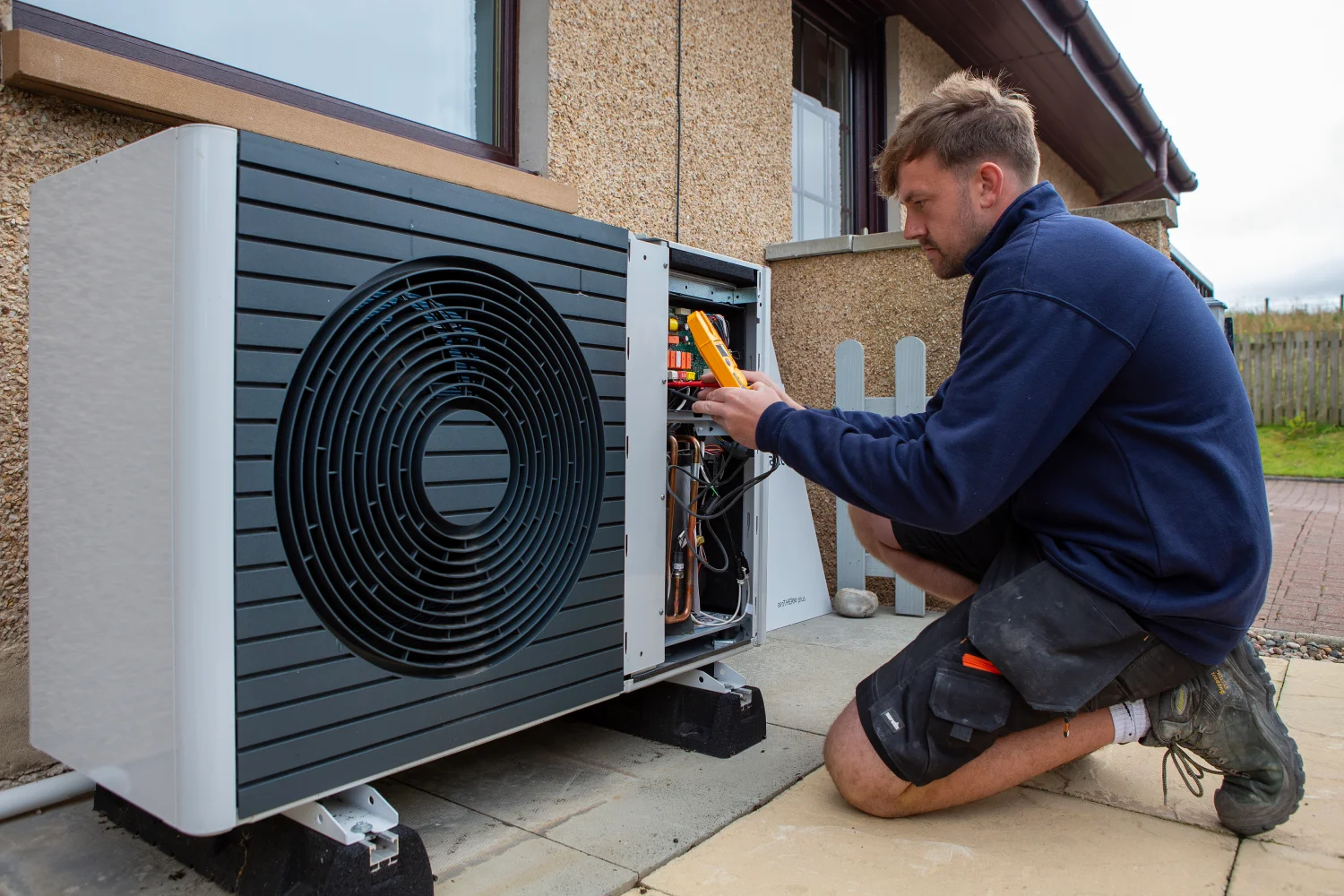
Installing a heat pump involves considerably more than positioning an outdoor unit.
Depending on the system, the installation team may need to complete:
- Plumbing connections
- Heating system alterations
- Pipework installation
- Hot water cylinder installation
- Electrical connections
- Control setup
- Radiator replacement
- System flushing or preparation
- Commissioning
- Customer handover
The complexity of the property can affect how long the work takes.
For example, a straightforward modern home with accessible pipework may require less preparation than an older property where the heating system needs several modifications.
A higher labour cost does not automatically mean poor value. The important question is what work the labour charge covers.
What home preparation might be needed?
Preparation is one of the areas most likely to create differences between quotations.
Before installation, the installer may identify requirements involving the existing heating system or the property itself.
Potential preparation can include:
- Replacing unsuitable radiators
- Modifying pipework
- Creating a suitable equipment base
- Improving access
- Altering hot water arrangements
- Making electrical changes
- Removing an existing boiler
- Adjusting heating controls
Not every homeowner will need these changes.
A professional quotation should explain which preparation is required and why.
Do radiators affect heat pump costs?
They can.
Heat pumps generally operate at lower flow temperatures than many traditional boiler systems. Existing radiators therefore need to be assessed to determine whether they can provide sufficient heat under the proposed operating conditions.
Some radiators may be suitable without modification.
Others may need replacing with larger or more suitable models.
If a quotation includes radiator upgrades, ask whether the price covers both the radiators and the labour required to install them.
This can be an important difference when comparing two quotations.
If you are comparing the heat pump cost Elgin homeowners have been quoted, Plumbing & Renewables can explain which parts of the installation relate to your property’s existing heating system and what preparation may be required.
What about the hot water cylinder?
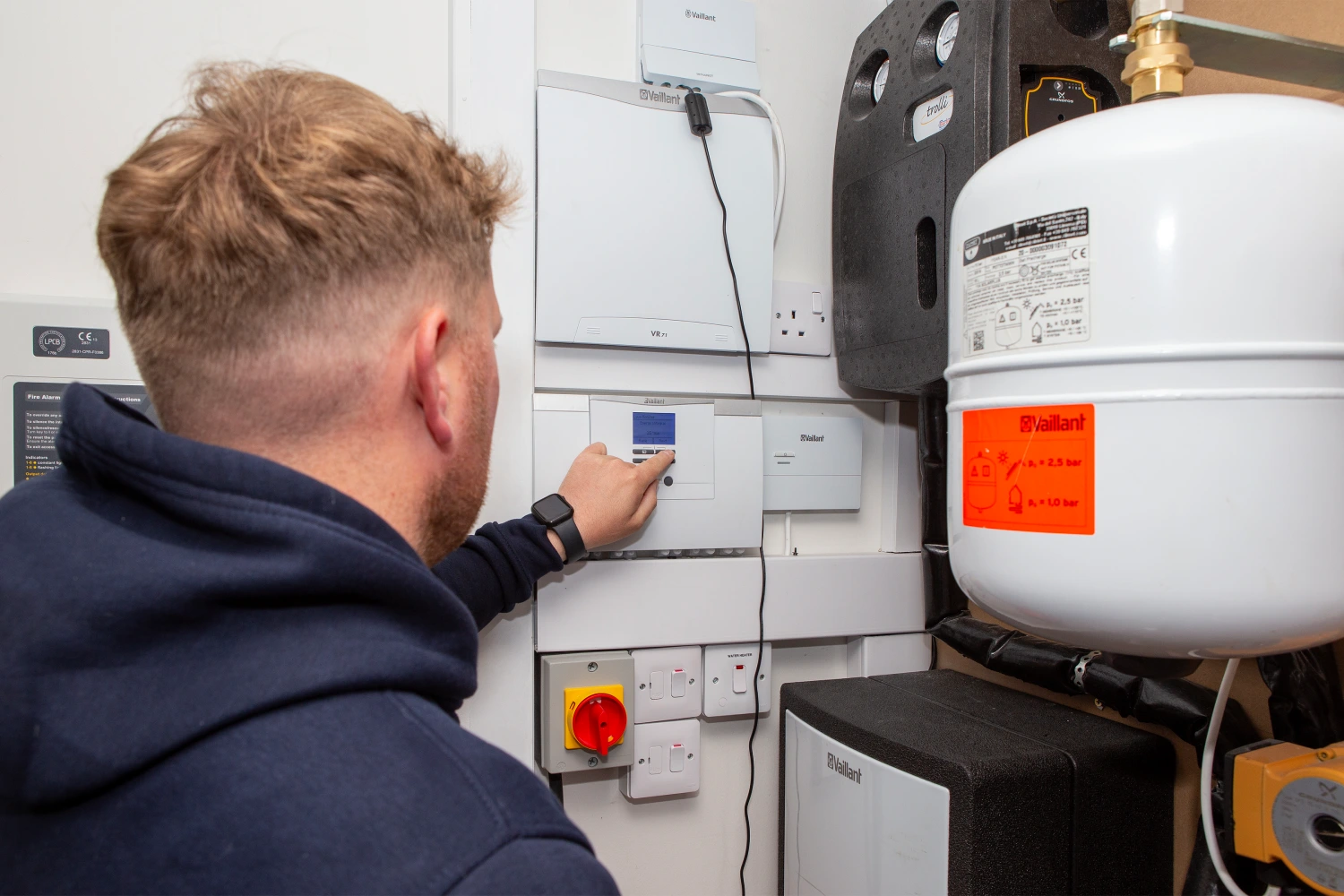
For many domestic systems, hot water storage is an important part of the installation.
The quotation should explain whether a cylinder is included and identify the proposed capacity where appropriate.
The right cylinder needs to match household requirements and available space.
Factors can include:
- Number of occupants
- Typical hot water usage
- Available cylinder space
- Existing hot water arrangements
- Recovery requirements
- Controls
- Pipework
A quotation that includes the heat pump but says little about domestic hot water may need further clarification.
Which option best describes your home?
It just takes 2 minutes
And then you can book a free consultation
Can electrical work increase the installation price?
Potentially.
The installer needs to consider the electrical requirements of the proposed system and whether the existing arrangement is suitable.
Depending on the property, this could involve additional electrical work or alterations.
The key is to establish whether electrical work is included in the quotation.
Ask:
- Is the electrical connection included?
- Are additional works included if required?
- Is an electrician involved?
- Are there any assumptions about the existing supply?
Knowing the answer before work starts can prevent unexpected costs.
Why do two heat pump quotes sometimes have very different prices?
The difference may have little to do with the actual heat pump.
One installer might provide a complete package including radiator upgrades, hot water equipment, controls, electrical work, commissioning and removal of the existing heating system.
Another might provide a lower price that excludes several of these items.
This is why homeowners should compare the scope of each quotation rather than simply looking at the final total.
A detailed quote may appear more expensive because it includes more of the work required to complete the project properly.
Should you be concerned about a very low quotation?
Not necessarily, but it deserves closer examination.
A lower price may result from efficient installation, different equipment or fewer preparation requirements. However, it could also reflect exclusions that are not immediately obvious.
Before accepting a particularly low quotation, ask:
- Is the same heat pump output being compared?
- Is the hot water cylinder included?
- Are radiators included?
- Is electrical work included?
- Is installation labour included?
- Is commissioning included?
- Is removal of existing equipment included?
- What warranties are provided?
- What is specifically excluded?
Once you have these answers, you can establish whether the quotations are genuinely comparable.
What is a realistic way to think about heat pump cost?
Instead of asking for one universal number, think about the project in layers.
Equipment: What heat pump and supporting components are required?
System: What hot water, controls and heating emitters are needed?
Preparation: What does the existing property need before installation?
Labour: How complex is the installation?
Completion: What commissioning, certification and handover are included?
This approach gives you a much clearer picture of the overall investment.
For homeowners researching the cost for heat pump installation, it also helps explain why online estimates can differ significantly from a final property-specific quotation.
A typical Elgin property example
Consider an older semi-detached home in Elgin with an existing boiler, several older radiators and a separate hot water cylinder.
The homeowner initially sees an attractive equipment-only price online.
After a property assessment, the installer identifies that some radiators need upgrading, pipework requires modification and a different cylinder arrangement would better suit the household.
The final quotation is therefore higher than the original online figure.
That does not necessarily mean the installer has increased the price unfairly. The initial figure simply did not account for the property’s actual requirements.
What should be fixed before work begins?
The final quotation should clearly identify the agreed scope and price, together with any assumptions or exclusions.
Before signing, make sure you understand:
- The exact equipment being supplied
- The installation work included
- Preparation requirements
- Any items excluded
- Payment arrangements
- Warranty cover
- Commissioning
- Handover documentation
- How changes will be handled
If something important is unclear, ask for it to be confirmed in writing.
A transparent quotation protects both the homeowner and installer.
If you want to understand the heat pump cost Elgin homeowners can expect for a property-specific installation, contact Plumbing & Renewables to discuss your home and request a tailored quotation.
Final thoughts
Understanding the cost of a heat pump means looking beyond the main equipment price. Labour, hot water, radiators, controls, pipework, electrical work and property preparation can all contribute to the final investment.
A detailed quotation should make these elements clear so you can compare proposals fairly and understand what you are paying for.
For homeowners in Elgin, Plumbing & Renewables can provide a property-focused assessment and explain the practical requirements behind the quotation. Clear cost information at the beginning can make the decision process much easier and help avoid unexpected additions later.
Related articles

Which option best describes your home?
At a glance
An air source heat pump installation is a complete heating project. The final price can include the main unit, hot water equipment, controls, labour, pipework, electrical work, radiator upgrades and preparation specific to the property.
Understanding these individual costs makes it easier to compare quotations properly and avoid being surprised by items that were not obvious at the beginning.
If you are considering an air source heat pump, Plumbing & Renewables can assess your requirements and provide a bespoke quotation based on the property rather than a generic package price.
What makes up the cost of a heat pump installation?
There is no universal installation price because every property presents different requirements.
The overall project can usually be divided into several broad areas:
| Cost area | What it can include |
| Heat pump equipment | Outdoor unit and associated components |
| Hot water | Cylinder, controls and connections |
| Heating system | Radiators, underfloor heating or adaptations |
| Labour | Installation, plumbing and system setup |
| Electrical work | Connections and associated alterations |
| Pipework | New or modified heating pipework |
| Controls | Thermostats and heating controls |
| Preparation | Bases, access work or property modifications |
| Removal | Taking away existing heating equipment |
| Commissioning | Testing, configuration and handover |
Not every property will require every item. The purpose of a detailed quotation is to establish exactly which components and services apply to your home.
How much does the heat pump equipment itself cost?
The heat pump is often the most visible part of the quotation, but it is only one component of the complete system.
Equipment prices vary according to:
- Manufacturer
- Model
- Output
- Efficiency
- System configuration
- Controls
- Warranty
- Hot water requirements
A larger property may require a different output from a smaller, well-insulated home. Some systems may also require additional components depending on the design.
This means the cost for heat pump equipment should not be judged independently from the rest of the installation.
A suitable system is more important than simply finding the cheapest available unit.
Why can labour make a noticeable difference to the final price?
Installing a heat pump involves considerably more than positioning an outdoor unit.
Depending on the system, the installation team may need to complete:
- Plumbing connections
- Heating system alterations
- Pipework installation
- Hot water cylinder installation
- Electrical connections
- Control setup
- Radiator replacement
- System flushing or preparation
- Commissioning
- Customer handover
The complexity of the property can affect how long the work takes.
For example, a straightforward modern home with accessible pipework may require less preparation than an older property where the heating system needs several modifications.
A higher labour cost does not automatically mean poor value. The important question is what work the labour charge covers.
What home preparation might be needed?
Preparation is one of the areas most likely to create differences between quotations.
Before installation, the installer may identify requirements involving the existing heating system or the property itself.
Potential preparation can include:
- Replacing unsuitable radiators
- Modifying pipework
- Creating a suitable equipment base
- Improving access
- Altering hot water arrangements
- Making electrical changes
- Removing an existing boiler
- Adjusting heating controls
Not every homeowner will need these changes.
A professional quotation should explain which preparation is required and why.
Do radiators affect heat pump costs?
They can.
Heat pumps generally operate at lower flow temperatures than many traditional boiler systems. Existing radiators therefore need to be assessed to determine whether they can provide sufficient heat under the proposed operating conditions.
Some radiators may be suitable without modification.
Others may need replacing with larger or more suitable models.
If a quotation includes radiator upgrades, ask whether the price covers both the radiators and the labour required to install them.
This can be an important difference when comparing two quotations.
If you are comparing the heat pump cost Elgin homeowners have been quoted, Plumbing & Renewables can explain which parts of the installation relate to your property’s existing heating system and what preparation may be required.
What about the hot water cylinder?
For many domestic systems, hot water storage is an important part of the installation.
The quotation should explain whether a cylinder is included and identify the proposed capacity where appropriate.
The right cylinder needs to match household requirements and available space.
Factors can include:
- Number of occupants
- Typical hot water usage
- Available cylinder space
- Existing hot water arrangements
- Recovery requirements
- Controls
- Pipework
A quotation that includes the heat pump but says little about domestic hot water may need further clarification.
Which option best describes your home?
It just takes 2 minutes
And then you can book a free consultation
Can electrical work increase the installation price?
Potentially.
The installer needs to consider the electrical requirements of the proposed system and whether the existing arrangement is suitable.
Depending on the property, this could involve additional electrical work or alterations.
The key is to establish whether electrical work is included in the quotation.
Ask:
- Is the electrical connection included?
- Are additional works included if required?
- Is an electrician involved?
- Are there any assumptions about the existing supply?
Knowing the answer before work starts can prevent unexpected costs.
Why do two heat pump quotes sometimes have very different prices?
The difference may have little to do with the actual heat pump.
One installer might provide a complete package including radiator upgrades, hot water equipment, controls, electrical work, commissioning and removal of the existing heating system.
Another might provide a lower price that excludes several of these items.
This is why homeowners should compare the scope of each quotation rather than simply looking at the final total.
A detailed quote may appear more expensive because it includes more of the work required to complete the project properly.
Should you be concerned about a very low quotation?
Not necessarily, but it deserves closer examination.
A lower price may result from efficient installation, different equipment or fewer preparation requirements. However, it could also reflect exclusions that are not immediately obvious.
Before accepting a particularly low quotation, ask:
- Is the same heat pump output being compared?
- Is the hot water cylinder included?
- Are radiators included?
- Is electrical work included?
- Is installation labour included?
- Is commissioning included?
- Is removal of existing equipment included?
- What warranties are provided?
- What is specifically excluded?
Once you have these answers, you can establish whether the quotations are genuinely comparable.
What is a realistic way to think about heat pump cost?
Instead of asking for one universal number, think about the project in layers.
Equipment: What heat pump and supporting components are required?
System: What hot water, controls and heating emitters are needed?
Preparation: What does the existing property need before installation?
Labour: How complex is the installation?
Completion: What commissioning, certification and handover are included?
This approach gives you a much clearer picture of the overall investment.
For homeowners researching the cost for heat pump installation, it also helps explain why online estimates can differ significantly from a final property-specific quotation.
A typical Elgin property example
Consider an older semi-detached home in Elgin with an existing boiler, several older radiators and a separate hot water cylinder.
The homeowner initially sees an attractive equipment-only price online.
After a property assessment, the installer identifies that some radiators need upgrading, pipework requires modification and a different cylinder arrangement would better suit the household.
The final quotation is therefore higher than the original online figure.
That does not necessarily mean the installer has increased the price unfairly. The initial figure simply did not account for the property’s actual requirements.
What should be fixed before work begins?
The final quotation should clearly identify the agreed scope and price, together with any assumptions or exclusions.
Before signing, make sure you understand:
- The exact equipment being supplied
- The installation work included
- Preparation requirements
- Any items excluded
- Payment arrangements
- Warranty cover
- Commissioning
- Handover documentation
- How changes will be handled
If something important is unclear, ask for it to be confirmed in writing.
A transparent quotation protects both the homeowner and installer.
If you want to understand the heat pump cost Elgin homeowners can expect for a property-specific installation, contact Plumbing & Renewables to discuss your home and request a tailored quotation.
Final thoughts
Understanding the cost of a heat pump means looking beyond the main equipment price. Labour, hot water, radiators, controls, pipework, electrical work and property preparation can all contribute to the final investment.
A detailed quotation should make these elements clear so you can compare proposals fairly and understand what you are paying for.
For homeowners in Elgin, Plumbing & Renewables can provide a property-focused assessment and explain the practical requirements behind the quotation. Clear cost information at the beginning can make the decision process much easier and help avoid unexpected additions later.