
Do Heat Pumps Really Work in Freezing Elgin Winters?
One of the most common questions homeowners ask when considering renewable heating is whether heat pumps can cope with freezing temperatures.

Why you can trust our content
We know the plumbing and renewable energy industry can feel overwhelming, especially with conflicting advice and outdated information online. That’s why we base everything we do on clarity, expertise, and trusted sources:


At a glance
In areas like Elgin, where winter temperatures can regularly drop below zero, this concern is completely understandable.
Many people assume that because heat pumps extract heat from outdoor air, they must struggle when the weather becomes very cold. In reality, modern systems are specifically designed to operate efficiently in low temperatures.
Understanding how heat pumps work in winter conditions can help homeowners feel more confident when considering renewable heating. For those planning an ashp installation elgin, knowing how the technology performs during colder months is an important part of the decision.
If you are exploring renewable heating options, the Plumbing & Renewables team can provide expert guidance on whether a heat pump system is suitable for your home.
How Do Heat Pumps Work in Cold Weather?
Heat pumps operate by extracting heat energy from outdoor air and transferring it indoors. Even when the temperature feels extremely cold, there is still usable heat present in the air.
The system uses a refrigerant cycle that allows it to absorb this heat and compress it to a higher temperature before delivering it into the heating system.
This process continues to function even when temperatures fall below freezing. Modern heat pumps are specifically designed to maintain performance in cold climates, which is why they are widely used across northern Europe.
Can Heat Pumps Still Work Below Freezing?
Yes, modern systems are capable of operating in sub-zero temperatures.
Most air source heat pumps are designed to function effectively in outdoor conditions well below freezing. Although efficiency may reduce slightly in very cold weather, the system can still provide consistent heating.
Manufacturers typically test systems in conditions as low as:
- -10°C
- -15°C
- sometimes even lower depending on the model
For many homes in Elgin, winter temperatures rarely fall outside the operating range of modern systems.
Why Does System Design Matter in Cold Weather?
The key to reliable winter performance is not just the heat pump itself but how the entire heating system has been designed.
A properly designed system considers several important factors:
- the heat loss of the property
- radiator sizing
- insulation levels
- heating control strategy
If the system is designed correctly, it will be able to maintain comfortable indoor temperatures even during cold weather.
When homeowners consider a heat pump installation elgin, installers typically begin with a detailed heat loss calculation to determine the heating requirements of the property.
Which option best describes your home?
It just takes 2 minutes
And then you can book a free consultation
What Happens When Frost Forms on the Outdoor Unit?
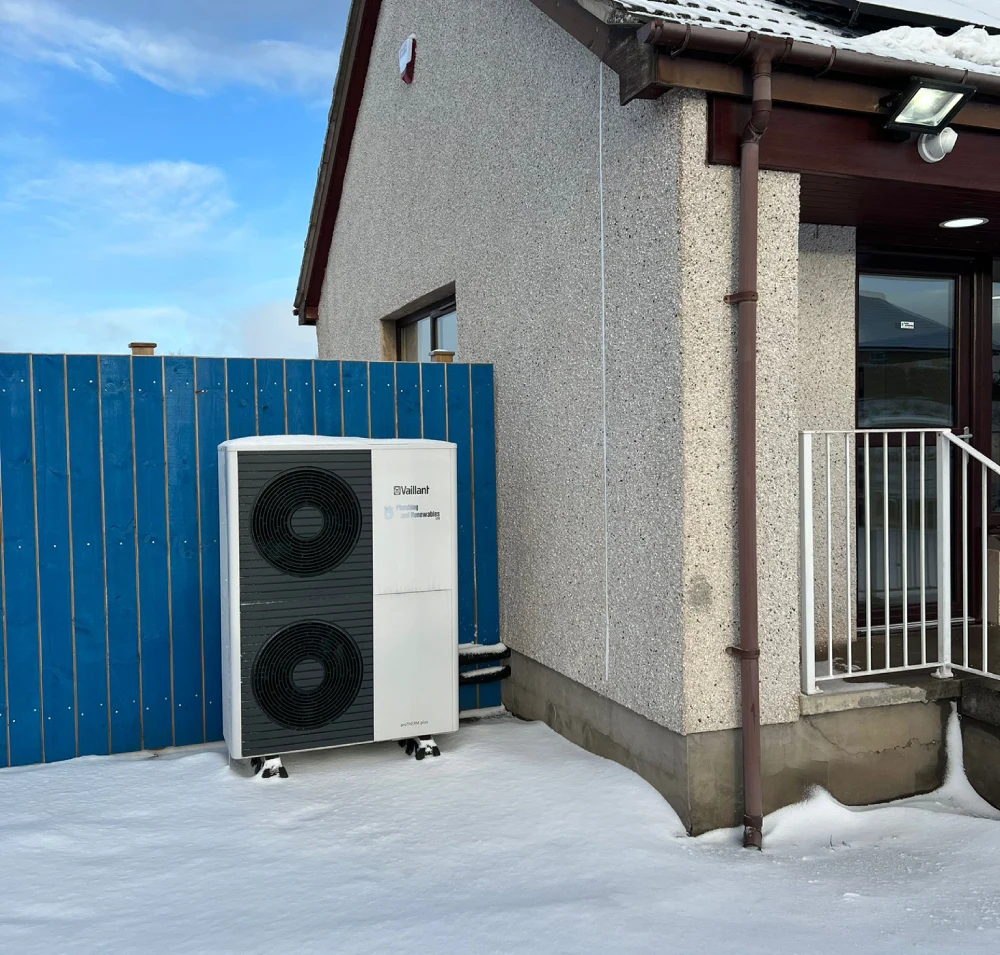
During very cold weather, frost can sometimes form on the outdoor unit.
This is completely normal and does not mean the system has stopped working. Heat pumps include a built-in defrost cycle that removes frost automatically.
The process works as follows:
- The system detects frost buildup.
- It briefly switches operating mode.
- Ice melts from the coil surface.
- Normal heating resumes shortly afterwards.
This process usually takes only a few minutes and ensures the system continues to operate efficiently.
How Do Heat Pumps Compare with Traditional Boilers?
Traditional boilers generate heat by burning fuel, while heat pumps move existing heat from the outdoor air into the home.
Although the methods are different, both systems can maintain comfortable indoor temperatures when installed correctly.
The table below highlights some of the main differences.
| Heating Feature | Traditional Boiler | Air Source Heat Pump |
| Heat source | Fuel combustion | Heat extracted from outdoor air |
| Typical operating temperature | High | Lower |
| Heating style | Rapid bursts of heat | Continuous gentle heating |
| Efficiency approach | Fuel conversion | Heat transfer |
Because heat pumps operate differently, homeowners sometimes notice that their homes heat more gradually. However, the temperature remains stable once the system reaches the desired level.
Do Homes Need Extra Insulation for Winter Performance?
Insulation plays an important role in any heating system, regardless of whether it uses a boiler or a heat pump.
Well-insulated homes retain heat for longer, allowing the heating system to operate more efficiently.
Areas that often influence heat retention include:
- loft insulation
- cavity wall insulation
- window quality
- draught proofing
Many homes in Elgin already benefit from insulation improvements, which helps support efficient renewable heating systems.
Even in older properties, small upgrades can reduce heat loss and improve heating performance.
If you would like professional advice about preparing your home for a heat pump system, the Plumbing & Renewables team can assess your property and explain the options available.
Example Scenario – A Winter Installation in Elgin
A homeowner in Elgin recently replaced their ageing oil boiler with a heat pump system.
During the planning stage, installers performed a detailed heat loss survey and identified that two radiators in larger rooms needed upgrading. Once the system was installed, the heating operated at lower temperatures but ran steadily throughout the day.
When winter temperatures dropped below freezing, the home remained comfortable with a consistent indoor temperature.
This example highlights how proper planning during an ashp installation elgin can ensure reliable winter performance.
Do Heat Pumps Run Constantly in Winter?
Heat pumps often run for longer periods during colder weather, but this does not mean they are working inefficiently.
In fact, steady operation is part of how the system maintains comfort. Rather than switching on and off repeatedly, the system gently maintains the desired temperature.
This operating style offers several advantages:
- stable indoor temperatures
- reduced temperature fluctuations
- quieter system performance
Once homeowners become familiar with this approach, they often find the heating experience more comfortable than traditional systems.
What Factors Influence Winter Performance?
Several elements affect how well a heat pump performs during colder months.
Important factors include:
- correct system sizing
- radiator capacity
- insulation quality
- heating controls
- professional installation
When these components work together properly, the system can provide reliable heating throughout winter.
Homeowners considering a heat pump installation elgin should ensure that installers take time to assess these elements carefully.
Final Thoughts
Cold weather is often the biggest concern for homeowners considering renewable heating, but modern heat pumps are designed to perform effectively even during freezing conditions.
Reliable winter performance depends largely on system design, insulation levels and proper installation. When these factors are carefully planned, a heat pump can provide steady and comfortable heating throughout the colder months.
For homeowners in Elgin exploring renewable heating, understanding how the technology operates during winter helps remove many common misconceptions.
If you would like tailored advice about heat pump systems, the team at Plumbing & Renewables can help you explore suitable options for your property.
Related articles

Which option best describes your home?
At a glance
In areas like Elgin, where winter temperatures can regularly drop below zero, this concern is completely understandable.
Many people assume that because heat pumps extract heat from outdoor air, they must struggle when the weather becomes very cold. In reality, modern systems are specifically designed to operate efficiently in low temperatures.
Understanding how heat pumps work in winter conditions can help homeowners feel more confident when considering renewable heating. For those planning an ashp installation elgin, knowing how the technology performs during colder months is an important part of the decision.
If you are exploring renewable heating options, the Plumbing & Renewables team can provide expert guidance on whether a heat pump system is suitable for your home.
How Do Heat Pumps Work in Cold Weather?
Heat pumps operate by extracting heat energy from outdoor air and transferring it indoors. Even when the temperature feels extremely cold, there is still usable heat present in the air.
The system uses a refrigerant cycle that allows it to absorb this heat and compress it to a higher temperature before delivering it into the heating system.
This process continues to function even when temperatures fall below freezing. Modern heat pumps are specifically designed to maintain performance in cold climates, which is why they are widely used across northern Europe.
Can Heat Pumps Still Work Below Freezing?
Yes, modern systems are capable of operating in sub-zero temperatures.
Most air source heat pumps are designed to function effectively in outdoor conditions well below freezing. Although efficiency may reduce slightly in very cold weather, the system can still provide consistent heating.
Manufacturers typically test systems in conditions as low as:
- -10°C
- -15°C
- sometimes even lower depending on the model
For many homes in Elgin, winter temperatures rarely fall outside the operating range of modern systems.
Why Does System Design Matter in Cold Weather?
The key to reliable winter performance is not just the heat pump itself but how the entire heating system has been designed.
A properly designed system considers several important factors:
- the heat loss of the property
- radiator sizing
- insulation levels
- heating control strategy
If the system is designed correctly, it will be able to maintain comfortable indoor temperatures even during cold weather.
When homeowners consider a heat pump installation elgin, installers typically begin with a detailed heat loss calculation to determine the heating requirements of the property.
Which option best describes your home?
It just takes 2 minutes
And then you can book a free consultation
What Happens When Frost Forms on the Outdoor Unit?
During very cold weather, frost can sometimes form on the outdoor unit.
This is completely normal and does not mean the system has stopped working. Heat pumps include a built-in defrost cycle that removes frost automatically.
The process works as follows:
- The system detects frost buildup.
- It briefly switches operating mode.
- Ice melts from the coil surface.
- Normal heating resumes shortly afterwards.
This process usually takes only a few minutes and ensures the system continues to operate efficiently.
How Do Heat Pumps Compare with Traditional Boilers?
Traditional boilers generate heat by burning fuel, while heat pumps move existing heat from the outdoor air into the home.
Although the methods are different, both systems can maintain comfortable indoor temperatures when installed correctly.
The table below highlights some of the main differences.
| Heating Feature | Traditional Boiler | Air Source Heat Pump |
| Heat source | Fuel combustion | Heat extracted from outdoor air |
| Typical operating temperature | High | Lower |
| Heating style | Rapid bursts of heat | Continuous gentle heating |
| Efficiency approach | Fuel conversion | Heat transfer |
Because heat pumps operate differently, homeowners sometimes notice that their homes heat more gradually. However, the temperature remains stable once the system reaches the desired level.
Do Homes Need Extra Insulation for Winter Performance?
Insulation plays an important role in any heating system, regardless of whether it uses a boiler or a heat pump.
Well-insulated homes retain heat for longer, allowing the heating system to operate more efficiently.
Areas that often influence heat retention include:
- loft insulation
- cavity wall insulation
- window quality
- draught proofing
Many homes in Elgin already benefit from insulation improvements, which helps support efficient renewable heating systems.
Even in older properties, small upgrades can reduce heat loss and improve heating performance.
If you would like professional advice about preparing your home for a heat pump system, the Plumbing & Renewables team can assess your property and explain the options available.
Example Scenario – A Winter Installation in Elgin
A homeowner in Elgin recently replaced their ageing oil boiler with a heat pump system.
During the planning stage, installers performed a detailed heat loss survey and identified that two radiators in larger rooms needed upgrading. Once the system was installed, the heating operated at lower temperatures but ran steadily throughout the day.
When winter temperatures dropped below freezing, the home remained comfortable with a consistent indoor temperature.
This example highlights how proper planning during an ashp installation elgin can ensure reliable winter performance.
Do Heat Pumps Run Constantly in Winter?
Heat pumps often run for longer periods during colder weather, but this does not mean they are working inefficiently.
In fact, steady operation is part of how the system maintains comfort. Rather than switching on and off repeatedly, the system gently maintains the desired temperature.
This operating style offers several advantages:
- stable indoor temperatures
- reduced temperature fluctuations
- quieter system performance
Once homeowners become familiar with this approach, they often find the heating experience more comfortable than traditional systems.
What Factors Influence Winter Performance?
Several elements affect how well a heat pump performs during colder months.
Important factors include:
- correct system sizing
- radiator capacity
- insulation quality
- heating controls
- professional installation
When these components work together properly, the system can provide reliable heating throughout winter.
Homeowners considering a heat pump installation elgin should ensure that installers take time to assess these elements carefully.
Final Thoughts
Cold weather is often the biggest concern for homeowners considering renewable heating, but modern heat pumps are designed to perform effectively even during freezing conditions.
Reliable winter performance depends largely on system design, insulation levels and proper installation. When these factors are carefully planned, a heat pump can provide steady and comfortable heating throughout the colder months.
For homeowners in Elgin exploring renewable heating, understanding how the technology operates during winter helps remove many common misconceptions.
If you would like tailored advice about heat pump systems, the team at Plumbing & Renewables can help you explore suitable options for your property.