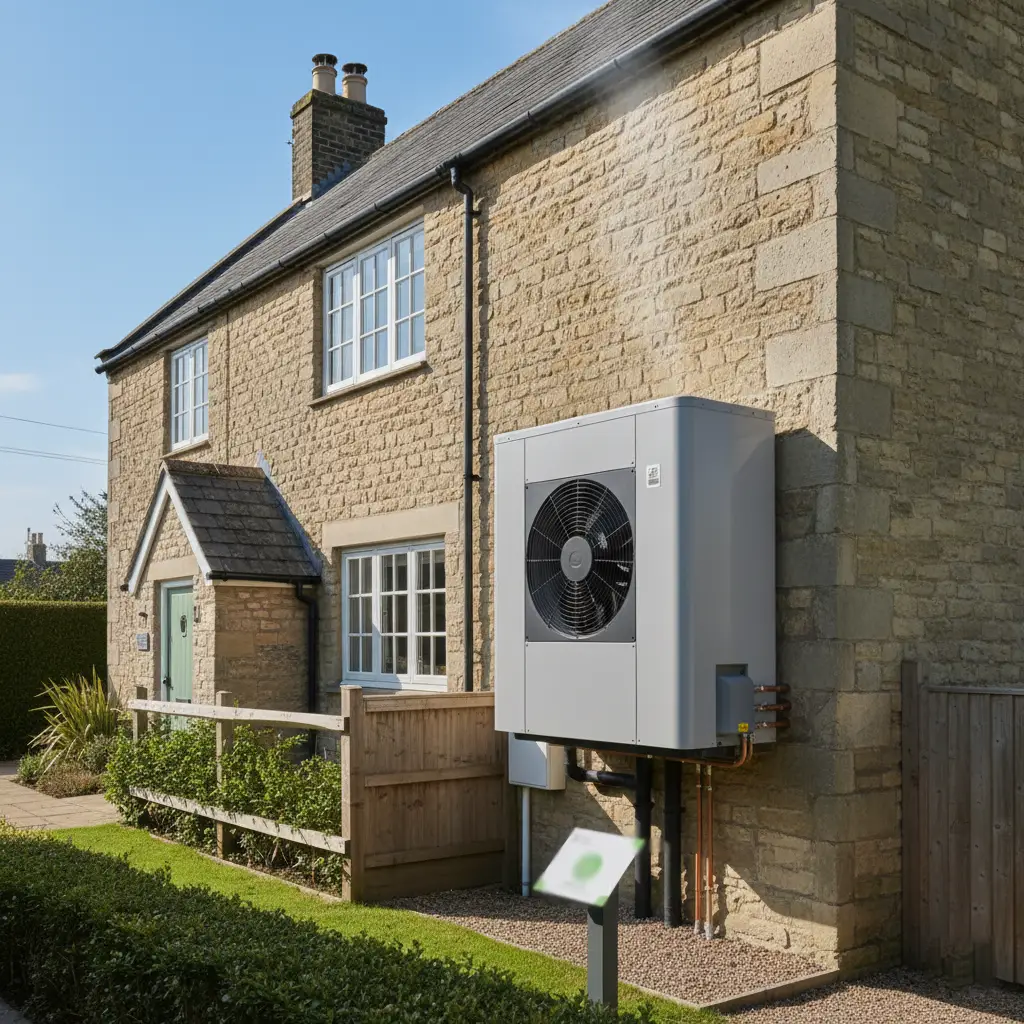

How Much Should You Budget to Replace an Oil Boiler With an ASHP in Elgin?
Find out what affects the cost of replacing an oil boiler with an ASHP in Elgin, including equipment, radiators, pipework, hot water and installation.

Why you can trust our content
We know the plumbing and renewable energy industry can feel overwhelming, especially with conflicting advice and outdated information online. That’s why we base everything we do on clarity, expertise, and trusted sources:


At a glance
Replacing an oil boiler with an air source heat pump is a significant heating upgrade, and the overall budget can vary considerably from one property to another. There is no single price that applies to every home because the installation involves more than the heat pump itself.
The condition of the existing heating system, property heat loss, radiator sizes, pipework, hot water arrangements, electrical requirements and outdoor unit position can all affect the final project cost.
If you are researching the air source heat pump cost elgin homeowners may need to budget for, it is useful to understand the different parts of the project before comparing quotations.
What makes up the cost of an oil-to-ASHP conversion?
The total project price can include several different elements.
A typical conversion may involve:
- Heat pump equipment
- Indoor heating components
- Hot water cylinder or associated equipment
- Controls and sensors
- Outdoor unit and mounting system
- Plumbing and pipework
- Electrical connections
- Radiator upgrades where required
- Removal of existing heating equipment
- Oil tank removal where included
- Installation labour
- System commissioning
- Handover and documentation
Not every property will require all of these items.
For example, some homes may already have suitable radiators, while another property may need several radiator upgrades before it can operate effectively at the lower flow temperatures associated with a heat pump.
This is why a headline figure found online should be treated as a starting point rather than a quotation for your particular home.
How much should you budget for the heat pump itself?
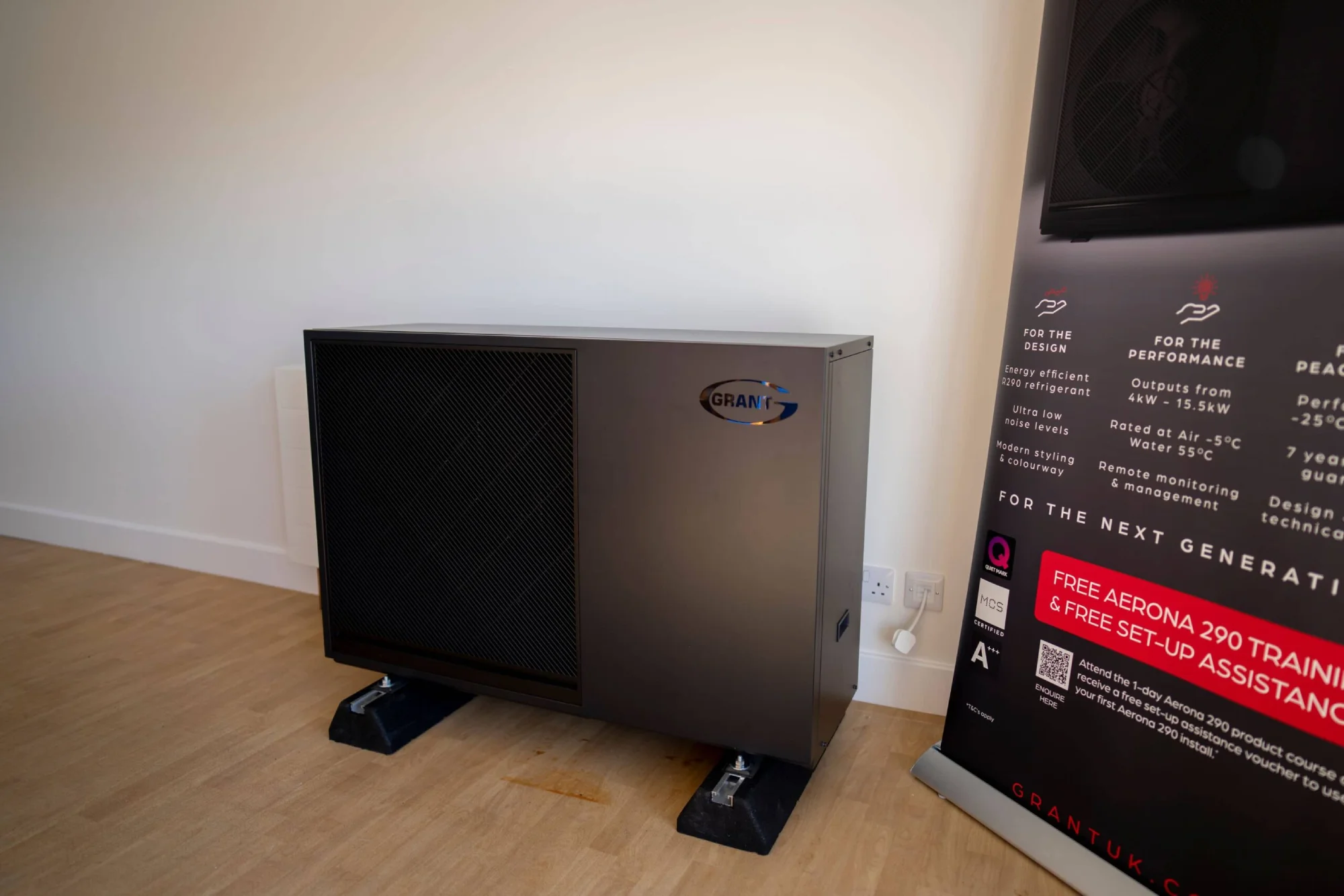
The heat pump is one of the most visible parts of the project, but it is only one component of the overall installation.
The required capacity depends on the property’s heat demand. A larger or less energy-efficient property may require a different system from a smaller, well-insulated home.
The system specification can also influence the equipment cost.
When reviewing a quotation, check whether the stated price includes the complete system or only the outdoor heat pump unit.
A complete proposal may also include:
| Component | Why it may affect the budget |
|---|---|
| Heat pump | Capacity and system specification vary by property |
| Hot water cylinder | A suitable cylinder may be required for heat pump operation |
| Controls | Heat pump systems need appropriate controls and sensors |
| Outdoor mounting | The unit needs a suitable base or mounting arrangement |
| Plumbing | Existing pipework may require alterations |
| Electrical work | Connection requirements depend on the installation |
| Radiators | Some rooms may need higher-output radiators |
| Removal | Existing oil equipment may need to be removed |
| Commissioning | The completed system needs to be configured and tested |
The important point is to understand which components are included in the quoted figure.
Does property size determine the ASHP budget?
Property size is relevant, but it is not the only factor.
Two homes with a similar floor area can have very different heating requirements. Construction type, insulation, glazing, room layout, ceiling heights and levels of heat loss can all affect the required system capacity.
This is why heat pump sizing should be based on calculated heat demand rather than simply using the property’s floor area.
A proper assessment can identify the heating requirement for individual rooms and help determine whether existing emitters are suitable.
For homeowners researching ashp cost elgin, this distinction is important. A larger heat pump is not automatically better, and selecting equipment simply from the property’s size can result in a system that is not appropriately matched to the home.
How much could radiator changes add to the project?
Radiators are one of the areas that can influence the cost of an oil-to-ASHP conversion.
Oil boilers can operate at higher flow temperatures than many heat pump systems are designed around. As a result, an existing radiator that works effectively with an oil boiler may not provide enough heat when operating at a lower temperature.
That does not mean every radiator needs to be replaced.
An assessment should establish which rooms require additional output. Some radiators may remain suitable, while others may need to be replaced with larger or higher-output models.
The cost will therefore depend on:
- Number of radiators requiring changes
- Size and type of replacement radiators
- Pipework alterations
- Access to each room
- Labour requirements
- Whether other heating system work is carried out at the same time
A quotation should identify these changes clearly rather than simply stating that radiator upgrades may be required.
Does pipework affect the cost of an ASHP conversion?
It can.
A heat pump needs the heating system to circulate water effectively at the required flow rate. Existing pipework should therefore be assessed rather than automatically assumed to be suitable.
Older systems may contain pipework that was designed around a different heating system and operating conditions.
Possible work could include:
- Altering sections of pipework
- Replacing unsuitable components
- Improving circulation
- Relocating equipment
- Making connections for the new heat pump system
Not every installation will require major pipework changes.
The key is to establish what your property requires before the final project price is agreed.
What about the hot water cylinder?
Hot water is another cost that homeowners should include when preparing a budget.
Heat pumps generally work with a hot water cylinder rather than the same type of instantaneous hot water arrangement commonly associated with some boiler systems.
If your current property does not have a suitable cylinder, a new one may be needed.
The quotation should make clear:
- Whether a cylinder is included
- Its proposed size
- Where it will be installed
- Whether existing pipework needs modification
- Whether removal of the current hot water equipment is included
The available space can also affect the practical cost of the work.
A survey should identify these issues before installation begins.
What costs are involved in removing the old oil system?
Moving away from oil heating may involve more than disconnecting the boiler.
Depending on the existing setup, the project may involve the removal or disposal of:
- Oil boiler
- Flue
- Oil tank
- Associated pipework
- Redundant heating components
The exact requirements will depend on the property and the condition and position of the existing equipment.
An important budgeting question is whether these works are included in the ASHP quotation.
If they are excluded, you may need to arrange separate work and account for the additional cost.
Could the outdoor unit location affect the budget?
Yes.
The outdoor unit needs a suitable location with appropriate access, airflow and installation conditions.
A straightforward installation may require less work than a property where the unit needs to be positioned some distance from the indoor heating components or where access is restricted.
Potential considerations include:
- Distance between indoor and outdoor components
- Mounting or base requirements
- Pipework routes
- Electrical cable routes
- Wall or ground mounting
- Access for installation
- Positioning requirements around the property
The location should therefore be assessed during the survey rather than selected solely from a floor plan.
What should you include in your ASHP budget?
A realistic budget should allow for the complete project rather than only the equipment.
Consider creating separate allowances for:
System equipment
This includes the heat pump and associated system components.
Heating system alterations
Allow for potential radiator, pipework and controls work identified during the design.
Hot water
Include the cost of a suitable cylinder and installation if required.
Electrical work
Check whether the existing electrical arrangements are suitable and whether additional work is needed.
Removal of oil equipment
Clarify whether boiler and tank removal or disposal is part of the quotation.
Installation and commissioning
The labour involved in fitting, setting up and testing the complete system should be clearly identified.
Contingency
Where the initial survey cannot establish every detail, a sensible contingency can help cover unforeseen work. However, major potential extras should ideally be identified before the contract is agreed.
How can you compare ASHP budgets accurately?
The air source heat pump cost elgin homeowners see in advertisements may not represent the final price for an oil-to-ASHP conversion.
Instead, compare quotations by checking whether they cover the same scope.
For example, one quotation might include:
- Heat pump
- Cylinder
- Radiator upgrades
- Electrical work
- Oil tank removal
- Commissioning
Another might only include the heat pump installation itself.
The first quote could therefore appear more expensive even though both proposals are not actually offering the same work.
Ask each installer to explain exclusions and potential additional costs before comparing the figures.
What questions should you ask before agreeing to the budget?
Before committing to an oil-to-ASHP conversion, ask:
- Has a room-by-room heat-loss calculation been completed?
- What heat pump capacity has been proposed?
- Which radiators need changing?
- Is the existing pipework suitable?
- Is a new hot water cylinder required?
- Is electrical work included?
- Is the oil boiler being removed?
- Is the oil tank being removed?
- Is commissioning included?
- What documentation will be provided?
- Are there any known exclusions?
- Could additional work be identified after installation begins?
These questions help establish whether the quoted budget reflects the complete project.
Is there a standard ASHP price for every Elgin home?
No.
The ashp cost elgin homeowners need to plan for will depend on the property’s heating demand and the amount of work required to convert the existing system.
A well-insulated property with suitable radiators and straightforward access may have a different project scope from an older home that needs radiator upgrades, pipework alterations, a new cylinder and more extensive installation work.
That is why an accurate budget should follow a proper assessment.
Generic online prices can be useful for initial research, but they should not be treated as a firm quotation.
Final Thoughts
Budgeting for an air source heat pump should start with the complete heating system rather than the outdoor unit alone.
Consider the heat pump, hot water system, radiators, pipework, electrical requirements, outdoor installation, removal of the existing oil equipment, commissioning and any other work identified during the survey.
The air source heat pump cost elgin homeowners face will ultimately depend on the individual property and the scope of the conversion.
A detailed quotation should make those requirements clear, helping you understand where your money is going and reducing the risk of unexpected additions later.
Related articles

Which option best describes your home?
At a glance
Replacing an oil boiler with an air source heat pump is a significant heating upgrade, and the overall budget can vary considerably from one property to another. There is no single price that applies to every home because the installation involves more than the heat pump itself.
The condition of the existing heating system, property heat loss, radiator sizes, pipework, hot water arrangements, electrical requirements and outdoor unit position can all affect the final project cost.
If you are researching the air source heat pump cost elgin homeowners may need to budget for, it is useful to understand the different parts of the project before comparing quotations.
What makes up the cost of an oil-to-ASHP conversion?
The total project price can include several different elements.
A typical conversion may involve:
- Heat pump equipment
- Indoor heating components
- Hot water cylinder or associated equipment
- Controls and sensors
- Outdoor unit and mounting system
- Plumbing and pipework
- Electrical connections
- Radiator upgrades where required
- Removal of existing heating equipment
- Oil tank removal where included
- Installation labour
- System commissioning
- Handover and documentation
Not every property will require all of these items.
For example, some homes may already have suitable radiators, while another property may need several radiator upgrades before it can operate effectively at the lower flow temperatures associated with a heat pump.
This is why a headline figure found online should be treated as a starting point rather than a quotation for your particular home.
How much should you budget for the heat pump itself?
The heat pump is one of the most visible parts of the project, but it is only one component of the overall installation.
The required capacity depends on the property’s heat demand. A larger or less energy-efficient property may require a different system from a smaller, well-insulated home.
The system specification can also influence the equipment cost.
When reviewing a quotation, check whether the stated price includes the complete system or only the outdoor heat pump unit.
A complete proposal may also include:
| Component | Why it may affect the budget |
|---|---|
| Heat pump | Capacity and system specification vary by property |
| Hot water cylinder | A suitable cylinder may be required for heat pump operation |
| Controls | Heat pump systems need appropriate controls and sensors |
| Outdoor mounting | The unit needs a suitable base or mounting arrangement |
| Plumbing | Existing pipework may require alterations |
| Electrical work | Connection requirements depend on the installation |
| Radiators | Some rooms may need higher-output radiators |
| Removal | Existing oil equipment may need to be removed |
| Commissioning | The completed system needs to be configured and tested |
The important point is to understand which components are included in the quoted figure.
Does property size determine the ASHP budget?
Property size is relevant, but it is not the only factor.
Two homes with a similar floor area can have very different heating requirements. Construction type, insulation, glazing, room layout, ceiling heights and levels of heat loss can all affect the required system capacity.
This is why heat pump sizing should be based on calculated heat demand rather than simply using the property’s floor area.
A proper assessment can identify the heating requirement for individual rooms and help determine whether existing emitters are suitable.
For homeowners researching ashp cost elgin, this distinction is important. A larger heat pump is not automatically better, and selecting equipment simply from the property’s size can result in a system that is not appropriately matched to the home.
How much could radiator changes add to the project?
Radiators are one of the areas that can influence the cost of an oil-to-ASHP conversion.
Oil boilers can operate at higher flow temperatures than many heat pump systems are designed around. As a result, an existing radiator that works effectively with an oil boiler may not provide enough heat when operating at a lower temperature.
That does not mean every radiator needs to be replaced.
An assessment should establish which rooms require additional output. Some radiators may remain suitable, while others may need to be replaced with larger or higher-output models.
The cost will therefore depend on:
- Number of radiators requiring changes
- Size and type of replacement radiators
- Pipework alterations
- Access to each room
- Labour requirements
- Whether other heating system work is carried out at the same time
A quotation should identify these changes clearly rather than simply stating that radiator upgrades may be required.
Does pipework affect the cost of an ASHP conversion?
It can.
A heat pump needs the heating system to circulate water effectively at the required flow rate. Existing pipework should therefore be assessed rather than automatically assumed to be suitable.
Older systems may contain pipework that was designed around a different heating system and operating conditions.
Possible work could include:
- Altering sections of pipework
- Replacing unsuitable components
- Improving circulation
- Relocating equipment
- Making connections for the new heat pump system
Not every installation will require major pipework changes.
The key is to establish what your property requires before the final project price is agreed.
What about the hot water cylinder?
Hot water is another cost that homeowners should include when preparing a budget.
Heat pumps generally work with a hot water cylinder rather than the same type of instantaneous hot water arrangement commonly associated with some boiler systems.
If your current property does not have a suitable cylinder, a new one may be needed.
The quotation should make clear:
- Whether a cylinder is included
- Its proposed size
- Where it will be installed
- Whether existing pipework needs modification
- Whether removal of the current hot water equipment is included
The available space can also affect the practical cost of the work.
A survey should identify these issues before installation begins.
What costs are involved in removing the old oil system?
Moving away from oil heating may involve more than disconnecting the boiler.
Depending on the existing setup, the project may involve the removal or disposal of:
- Oil boiler
- Flue
- Oil tank
- Associated pipework
- Redundant heating components
The exact requirements will depend on the property and the condition and position of the existing equipment.
An important budgeting question is whether these works are included in the ASHP quotation.
If they are excluded, you may need to arrange separate work and account for the additional cost.
Could the outdoor unit location affect the budget?
Yes.
The outdoor unit needs a suitable location with appropriate access, airflow and installation conditions.
A straightforward installation may require less work than a property where the unit needs to be positioned some distance from the indoor heating components or where access is restricted.
Potential considerations include:
- Distance between indoor and outdoor components
- Mounting or base requirements
- Pipework routes
- Electrical cable routes
- Wall or ground mounting
- Access for installation
- Positioning requirements around the property
The location should therefore be assessed during the survey rather than selected solely from a floor plan.
What should you include in your ASHP budget?
A realistic budget should allow for the complete project rather than only the equipment.
Consider creating separate allowances for:
System equipment
This includes the heat pump and associated system components.
Heating system alterations
Allow for potential radiator, pipework and controls work identified during the design.
Hot water
Include the cost of a suitable cylinder and installation if required.
Electrical work
Check whether the existing electrical arrangements are suitable and whether additional work is needed.
Removal of oil equipment
Clarify whether boiler and tank removal or disposal is part of the quotation.
Installation and commissioning
The labour involved in fitting, setting up and testing the complete system should be clearly identified.
Contingency
Where the initial survey cannot establish every detail, a sensible contingency can help cover unforeseen work. However, major potential extras should ideally be identified before the contract is agreed.
How can you compare ASHP budgets accurately?
The air source heat pump cost elgin homeowners see in advertisements may not represent the final price for an oil-to-ASHP conversion.
Instead, compare quotations by checking whether they cover the same scope.
For example, one quotation might include:
- Heat pump
- Cylinder
- Radiator upgrades
- Electrical work
- Oil tank removal
- Commissioning
Another might only include the heat pump installation itself.
The first quote could therefore appear more expensive even though both proposals are not actually offering the same work.
Ask each installer to explain exclusions and potential additional costs before comparing the figures.
What questions should you ask before agreeing to the budget?
Before committing to an oil-to-ASHP conversion, ask:
- Has a room-by-room heat-loss calculation been completed?
- What heat pump capacity has been proposed?
- Which radiators need changing?
- Is the existing pipework suitable?
- Is a new hot water cylinder required?
- Is electrical work included?
- Is the oil boiler being removed?
- Is the oil tank being removed?
- Is commissioning included?
- What documentation will be provided?
- Are there any known exclusions?
- Could additional work be identified after installation begins?
These questions help establish whether the quoted budget reflects the complete project.
Is there a standard ASHP price for every Elgin home?
No.
The ashp cost elgin homeowners need to plan for will depend on the property’s heating demand and the amount of work required to convert the existing system.
A well-insulated property with suitable radiators and straightforward access may have a different project scope from an older home that needs radiator upgrades, pipework alterations, a new cylinder and more extensive installation work.
That is why an accurate budget should follow a proper assessment.
Generic online prices can be useful for initial research, but they should not be treated as a firm quotation.
Final Thoughts
Budgeting for an air source heat pump should start with the complete heating system rather than the outdoor unit alone.
Consider the heat pump, hot water system, radiators, pipework, electrical requirements, outdoor installation, removal of the existing oil equipment, commissioning and any other work identified during the survey.
The air source heat pump cost elgin homeowners face will ultimately depend on the individual property and the scope of the conversion.
A detailed quotation should make those requirements clear, helping you understand where your money is going and reducing the risk of unexpected additions later.