
Preparing for ASHP Fitters: Access, Parking and Indoor Work Areas
Having an air source heat pump installed involves more than choosing the equipment and agreeing a date. The installation team needs practical access to the property, suitable space for equipment and enough room to work safely and efficiently.

Why you can trust our content
We know the plumbing and renewable energy industry can feel overwhelming, especially with conflicting advice and outdated information online. That’s why we base everything we do on clarity, expertise, and trusted sources:


At a glance
For homeowners, preparing these areas in advance can help avoid delays and make installation day less disruptive. This is particularly useful when equipment needs to be moved through the house, work is required around existing heating systems or the outdoor unit has to be positioned in a restricted area.
If you are arranging work with an air source heat pump fitter Elgin homeowners can benefit from planning access and working areas before installation begins.
If you are unsure what needs to be prepared before your installation, contact Plumbing & Renewables. Our team can explain the practical requirements for your property before the work is scheduled.
What access does a heat pump installation team need?
The access requirements depend on the property, equipment and installation design.
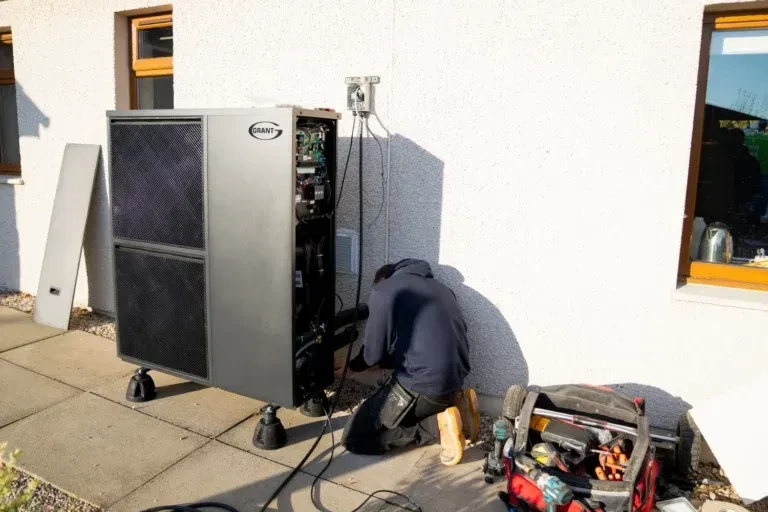
The outdoor unit, hot water cylinder and other components can be substantial, so installers need to know how equipment will reach its intended location.
Before installation day, consider whether there is a clear route from the parking area to the property and then into the rooms where work will take place.
The team may need access to:
- The front or rear entrance
- Side passages
- Driveways
- Gardens
- Utility rooms
- Boiler cupboards
- Cylinder cupboards
- Loft or storage areas where relevant
- Electrical equipment
- Existing heating controls
A clear route reduces unnecessary handling and allows the installation team to concentrate on the work itself.
Does parking need to be arranged before installation?
It can help considerably.
Heat pump installations may involve equipment, tools, pipework and other materials that need to be transported close to the property.
If parking directly outside the home is restricted, let the installer know before the installation date.
This is especially important for properties where:
- Parking is on a public road
- A shared driveway is used
- Access is narrow
- Parking permits apply
- There are gates or height restrictions
- The property is some distance from the road
An air source heat pump installer Elgin homeowners choose should be able to advise what access they need for the particular installation.
If temporary parking arrangements are required, sorting these out early can prevent avoidable disruption.
What should you clear inside the property?
Indoor working areas should be reasonably clear before the installers arrive.
The amount of space required will depend on where the heat pump system components are being installed.
You may need to move:
- Furniture
- Boxes
- Storage items
- Decorative objects
- Floor-standing appliances
- Items stored around the boiler or cylinder
There is no need to empty the entire house.
Focus on the rooms and routes that the installers have identified as part of the project.
For example, if the hot water cylinder is being replaced in a utility room, make sure there is sufficient space around the cylinder location for the team to work safely.
How can you protect floors and furniture?
Installation work can involve carrying equipment through the property, drilling, cutting pipework and moving tools.
Discuss floor and surface protection with the installer before the work begins.
You can also help by:
- Moving fragile items away from working areas
- Clearing narrow passageways
- Protecting particularly delicate belongings
- Keeping valuable objects away from installation zones
- Providing access to relevant rooms
Professional installers will normally take reasonable precautions around working areas, but homeowners should still identify anything particularly vulnerable before work starts.
If you are preparing for an air source heat pump fitter Elgin installation, Plumbing & Renewables can explain which areas of your property will need access and what preparation may be useful before the team arrives.
Which option best describes your home?
It just takes 2 minutes
And then you can book a free consultation
What happens if the outdoor unit needs to go through the house?
This depends entirely on the property.
Some homes have easy rear or side access, while others have gardens surrounded by walls, narrow passages or extensions that make equipment movement more complicated.
If equipment has to pass through the house, the installer may need a clear route through several rooms.
Measure or discuss restricted areas such as:
- Doorways
- Gates
- Hallways
- Staircases
- Side passages
- Garden entrances
Do not assume that an item will fit simply because there appears to be enough space outdoors.
A pre-installation assessment should identify significant access challenges wherever possible.
Why is the outdoor unit location important?
The location of the outdoor unit affects both installation and ongoing maintenance.
It needs to be positioned according to the system design and manufacturer requirements, while also allowing suitable access for servicing.
The installer may need to consider:
- Available space
- Access for maintenance
- Pipework routes
- Electrical connections
- Drainage
- The prepared base
- Surrounding obstructions
If you have concerns about the proposed location, raise them before installation day.
Changing the location after work has started could potentially affect the installation scope and cost.
What indoor areas need to remain accessible?
The exact areas depend on the proposed system.
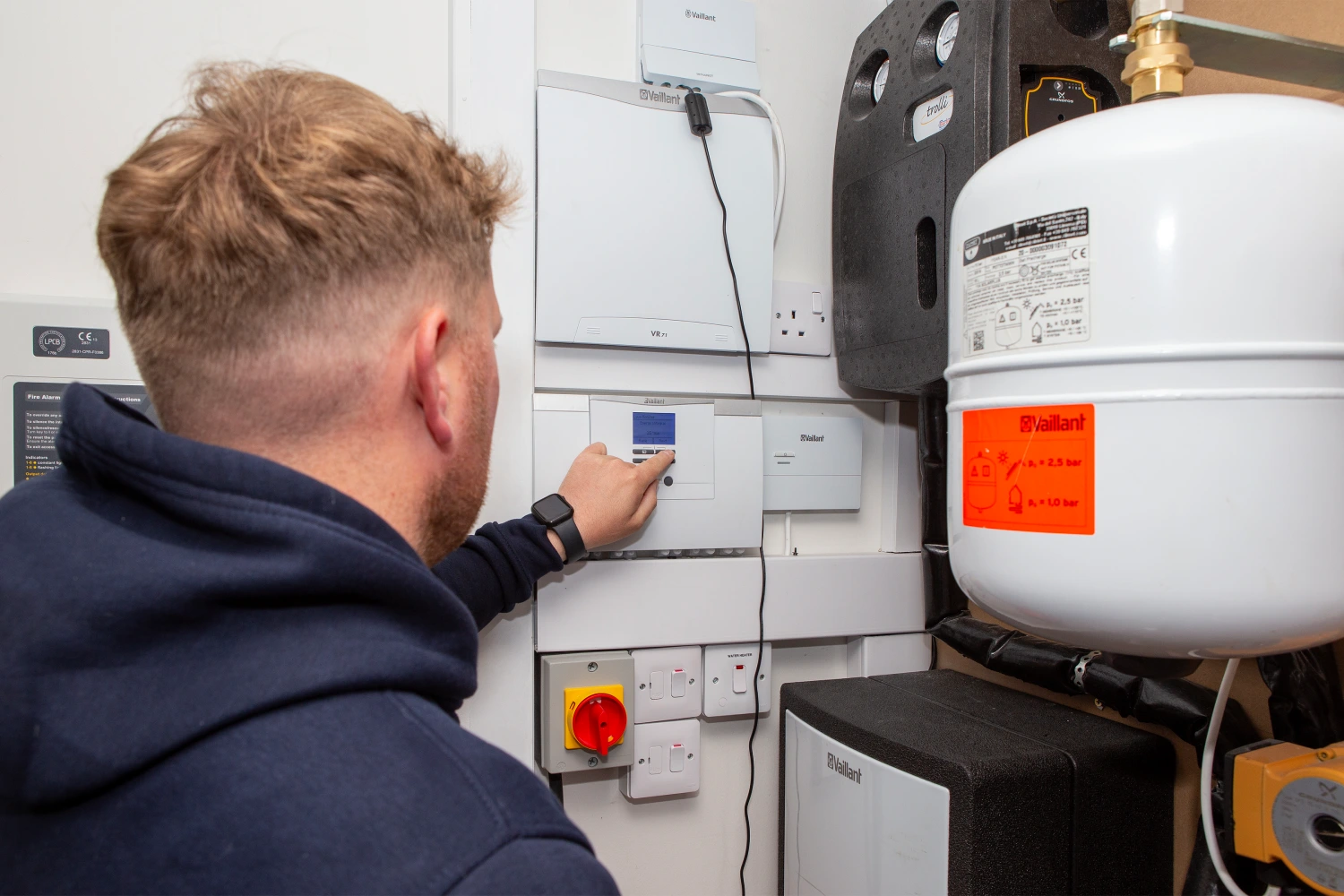
Common locations include the space around the existing boiler, hot water cylinder, heating controls and relevant pipework.
The installer may also need access to radiators if they are being replaced or modified.
Before the installation begins, ask the team which rooms they expect to enter.
A simple list can help you prepare without unnecessarily disrupting the rest of the property.
| Area | Why access may be needed |
| Boiler location | Existing equipment may be disconnected or removed |
| Hot water cylinder area | New cylinder or connections may be installed |
| Utility room | May house system components |
| Radiators | May require assessment or replacement |
| Hallways | Equipment and materials may need to pass through |
| Electrical equipment | Connections may need to be completed |
| Outdoor area | Heat pump unit and associated work |
Should children and pets be kept away from the work area?
Yes.
Installation involves tools, equipment, electrical work and materials that should not be interfered with.
Keeping children and pets away from active work areas helps the installers work safely and reduces the risk of accidents.
If you have a dog that normally uses the garden, for example, consider whether it needs to remain indoors or in another secure area while the outdoor work is taking place.
This is particularly useful when gates need to remain open for equipment movement.
What about existing heating and hot water?
Homeowners should expect some disruption during installation.
The existing heating system may need to be switched off while equipment is disconnected, altered or replaced.
Ask the installer:
- When will the heating be unavailable?
- Will hot water be affected?
- How long is the expected interruption?
- Are there any particularly important times when access is needed?
This allows you to plan around the work.
If the installation is expected to take more than one day, ask what temporary arrangements may be appropriate.
What information should you give the installer beforehand?
Homeowners should mention anything that could affect access or working conditions.
For example:
- Restricted parking
- Narrow access routes
- Locked gates
- Shared access
- Steps or steep paths
- Limited indoor space
- Vulnerable flooring
- Pets
- Particular access restrictions
- Planned building work
The more information the installer has before arriving, the easier it is to prepare appropriately.
A good air source heat pump installer Elgin homeowners use should be able to discuss these practical matters during the planning stage.
A typical Elgin property example
Consider a semi-detached property with a narrow side passage and a rear garden.
The planned heat pump position is at the back of the property, but the outdoor unit cannot be moved through the side passage without first checking the available width.
During the pre-installation discussion, the homeowner points out the restricted access. The installer reviews the route and confirms how the equipment can be moved safely.
The homeowner then clears the hallway and utility room, while keeping the driveway available for the installation team.
When installation day arrives, there are fewer unexpected obstacles and the team can begin the planned work without needing to reorganise the property.
What should you do the day before installation?
A simple checklist can make preparation easier.
Before the installers arrive:
- Confirm parking arrangements.
- Unlock or arrange access through relevant gates.
- Clear the agreed indoor work areas.
- Remove fragile items from installation routes.
- Keep children and pets away from planned work areas.
- Make sure the installers can reach the existing heating equipment.
- Check whether heating or hot water will be unavailable.
- Keep your quotation and relevant documents available.
- Tell the installer about any last-minute access changes.
You do not need to manage the installation yourself. The purpose of preparation is simply to make the property ready for the agreed work.
If you are arranging an air source heat pump fitter Elgin homeowners can rely on, speak to Plumbing & Renewables about the installation process, access requirements and preparation needed for your property.
Final thoughts
Preparing your home for a heat pump installation does not have to be complicated. The most useful steps are usually practical ones: make access routes clear, arrange suitable parking, prepare the agreed indoor working areas and tell the installer about any restrictions in advance.
For homeowners planning air source heat pump installation Elgin projects, early communication can make the installation day more organised and reduce the chance of avoidable delays.
Plumbing & Renewables can help you understand what preparation your particular property requires before the installation begins. With the access, working areas and equipment locations properly planned, homeowners can approach installation day with a much clearer idea of what to expect.
Related articles

Which option best describes your home?
At a glance
For homeowners, preparing these areas in advance can help avoid delays and make installation day less disruptive. This is particularly useful when equipment needs to be moved through the house, work is required around existing heating systems or the outdoor unit has to be positioned in a restricted area.
If you are arranging work with an air source heat pump fitter Elgin homeowners can benefit from planning access and working areas before installation begins.
If you are unsure what needs to be prepared before your installation, contact Plumbing & Renewables. Our team can explain the practical requirements for your property before the work is scheduled.
What access does a heat pump installation team need?
The access requirements depend on the property, equipment and installation design.
The outdoor unit, hot water cylinder and other components can be substantial, so installers need to know how equipment will reach its intended location.
Before installation day, consider whether there is a clear route from the parking area to the property and then into the rooms where work will take place.
The team may need access to:
- The front or rear entrance
- Side passages
- Driveways
- Gardens
- Utility rooms
- Boiler cupboards
- Cylinder cupboards
- Loft or storage areas where relevant
- Electrical equipment
- Existing heating controls
A clear route reduces unnecessary handling and allows the installation team to concentrate on the work itself.
Does parking need to be arranged before installation?
It can help considerably.
Heat pump installations may involve equipment, tools, pipework and other materials that need to be transported close to the property.
If parking directly outside the home is restricted, let the installer know before the installation date.
This is especially important for properties where:
- Parking is on a public road
- A shared driveway is used
- Access is narrow
- Parking permits apply
- There are gates or height restrictions
- The property is some distance from the road
An air source heat pump installer Elgin homeowners choose should be able to advise what access they need for the particular installation.
If temporary parking arrangements are required, sorting these out early can prevent avoidable disruption.
What should you clear inside the property?
Indoor working areas should be reasonably clear before the installers arrive.
The amount of space required will depend on where the heat pump system components are being installed.
You may need to move:
- Furniture
- Boxes
- Storage items
- Decorative objects
- Floor-standing appliances
- Items stored around the boiler or cylinder
There is no need to empty the entire house.
Focus on the rooms and routes that the installers have identified as part of the project.
For example, if the hot water cylinder is being replaced in a utility room, make sure there is sufficient space around the cylinder location for the team to work safely.
How can you protect floors and furniture?
Installation work can involve carrying equipment through the property, drilling, cutting pipework and moving tools.
Discuss floor and surface protection with the installer before the work begins.
You can also help by:
- Moving fragile items away from working areas
- Clearing narrow passageways
- Protecting particularly delicate belongings
- Keeping valuable objects away from installation zones
- Providing access to relevant rooms
Professional installers will normally take reasonable precautions around working areas, but homeowners should still identify anything particularly vulnerable before work starts.
If you are preparing for an air source heat pump fitter Elgin installation, Plumbing & Renewables can explain which areas of your property will need access and what preparation may be useful before the team arrives.
Which option best describes your home?
It just takes 2 minutes
And then you can book a free consultation
What happens if the outdoor unit needs to go through the house?
This depends entirely on the property.
Some homes have easy rear or side access, while others have gardens surrounded by walls, narrow passages or extensions that make equipment movement more complicated.
If equipment has to pass through the house, the installer may need a clear route through several rooms.
Measure or discuss restricted areas such as:
- Doorways
- Gates
- Hallways
- Staircases
- Side passages
- Garden entrances
Do not assume that an item will fit simply because there appears to be enough space outdoors.
A pre-installation assessment should identify significant access challenges wherever possible.
Why is the outdoor unit location important?
The location of the outdoor unit affects both installation and ongoing maintenance.
It needs to be positioned according to the system design and manufacturer requirements, while also allowing suitable access for servicing.
The installer may need to consider:
- Available space
- Access for maintenance
- Pipework routes
- Electrical connections
- Drainage
- The prepared base
- Surrounding obstructions
If you have concerns about the proposed location, raise them before installation day.
Changing the location after work has started could potentially affect the installation scope and cost.
What indoor areas need to remain accessible?
The exact areas depend on the proposed system.
Common locations include the space around the existing boiler, hot water cylinder, heating controls and relevant pipework.
The installer may also need access to radiators if they are being replaced or modified.
Before the installation begins, ask the team which rooms they expect to enter.
A simple list can help you prepare without unnecessarily disrupting the rest of the property.
| Area | Why access may be needed |
| Boiler location | Existing equipment may be disconnected or removed |
| Hot water cylinder area | New cylinder or connections may be installed |
| Utility room | May house system components |
| Radiators | May require assessment or replacement |
| Hallways | Equipment and materials may need to pass through |
| Electrical equipment | Connections may need to be completed |
| Outdoor area | Heat pump unit and associated work |
Should children and pets be kept away from the work area?
Yes.
Installation involves tools, equipment, electrical work and materials that should not be interfered with.
Keeping children and pets away from active work areas helps the installers work safely and reduces the risk of accidents.
If you have a dog that normally uses the garden, for example, consider whether it needs to remain indoors or in another secure area while the outdoor work is taking place.
This is particularly useful when gates need to remain open for equipment movement.
What about existing heating and hot water?
Homeowners should expect some disruption during installation.
The existing heating system may need to be switched off while equipment is disconnected, altered or replaced.
Ask the installer:
- When will the heating be unavailable?
- Will hot water be affected?
- How long is the expected interruption?
- Are there any particularly important times when access is needed?
This allows you to plan around the work.
If the installation is expected to take more than one day, ask what temporary arrangements may be appropriate.
What information should you give the installer beforehand?
Homeowners should mention anything that could affect access or working conditions.
For example:
- Restricted parking
- Narrow access routes
- Locked gates
- Shared access
- Steps or steep paths
- Limited indoor space
- Vulnerable flooring
- Pets
- Particular access restrictions
- Planned building work
The more information the installer has before arriving, the easier it is to prepare appropriately.
A good air source heat pump installer Elgin homeowners use should be able to discuss these practical matters during the planning stage.
A typical Elgin property example
Consider a semi-detached property with a narrow side passage and a rear garden.
The planned heat pump position is at the back of the property, but the outdoor unit cannot be moved through the side passage without first checking the available width.
During the pre-installation discussion, the homeowner points out the restricted access. The installer reviews the route and confirms how the equipment can be moved safely.
The homeowner then clears the hallway and utility room, while keeping the driveway available for the installation team.
When installation day arrives, there are fewer unexpected obstacles and the team can begin the planned work without needing to reorganise the property.
What should you do the day before installation?
A simple checklist can make preparation easier.
Before the installers arrive:
- Confirm parking arrangements.
- Unlock or arrange access through relevant gates.
- Clear the agreed indoor work areas.
- Remove fragile items from installation routes.
- Keep children and pets away from planned work areas.
- Make sure the installers can reach the existing heating equipment.
- Check whether heating or hot water will be unavailable.
- Keep your quotation and relevant documents available.
- Tell the installer about any last-minute access changes.
You do not need to manage the installation yourself. The purpose of preparation is simply to make the property ready for the agreed work.
If you are arranging an air source heat pump fitter Elgin homeowners can rely on, speak to Plumbing & Renewables about the installation process, access requirements and preparation needed for your property.
Final thoughts
Preparing your home for a heat pump installation does not have to be complicated. The most useful steps are usually practical ones: make access routes clear, arrange suitable parking, prepare the agreed indoor working areas and tell the installer about any restrictions in advance.
For homeowners planning air source heat pump installation Elgin projects, early communication can make the installation day more organised and reduce the chance of avoidable delays.
Plumbing & Renewables can help you understand what preparation your particular property requires before the installation begins. With the access, working areas and equipment locations properly planned, homeowners can approach installation day with a much clearer idea of what to expect.