

Why Proper Heat Pump Design Affects Running Costs
When people discuss heat pump efficiency, the conversation often focuses on the equipment itself. However, the real factor that determines long-term running costs is not just the unit – it is the overall system design.

Why you can trust our content
We know the plumbing and renewable energy industry can feel overwhelming, especially with conflicting advice and outdated information online. That’s why we base everything we do on clarity, expertise, and trusted sources:


At a glance
A well-designed heating system can operate efficiently for many years, delivering stable temperatures and predictable energy bills. In contrast, a poorly designed system may still function, but it can consume more electricity and struggle to maintain comfort levels.
For homeowners in Elgin considering renewable heating, understanding how system design affects performance is essential before installation begins.
If you are exploring renewable heating for your home, speaking with an experienced air source heat pump installer elgin can help ensure the system is designed correctly from the start.
What Does Heat Pump System Design Actually Mean?
Heat pump design refers to the planning process that takes place before installation.
Instead of simply selecting a heating unit and fitting it to the property, installers must assess how heat moves through the home and how the heating system will deliver warmth efficiently.
This process typically includes:
- calculating the property’s heat loss
- selecting the correct heat pump size
- assessing radiator or underfloor heating requirements
- designing pipework and flow temperatures
- configuring heating controls
Each of these elements influences how efficiently the system operates throughout the year.
Why Is Correct Sizing So Important?
Heat pumps must be carefully matched to the heating demand of the property.
If the unit is too small, it may struggle to maintain comfortable temperatures during colder weather. If it is oversized, the system may cycle on and off more frequently, which can reduce efficiency.
Correct sizing allows the heat pump to run steadily at lower temperatures. This is where heat pumps perform best.
Professional installers calculate the required system size using detailed heat loss calculations rather than rough estimates.
How Does Heat Loss Affect Running Costs?
Heat loss describes how quickly warmth escapes from a property through walls, windows, roofs and floors.
Older homes or properties with limited insulation may lose heat more quickly than modern buildings.
If heat loss calculations are inaccurate, the heating system may be incorrectly sized. This can result in:
- higher electricity usage
- inconsistent indoor temperatures
- reduced system efficiency
An experienced mcs certified ashp installer will typically perform a full heat loss survey before recommending a system.
Do Radiators Need to Be Replaced?
This is one of the most common questions homeowners ask before installing a heat pump.
In many cases, existing radiators can still be used. However, heat pumps operate at lower water temperatures compared with traditional boilers.
Because of this, some radiators may need to be replaced with larger models to deliver the same amount of heat.
During system design, installers assess whether radiators can deliver enough heat at lower temperatures. If they cannot, upgrades may be recommended to ensure efficient operation.
What Happens If a System Is Poorly Designed?
A heat pump that is installed without proper planning may still function, but it often performs less efficiently.
Common problems associated with poor system design include:
- higher electricity bills
- rooms heating unevenly
- the system running constantly
- difficulty reaching desired temperatures
These issues are rarely caused by the heat pump itself. Instead, they usually result from incorrect system design or installation decisions.
If you would like advice about renewable heating systems, the team at Plumbing & Renewables can assess your property and provide guidance based on proper system design.
Which option best describes your home?
It just takes 2 minutes
And then you can book a free consultation
A Typical Design Process for a Heat Pump Installation
A professional installation typically follows a structured planning process.
This usually includes several key stages.
1. Property assessment
Installers evaluate the layout, insulation levels and heating system currently in place.
2. Heat loss calculation
Each room is assessed individually to determine how much heat it requires.
3. System sizing
The appropriate heat pump model and capacity are selected based on the property’s heating demand.
4. Heating emitter evaluation
Radiators or underfloor heating systems are checked to ensure they can deliver sufficient heat.
5. Control configuration
Heating controls and thermostats are selected to optimise efficiency.
When these steps are completed properly, the resulting system tends to operate more efficiently and reliably.
Example Scenario – A Home in Elgin
Consider a typical three-bedroom detached home in Elgin that was originally heated by an oil boiler.
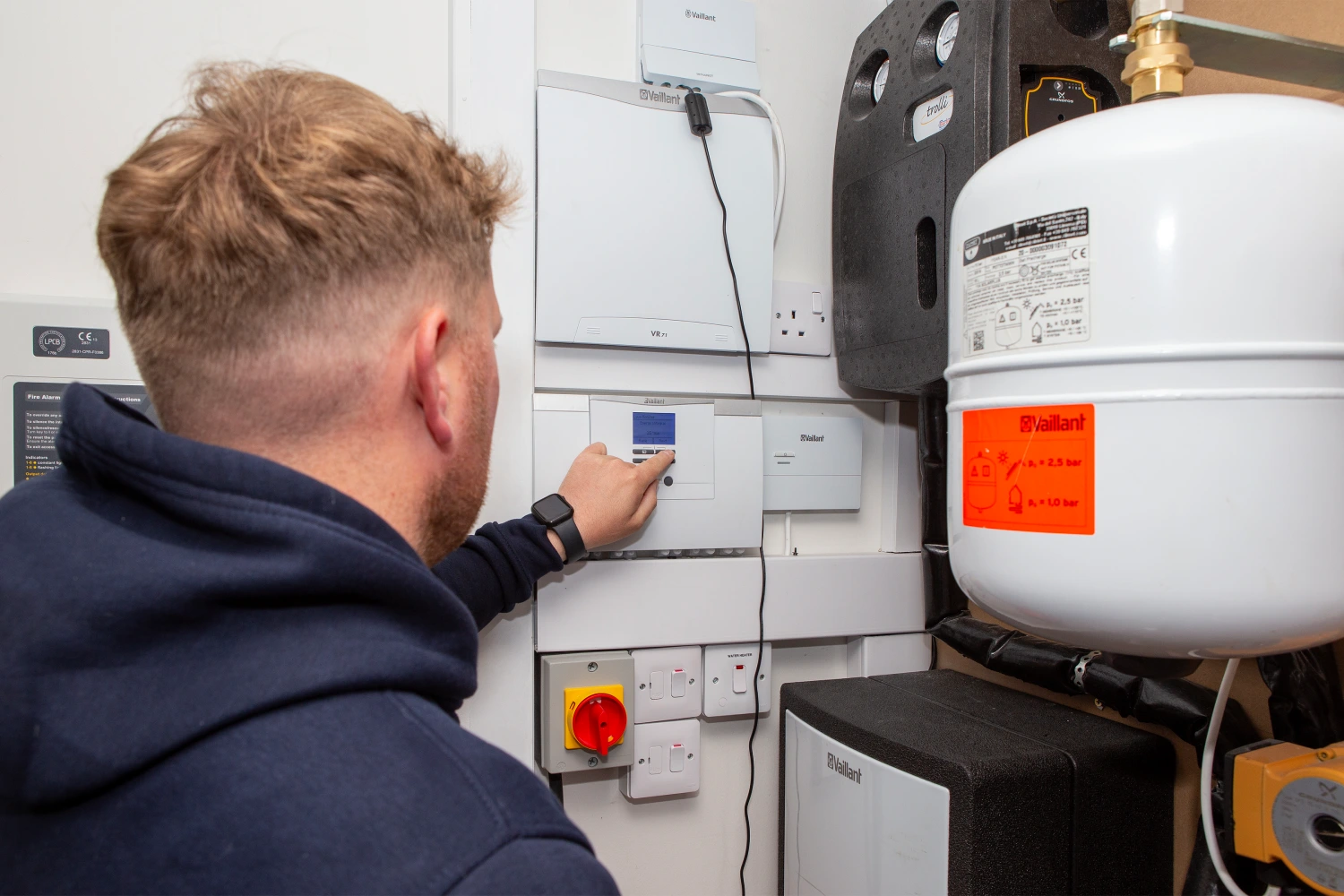
During the planning stage, installers performed a full heat loss survey and identified that several radiators were undersized for low-temperature heating.
By upgrading those radiators and adjusting the system design, the new heat pump was able to run at a lower flow temperature while still heating the property effectively.
The result was a system that maintained comfortable indoor temperatures while keeping electricity consumption predictable throughout the winter months.
This example highlights how design decisions made before installation can significantly influence long-term performance.
Can Good Design Reduce Running Costs?
Yes, proper system design can have a major impact on energy efficiency.
Well-designed heat pump systems often benefit from:
- lower flow temperatures
- steady system operation
- reduced electricity consumption
- improved comfort levels throughout the home
These factors combine to create a heating system that operates efficiently throughout the year.
Homeowners considering renewable heating often begin by contacting an air source heat pump installer elgin to understand how their property might perform with a new system.
How Can Homeowners Ensure Their System Is Designed Properly?
Choosing the right installer is one of the most important steps in the process.
Homeowners should look for professionals who:
- perform full heat loss calculations
- explain system design clearly
- provide transparent recommendations
- follow recognised installation standards
Working with a qualified mcs certified ashp installer helps ensure the installation meets industry guidelines and performs as expected.
Final Thoughts
Heat pumps are capable of delivering efficient and reliable heating, but their performance depends heavily on proper system design.
From heat loss calculations to radiator sizing, the decisions made during the planning stage determine how efficiently the system will operate over the long term.
Homeowners in Elgin who take the time to work with experienced installers often benefit from better comfort levels and more predictable energy costs.
If you are considering renewable heating, you can speak to the Plumbing & Renewables team for expert guidance. An experienced air source heat pump installer elgin can assess your property and recommend a system designed for long-term performance.
Related articles

Which option best describes your home?
At a glance
A well-designed heating system can operate efficiently for many years, delivering stable temperatures and predictable energy bills. In contrast, a poorly designed system may still function, but it can consume more electricity and struggle to maintain comfort levels.
For homeowners in Elgin considering renewable heating, understanding how system design affects performance is essential before installation begins.
If you are exploring renewable heating for your home, speaking with an experienced air source heat pump installer elgin can help ensure the system is designed correctly from the start.
What Does Heat Pump System Design Actually Mean?
Heat pump design refers to the planning process that takes place before installation.
Instead of simply selecting a heating unit and fitting it to the property, installers must assess how heat moves through the home and how the heating system will deliver warmth efficiently.
This process typically includes:
- calculating the property’s heat loss
- selecting the correct heat pump size
- assessing radiator or underfloor heating requirements
- designing pipework and flow temperatures
- configuring heating controls
Each of these elements influences how efficiently the system operates throughout the year.
Why Is Correct Sizing So Important?
Heat pumps must be carefully matched to the heating demand of the property.
If the unit is too small, it may struggle to maintain comfortable temperatures during colder weather. If it is oversized, the system may cycle on and off more frequently, which can reduce efficiency.
Correct sizing allows the heat pump to run steadily at lower temperatures. This is where heat pumps perform best.
Professional installers calculate the required system size using detailed heat loss calculations rather than rough estimates.
How Does Heat Loss Affect Running Costs?
Heat loss describes how quickly warmth escapes from a property through walls, windows, roofs and floors.
Older homes or properties with limited insulation may lose heat more quickly than modern buildings.
If heat loss calculations are inaccurate, the heating system may be incorrectly sized. This can result in:
- higher electricity usage
- inconsistent indoor temperatures
- reduced system efficiency
An experienced mcs certified ashp installer will typically perform a full heat loss survey before recommending a system.
Do Radiators Need to Be Replaced?
This is one of the most common questions homeowners ask before installing a heat pump.
In many cases, existing radiators can still be used. However, heat pumps operate at lower water temperatures compared with traditional boilers.
Because of this, some radiators may need to be replaced with larger models to deliver the same amount of heat.
During system design, installers assess whether radiators can deliver enough heat at lower temperatures. If they cannot, upgrades may be recommended to ensure efficient operation.
What Happens If a System Is Poorly Designed?
A heat pump that is installed without proper planning may still function, but it often performs less efficiently.
Common problems associated with poor system design include:
- higher electricity bills
- rooms heating unevenly
- the system running constantly
- difficulty reaching desired temperatures
These issues are rarely caused by the heat pump itself. Instead, they usually result from incorrect system design or installation decisions.
If you would like advice about renewable heating systems, the team at Plumbing & Renewables can assess your property and provide guidance based on proper system design.
Which option best describes your home?
It just takes 2 minutes
And then you can book a free consultation
A Typical Design Process for a Heat Pump Installation
A professional installation typically follows a structured planning process.
This usually includes several key stages.
1. Property assessment
Installers evaluate the layout, insulation levels and heating system currently in place.
2. Heat loss calculation
Each room is assessed individually to determine how much heat it requires.
3. System sizing
The appropriate heat pump model and capacity are selected based on the property’s heating demand.
4. Heating emitter evaluation
Radiators or underfloor heating systems are checked to ensure they can deliver sufficient heat.
5. Control configuration
Heating controls and thermostats are selected to optimise efficiency.
When these steps are completed properly, the resulting system tends to operate more efficiently and reliably.
Example Scenario – A Home in Elgin
Consider a typical three-bedroom detached home in Elgin that was originally heated by an oil boiler.
During the planning stage, installers performed a full heat loss survey and identified that several radiators were undersized for low-temperature heating.
By upgrading those radiators and adjusting the system design, the new heat pump was able to run at a lower flow temperature while still heating the property effectively.
The result was a system that maintained comfortable indoor temperatures while keeping electricity consumption predictable throughout the winter months.
This example highlights how design decisions made before installation can significantly influence long-term performance.
Can Good Design Reduce Running Costs?
Yes, proper system design can have a major impact on energy efficiency.
Well-designed heat pump systems often benefit from:
- lower flow temperatures
- steady system operation
- reduced electricity consumption
- improved comfort levels throughout the home
These factors combine to create a heating system that operates efficiently throughout the year.
Homeowners considering renewable heating often begin by contacting an air source heat pump installer elgin to understand how their property might perform with a new system.
How Can Homeowners Ensure Their System Is Designed Properly?
Choosing the right installer is one of the most important steps in the process.
Homeowners should look for professionals who:
- perform full heat loss calculations
- explain system design clearly
- provide transparent recommendations
- follow recognised installation standards
Working with a qualified mcs certified ashp installer helps ensure the installation meets industry guidelines and performs as expected.
Final Thoughts
Heat pumps are capable of delivering efficient and reliable heating, but their performance depends heavily on proper system design.
From heat loss calculations to radiator sizing, the decisions made during the planning stage determine how efficiently the system will operate over the long term.
Homeowners in Elgin who take the time to work with experienced installers often benefit from better comfort levels and more predictable energy costs.
If you are considering renewable heating, you can speak to the Plumbing & Renewables team for expert guidance. An experienced air source heat pump installer elgin can assess your property and recommend a system designed for long-term performance.