
Heat Pump Costs That Can Appear If Installation Prep Is Missed
A heat pump quotation can look straightforward until installation preparation reveals work that was not fully considered at the beginning.

Why you can trust our content
We know the plumbing and renewable energy industry can feel overwhelming, especially with conflicting advice and outdated information online. That’s why we base everything we do on clarity, expertise, and trusted sources:


At a glance
The equipment itself is only one part of the project. Property access, radiators, pipework, electrical requirements, hot water arrangements and the condition of existing heating components can all affect the final scope.
This does not necessarily mean an installer is trying to add unexpected charges. In many cases, additional work becomes apparent because a property cannot be assessed in sufficient detail from a basic enquiry alone.
Understanding what can affect the heat pump cost Elgin homeowners face can help you ask better questions before approving an installation.
If you are considering a heat pump and want to understand what preparation your property may require, Plumbing & Renewables can provide property-specific guidance before you commit to the work.
Why can preparation affect the final heat pump price?
Heat pump systems need to be designed around the property.
An installer may need to consider the building’s heat requirements, existing heating system, pipework, hot water demand, electrical supply and equipment locations.
If one of these areas has not been properly assessed, additional work may become apparent later.
Common examples include:
- Radiator upgrades
- Pipework alterations
- Electrical work
- Hot water cylinder changes
- Removal of existing equipment
- Difficult equipment access
- Additional mounting or base preparation
- Changes to heating controls
The more detailed the initial assessment, the easier it is to establish the likely project scope.
What happens if existing radiators are not suitable?
Radiators are an important part of the heating system.
Heat pumps generally operate at lower flow temperatures than many conventional boilers. Existing radiators therefore need to be assessed to determine whether they can provide the required heat output.
Some may be suitable.
Others may need to be replaced with larger or higher-output models.
If this has not been identified before the quotation is produced, radiator replacement could become an additional cost later.
A good survey should identify radiator requirements before installation day wherever possible.
Can pipework increase the installation cost?
Yes.
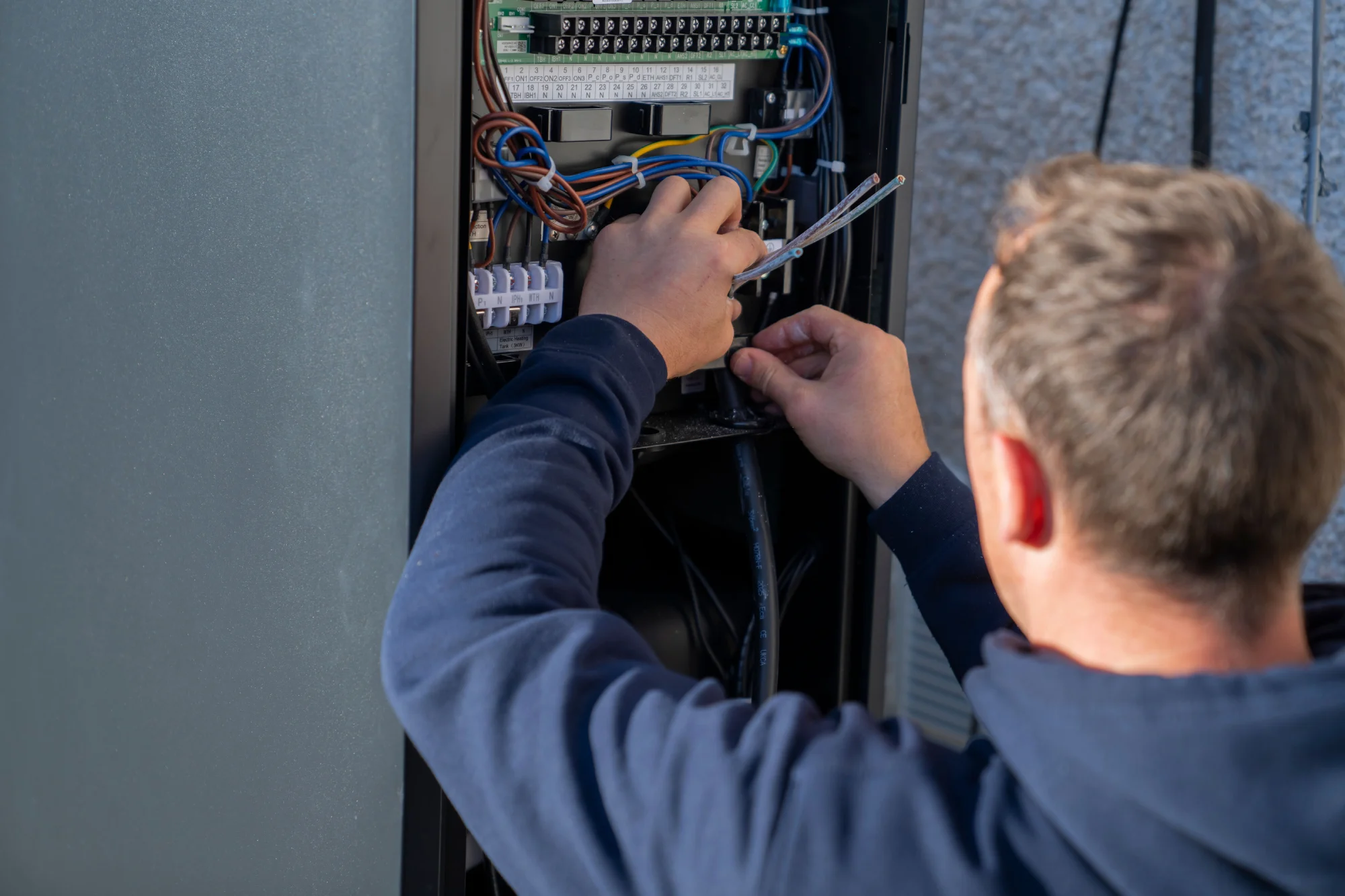
The existing heating pipework may not be suitable for the new system arrangement, or new pipework may need to be installed to connect the outdoor unit, indoor equipment and heating circuits.
The extent of work depends on the property.
A straightforward installation with accessible pipe routes may require relatively little alteration. A property with concealed, restricted or awkward pipe routes could require considerably more labour.
Ask the installer whether the quotation includes the pipework modifications they expect to be necessary.
Could electrical work affect the price?
A heat pump requires an appropriate electrical supply.
The installation team should assess the electrical requirements during the planning process and establish whether any additional work is necessary.
Potential requirements could include:
- New electrical connections
- Consumer unit considerations
- Cabling
- Isolation equipment
- Protection devices
- Changes to the existing electrical arrangement
The precise requirements depend on the heat pump and property.
If electrical work is expected, it should ideally be identified and included in the written scope before installation begins.
Which option best describes your home?
It just takes 2 minutes
And then you can book a free consultation
What about hot water preparation?
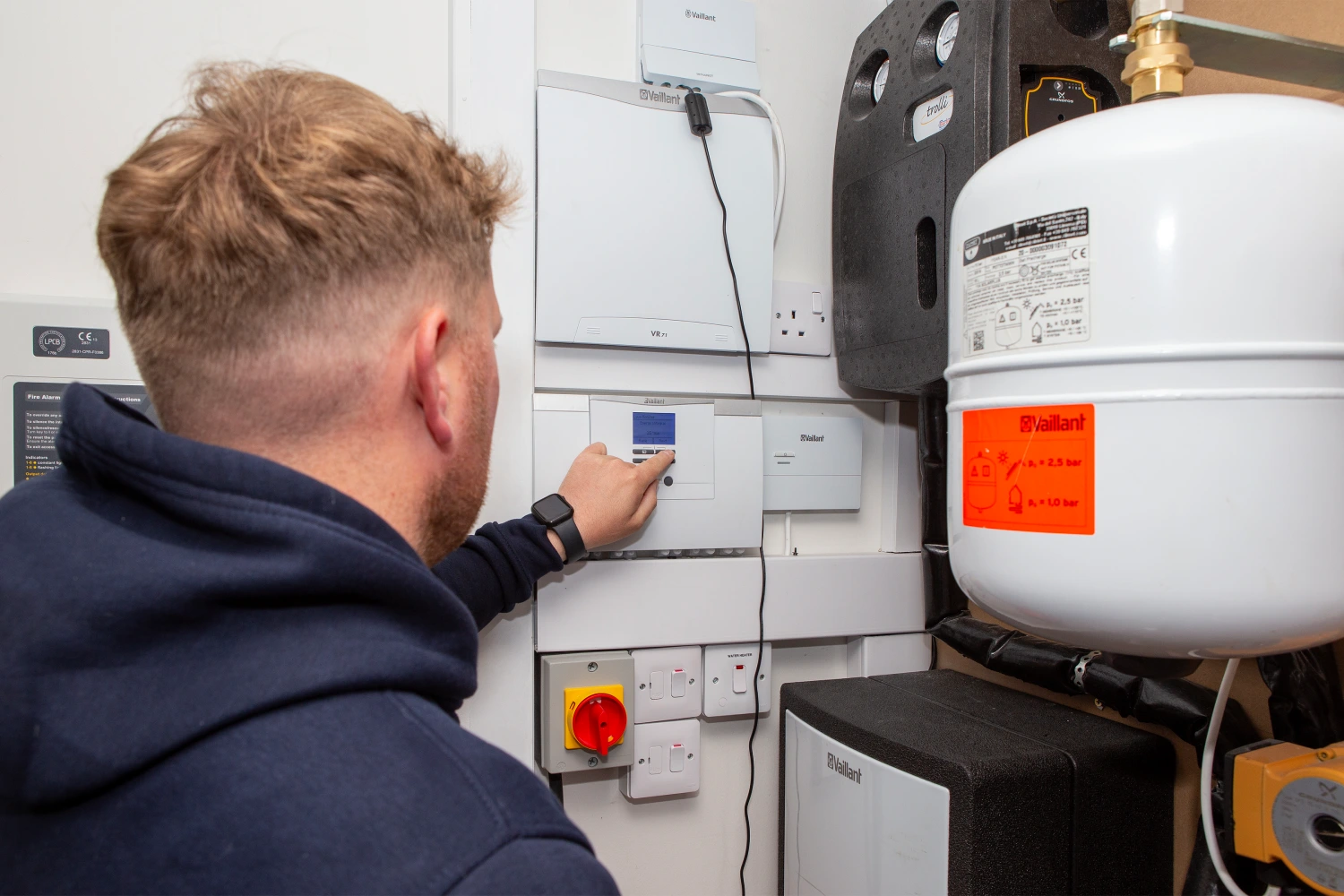
Many heat pump systems provide domestic hot water through a cylinder.
This means a property currently using a combination boiler may need a different hot water arrangement.
The installer may need to consider:
- Cylinder size
- Cylinder location
- Available cupboard space
- Pipework
- Hot water demand
- Existing storage arrangements
If there is no suitable location for the required equipment, additional work may be needed to prepare the property.
This is another reason why the cost for heat pump installation cannot be accurately judged from the outdoor unit alone.
Can access problems increase installation costs?
They can.
Equipment needs to reach the intended installation area, and restricted access can make the work more complicated.
Potential challenges include:
- Narrow side passages
- Restricted gates
- Long distances between parking and the property
- Steps
- Shared access
- Difficult garden access
- Limited indoor routes
An installer should consider access during the survey.
If significant access restrictions are discovered only after the quotation has been accepted, the installation process may need to be revised.
What happens if the outdoor unit needs a different base?
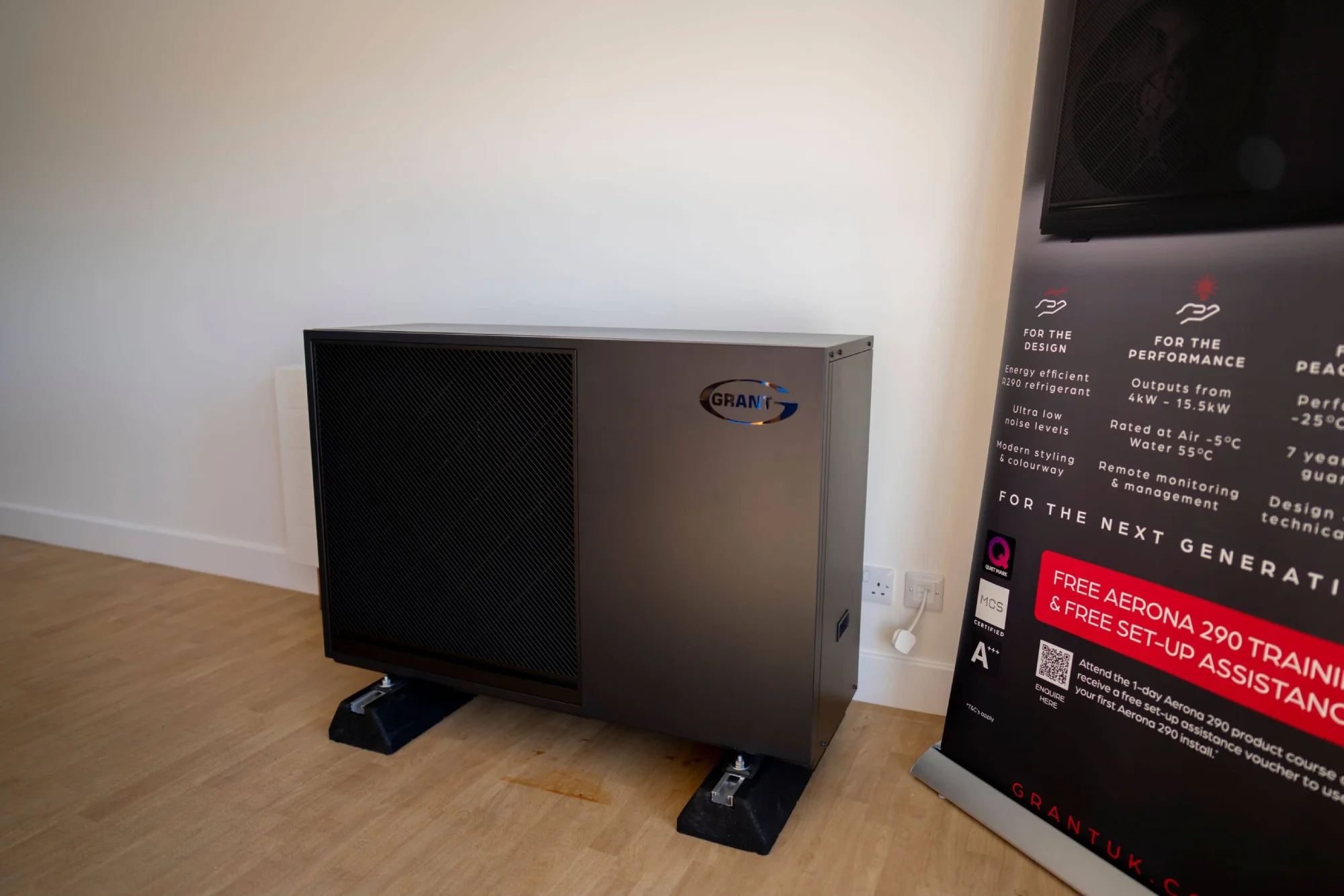
The outdoor unit requires an appropriate installation arrangement.
Depending on the project, this could involve a suitable base or mounting solution.
If the planned location does not provide the necessary support or requires additional preparation, there may be extra work involved.
The installer should discuss the proposed outdoor unit location and explain what preparation is included.
This is especially important if the homeowner has a preferred location that differs from the installer’s recommendation.
Does removing an old boiler add to the price?
It can, depending on what has been agreed.
If an existing boiler or heating equipment is being replaced, the quotation should state whether removal and disposal are included.
Do not assume that every quotation includes this automatically.
Ask:
- Is the existing boiler being removed?
- Is disposal included?
- Are redundant pipework or components being removed?
- Is making good included?
- Will any associated electrical work be required?
Clear answers can prevent confusion once installation begins.
How much can preparation affect the heat pump cost?
There is no universal additional amount.
The impact depends on what the property needs.
| Preparation issue | Why it may affect the project |
| Radiator upgrades | Additional equipment and labour |
| Pipework changes | More materials and installation time |
| Electrical work | May require additional components or labour |
| Hot water cylinder | Equipment and installation requirements |
| Access restrictions | Can increase handling and labour |
| Outdoor base | May require additional preparation |
| Boiler removal | Removal and disposal work |
| Controls | Additional equipment or configuration |
The important point is not to predict a specific surcharge. It is to identify potential preparation requirements before agreeing the final scope.
How can homeowners reduce the risk of unexpected costs?
The best approach is to ask for detail before accepting the quotation.
A useful checklist includes:
- Has the property been properly assessed?
- Have the radiators been checked?
- Has the pipework been considered?
- Are electrical requirements included?
- Is the hot water system included?
- Is equipment removal included?
- Is the outdoor base included?
- Are controls included?
- Are access requirements understood?
- Are exclusions clearly listed?
If something is not included, ask what it would cost if it becomes necessary.
If you want to understand your likely heat pump cost Elgin homeowners may face, Plumbing & Renewables can discuss the property requirements and clarify what should be considered within the installation scope.
Can a detailed survey prevent all additional costs?
It can reduce uncertainty, but no survey can guarantee that absolutely nothing unexpected will ever arise.
Existing buildings can contain concealed pipework, electrical issues or structural conditions that are not obvious during an initial inspection.
However, a thorough assessment should identify the major foreseeable requirements.
The goal is not to promise that a quotation can never change. It is to make sure any foreseeable work is properly considered and clearly documented.
A typical Elgin property example
Imagine a homeowner with an older property and a combination boiler.
The initial enquiry focuses mainly on replacing the boiler with a heat pump. During a more detailed assessment, the installer discovers that the existing radiators need reviewing, a hot water cylinder will be required and the preferred outdoor unit location has restricted access.
Rather than discovering these issues halfway through installation, they are included in the project discussion.
The homeowner can then compare the full scope and make a decision based on a more realistic understanding of the overall investment.
What should be written into your final quotation?
A good quotation should make the project understandable.
Ideally, it should identify the major equipment and work involved, along with relevant exclusions.
Look for information covering:
- Heat pump model
- System capacity
- Hot water equipment
- Radiators
- Controls
- Pipework
- Electrical work
- Installation labour
- Removal work
- Commissioning
- Warranty arrangements
- Aftercare
- Payment terms
- Exclusions
If an important part of the project is only discussed verbally, ask for it to be added to the written quotation.
Before approving a heat pump project, contact Plumbing & Renewables if you would like to discuss the proposed scope, preparation requirements and expected installation process.
Final thoughts
The cost for heat pump installation is influenced by much more than the price of the main equipment. The condition of your existing heating system, property access, electrical requirements, hot water arrangements and preparation work can all contribute to the overall project.
For homeowners assessing heat pump cost Elgin quotations, the safest approach is to understand the complete scope before work begins. A detailed assessment and written quotation can make it much easier to distinguish between a genuinely competitive price and a figure that simply leaves important work out.
Plumbing & Renewables can help homeowners understand the practical requirements of a heat pump installation and what needs to be considered before the final quotation is approved. Clear preparation at the start can make the entire project easier to plan and manage.
Related articles

Which option best describes your home?
At a glance
The equipment itself is only one part of the project. Property access, radiators, pipework, electrical requirements, hot water arrangements and the condition of existing heating components can all affect the final scope.
This does not necessarily mean an installer is trying to add unexpected charges. In many cases, additional work becomes apparent because a property cannot be assessed in sufficient detail from a basic enquiry alone.
Understanding what can affect the heat pump cost Elgin homeowners face can help you ask better questions before approving an installation.
If you are considering a heat pump and want to understand what preparation your property may require, Plumbing & Renewables can provide property-specific guidance before you commit to the work.
Why can preparation affect the final heat pump price?
Heat pump systems need to be designed around the property.
An installer may need to consider the building’s heat requirements, existing heating system, pipework, hot water demand, electrical supply and equipment locations.
If one of these areas has not been properly assessed, additional work may become apparent later.
Common examples include:
- Radiator upgrades
- Pipework alterations
- Electrical work
- Hot water cylinder changes
- Removal of existing equipment
- Difficult equipment access
- Additional mounting or base preparation
- Changes to heating controls
The more detailed the initial assessment, the easier it is to establish the likely project scope.
What happens if existing radiators are not suitable?
Radiators are an important part of the heating system.
Heat pumps generally operate at lower flow temperatures than many conventional boilers. Existing radiators therefore need to be assessed to determine whether they can provide the required heat output.
Some may be suitable.
Others may need to be replaced with larger or higher-output models.
If this has not been identified before the quotation is produced, radiator replacement could become an additional cost later.
A good survey should identify radiator requirements before installation day wherever possible.
Can pipework increase the installation cost?
Yes.
The existing heating pipework may not be suitable for the new system arrangement, or new pipework may need to be installed to connect the outdoor unit, indoor equipment and heating circuits.
The extent of work depends on the property.
A straightforward installation with accessible pipe routes may require relatively little alteration. A property with concealed, restricted or awkward pipe routes could require considerably more labour.
Ask the installer whether the quotation includes the pipework modifications they expect to be necessary.
Could electrical work affect the price?
A heat pump requires an appropriate electrical supply.
The installation team should assess the electrical requirements during the planning process and establish whether any additional work is necessary.
Potential requirements could include:
- New electrical connections
- Consumer unit considerations
- Cabling
- Isolation equipment
- Protection devices
- Changes to the existing electrical arrangement
The precise requirements depend on the heat pump and property.
If electrical work is expected, it should ideally be identified and included in the written scope before installation begins.
Which option best describes your home?
It just takes 2 minutes
And then you can book a free consultation
What about hot water preparation?
Many heat pump systems provide domestic hot water through a cylinder.
This means a property currently using a combination boiler may need a different hot water arrangement.
The installer may need to consider:
- Cylinder size
- Cylinder location
- Available cupboard space
- Pipework
- Hot water demand
- Existing storage arrangements
If there is no suitable location for the required equipment, additional work may be needed to prepare the property.
This is another reason why the cost for heat pump installation cannot be accurately judged from the outdoor unit alone.
Can access problems increase installation costs?
They can.
Equipment needs to reach the intended installation area, and restricted access can make the work more complicated.
Potential challenges include:
- Narrow side passages
- Restricted gates
- Long distances between parking and the property
- Steps
- Shared access
- Difficult garden access
- Limited indoor routes
An installer should consider access during the survey.
If significant access restrictions are discovered only after the quotation has been accepted, the installation process may need to be revised.
What happens if the outdoor unit needs a different base?
The outdoor unit requires an appropriate installation arrangement.
Depending on the project, this could involve a suitable base or mounting solution.
If the planned location does not provide the necessary support or requires additional preparation, there may be extra work involved.
The installer should discuss the proposed outdoor unit location and explain what preparation is included.
This is especially important if the homeowner has a preferred location that differs from the installer’s recommendation.
Does removing an old boiler add to the price?
It can, depending on what has been agreed.
If an existing boiler or heating equipment is being replaced, the quotation should state whether removal and disposal are included.
Do not assume that every quotation includes this automatically.
Ask:
- Is the existing boiler being removed?
- Is disposal included?
- Are redundant pipework or components being removed?
- Is making good included?
- Will any associated electrical work be required?
Clear answers can prevent confusion once installation begins.
How much can preparation affect the heat pump cost?
There is no universal additional amount.
The impact depends on what the property needs.
| Preparation issue | Why it may affect the project |
| Radiator upgrades | Additional equipment and labour |
| Pipework changes | More materials and installation time |
| Electrical work | May require additional components or labour |
| Hot water cylinder | Equipment and installation requirements |
| Access restrictions | Can increase handling and labour |
| Outdoor base | May require additional preparation |
| Boiler removal | Removal and disposal work |
| Controls | Additional equipment or configuration |
The important point is not to predict a specific surcharge. It is to identify potential preparation requirements before agreeing the final scope.
How can homeowners reduce the risk of unexpected costs?
The best approach is to ask for detail before accepting the quotation.
A useful checklist includes:
- Has the property been properly assessed?
- Have the radiators been checked?
- Has the pipework been considered?
- Are electrical requirements included?
- Is the hot water system included?
- Is equipment removal included?
- Is the outdoor base included?
- Are controls included?
- Are access requirements understood?
- Are exclusions clearly listed?
If something is not included, ask what it would cost if it becomes necessary.
If you want to understand your likely heat pump cost Elgin homeowners may face, Plumbing & Renewables can discuss the property requirements and clarify what should be considered within the installation scope.
Can a detailed survey prevent all additional costs?
It can reduce uncertainty, but no survey can guarantee that absolutely nothing unexpected will ever arise.
Existing buildings can contain concealed pipework, electrical issues or structural conditions that are not obvious during an initial inspection.
However, a thorough assessment should identify the major foreseeable requirements.
The goal is not to promise that a quotation can never change. It is to make sure any foreseeable work is properly considered and clearly documented.
A typical Elgin property example
Imagine a homeowner with an older property and a combination boiler.
The initial enquiry focuses mainly on replacing the boiler with a heat pump. During a more detailed assessment, the installer discovers that the existing radiators need reviewing, a hot water cylinder will be required and the preferred outdoor unit location has restricted access.
Rather than discovering these issues halfway through installation, they are included in the project discussion.
The homeowner can then compare the full scope and make a decision based on a more realistic understanding of the overall investment.
What should be written into your final quotation?
A good quotation should make the project understandable.
Ideally, it should identify the major equipment and work involved, along with relevant exclusions.
Look for information covering:
- Heat pump model
- System capacity
- Hot water equipment
- Radiators
- Controls
- Pipework
- Electrical work
- Installation labour
- Removal work
- Commissioning
- Warranty arrangements
- Aftercare
- Payment terms
- Exclusions
If an important part of the project is only discussed verbally, ask for it to be added to the written quotation.
Before approving a heat pump project, contact Plumbing & Renewables if you would like to discuss the proposed scope, preparation requirements and expected installation process.
Final thoughts
The cost for heat pump installation is influenced by much more than the price of the main equipment. The condition of your existing heating system, property access, electrical requirements, hot water arrangements and preparation work can all contribute to the overall project.
For homeowners assessing heat pump cost Elgin quotations, the safest approach is to understand the complete scope before work begins. A detailed assessment and written quotation can make it much easier to distinguish between a genuinely competitive price and a figure that simply leaves important work out.
Plumbing & Renewables can help homeowners understand the practical requirements of a heat pump installation and what needs to be considered before the final quotation is approved. Clear preparation at the start can make the entire project easier to plan and manage.