
Replacing an Oil Boiler With an ASHP in Elgin: What Changes Before Installation?
Replacing an oil boiler with an air source heat pump is not simply a case of removing one heating appliance and putting another in its place. An oil boiler typically heats water to a higher temperature in short, powerful bursts, while a heat pump is designed to provide steady heat at lower flow temperatures. That…

Why you can trust our content
We know the plumbing and renewable energy industry can feel overwhelming, especially with conflicting advice and outdated information online. That’s why we base everything we do on clarity, expertise, and trusted sources:


At a glance
Replacing an oil boiler with an air source heat pump is not simply a case of removing one heating appliance and putting another in its place. An oil boiler typically heats water to a higher temperature in short, powerful bursts, while a heat pump is designed to provide steady heat at lower flow temperatures.
That difference affects how the heating system is designed, how the property is assessed and what preparation may be needed before installation.
For homeowners considering an oil-to-heat-pump conversion, understanding these changes early can make the process much clearer. A proper heat pump installation elgin project should begin with the property, not simply the choice of heat pump model.
If you are considering moving away from oil heating, speak to the Plumbing & Renewables team about the suitability of your property and what preparation may be required.
Why is replacing an oil boiler different from replacing a boiler with another boiler?
An oil boiler and an air source heat pump operate in very different ways.
An oil boiler can produce relatively high water temperatures quickly. Many existing radiator systems have therefore been designed around these higher temperatures. A heat pump generally works most efficiently when producing lower-temperature water over longer periods.
This means an existing heating system may need to be assessed rather than assumed to be suitable without changes.
Before installation, an installer may need to consider:
- The heat loss of each heated room
- Existing radiator sizes and outputs
- Pipework and circulation
- Insulation levels
- Hot water requirements
- Heating controls
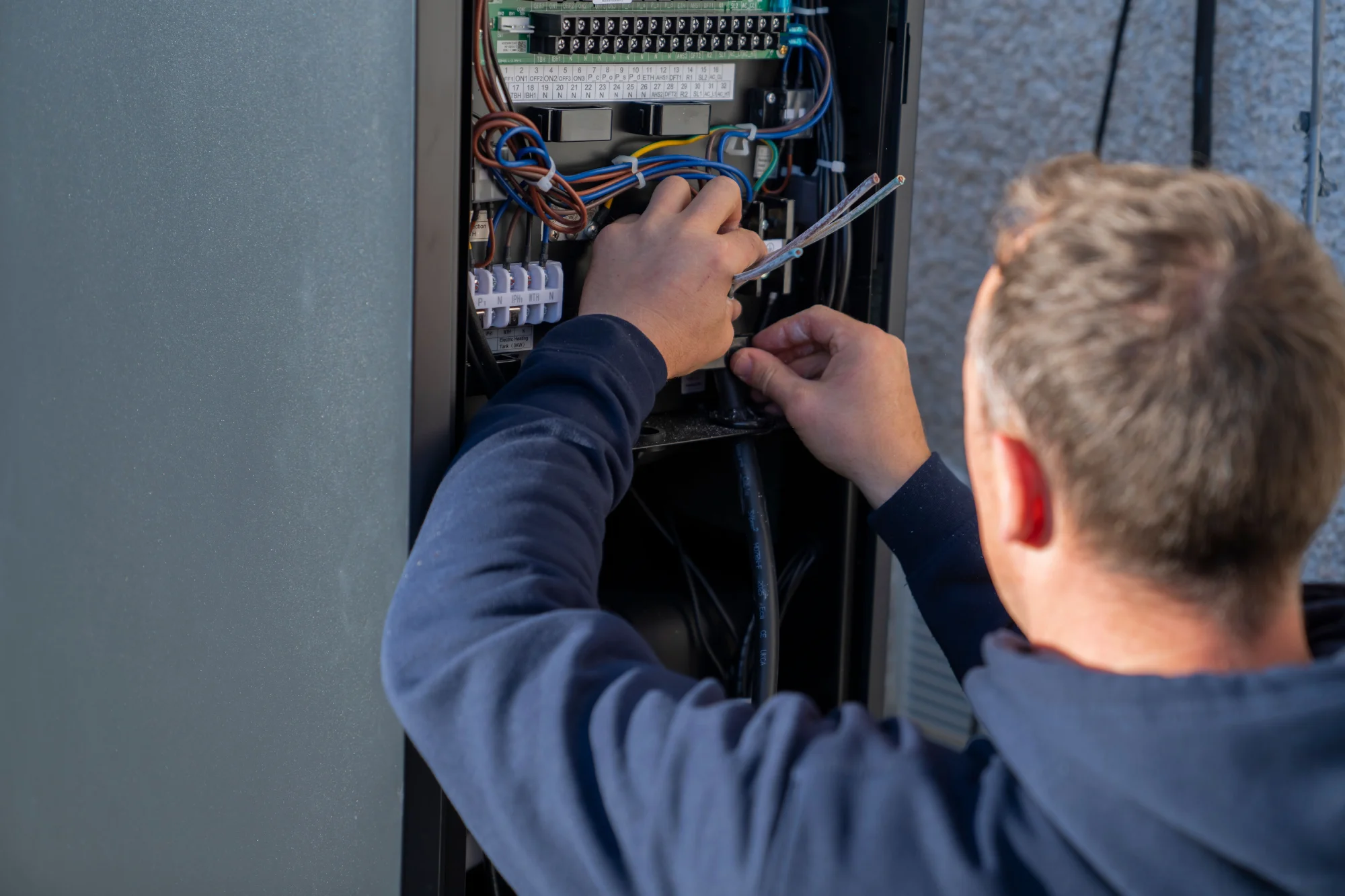
- The location of the outdoor unit
- Electrical requirements
- Available space around existing equipment
The aim is not necessarily to replace everything. Good design identifies what can remain and what genuinely needs changing.
What happens during the planning stage?
The first stage should be a detailed assessment of the property.
Heat loss is particularly important because the new system needs to be sized around the actual heating requirement. A heat pump that is too small may struggle to maintain comfortable temperatures during colder periods, while an unnecessarily large system can increase costs and affect efficiency.
The installer should also look at how the home is currently heated. An older property may have a mixture of radiator sizes, different pipe runs and rooms that have been altered over time.
A proper assessment gives the installer the information needed to design the system rather than relying on the output of the existing oil boiler.
Do your radiators need to be replaced?
Not necessarily.
Whether radiators need changing depends on their ability to provide sufficient heat at the lower water temperatures expected from a heat pump.
A large radiator may already have enough output. In another room, an older or smaller radiator may not provide enough heat once the system operates at a lower flow temperature.
An installer can assess radiator output as part of the system design. Where changes are required, this could involve replacing only selected radiators rather than every radiator throughout the property.
This is one reason a detailed survey is more useful than making assumptions based solely on the age of the heating system.
What about the existing pipework?
Existing pipework does not automatically have to be replaced.
However, the installer needs to establish whether the pipework can provide adequate flow around the new system. Pipe diameter, system design, circulation and the condition of the existing installation can all influence performance.
An oil boiler replacement may therefore involve some alterations to pipework, but the extent will depend on the property.
A good survey should identify these requirements before the final specification is agreed.
How does the hot water system change?
Hot water is another area where an oil-to-ASHP conversion can differ from a straightforward boiler replacement.
Depending on the existing setup, the property may need a suitable hot water cylinder or modifications to the current cylinder arrangement. The system also needs appropriate controls so that heating and hot water can be managed efficiently.
Homeowners should therefore ask exactly how domestic hot water will be produced as part of the proposed design.
This should be included in the quotation rather than treated as an afterthought.
If you are unsure whether your current radiators, pipework or hot water system are suitable, our team can assess the existing setup and explain what would need to change before ashp installation elgin.
Which option best describes your home?
It just takes 2 minutes
And then you can book a free consultation
Where does the outdoor heat pump unit go?
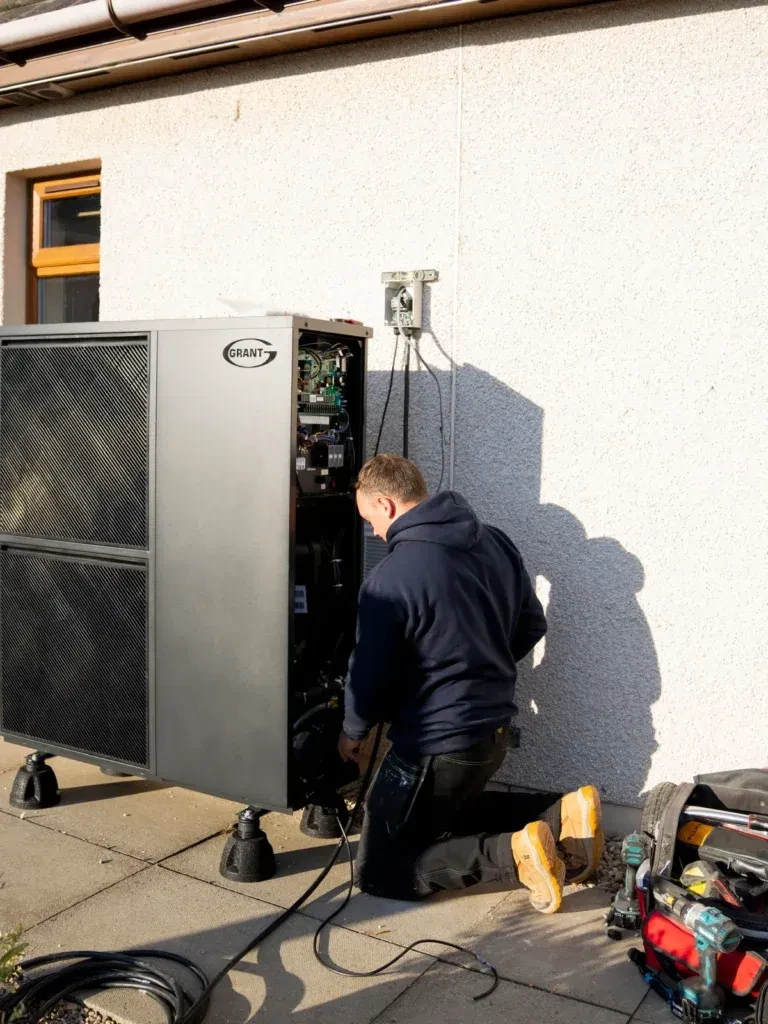
The outdoor unit needs a suitable location with adequate airflow and enough space around it.
For an oil-heated property, there may already be an external oil tank, boiler flue and other equipment occupying part of the available space. Switching technologies can therefore involve a different approach to the external layout.
The installer should consider:
- Access for installation and future maintenance
- Airflow around the outdoor unit
- Distance from the property
- Position relative to windows and neighbouring properties
- Existing oil tank location
- Electrical connections
- Pipe routes between the outdoor and indoor components
Removing or relocating an oil tank may also form part of the wider project, depending on the property’s existing arrangement.
What changes inside the property?
The internal plant area may look different after the conversion.
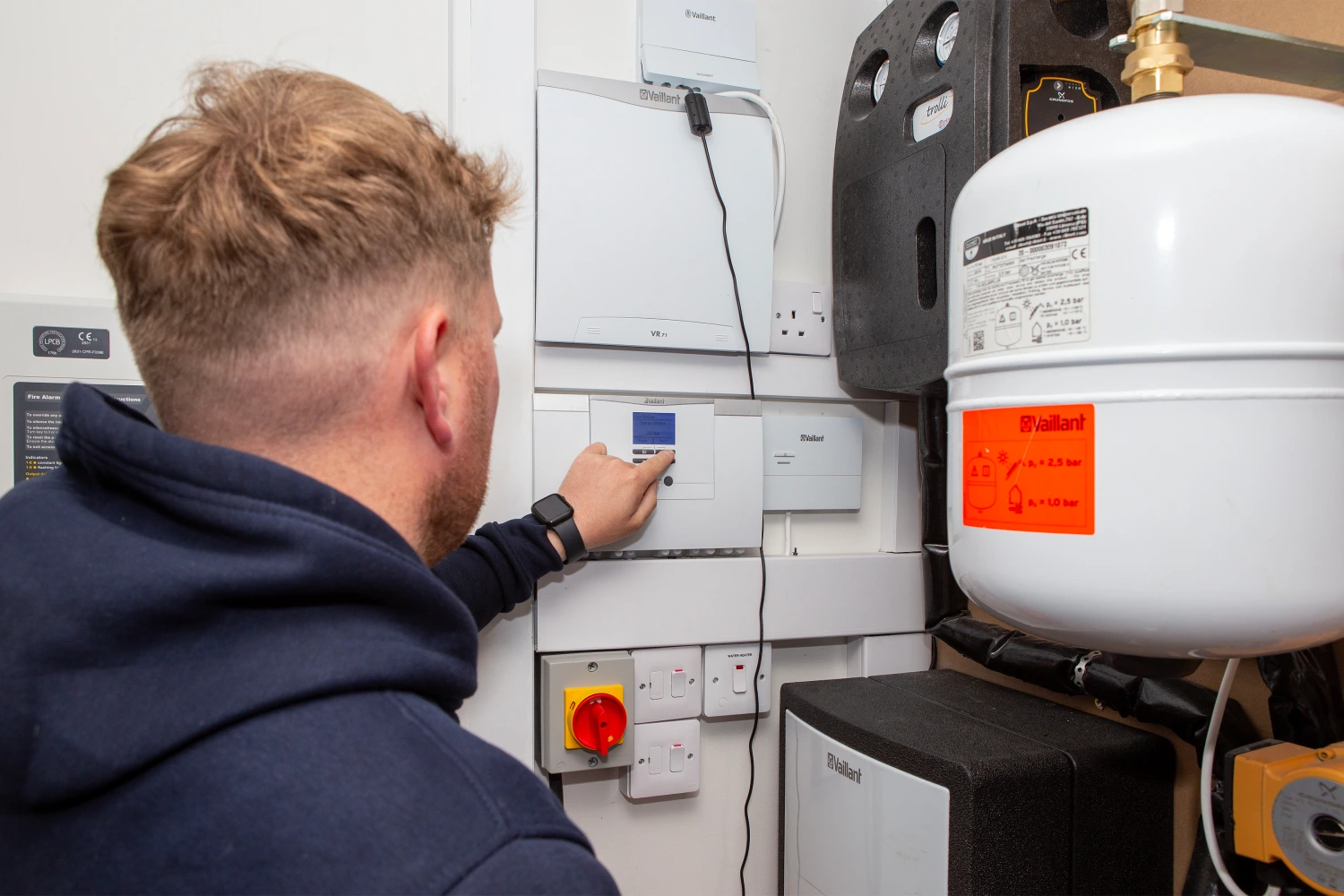
Depending on the system design, equipment could include a hot water cylinder, buffer components where appropriate, pumps, controls and associated pipework. The exact arrangement varies between properties.
This is why homeowners should consider the space required for the complete system rather than focusing only on the outdoor heat pump unit.
A good installer should explain where the main components will be positioned and whether any cupboards, utility areas or other spaces need modification.
What should homeowners expect from the installation process?
Every property is different, but an oil-to-ASHP conversion generally involves several stages:
| Stage | What is considered |
| Property assessment | Existing heating system, construction and available space |
| Heat-loss assessment | Room-by-room heating requirements |
| System design | Heat pump size, radiators, pipework and controls |
| Preparation | Any required electrical, plumbing or radiator changes |
| Installation | Outdoor and indoor equipment plus system connections |
| Commissioning | Testing, balancing and configuring the system |
| Handover | Controls explained and homeowner guidance provided |
The important point is that the installation should follow the design. Changes discovered during installation should not be the first time a homeowner learns about major requirements.
Is an old Elgin property suitable for a heat pump?
Age alone does not determine suitability.
Older properties can have a variety of construction types, insulation levels, window arrangements and heating systems. Some may need improvements before installation, while others may be suitable with relatively limited alterations.
The relevant question is whether the property can be designed to work effectively with a heat pump.
Insulation improvements may be recommended where they make sense, but homeowners should be wary of blanket statements that every older house must undergo extensive refurbishment before a heat pump can work.
A property-specific assessment is the better starting point.
What should be checked before agreeing to the installation?
Before accepting a proposal, ask the installer to explain:
- How the heat pump has been sized
- Whether a room-by-room heat-loss assessment has been completed
- Which radiators will remain
- Which radiators, if any, need changing
- Whether existing pipework is suitable
- How hot water will be provided
- Where the outdoor unit will be installed
- What happens to the existing oil tank
- What controls will be provided
- What preparation work is included
- What is excluded from the price
- How commissioning and handover will be handled
These questions can help you understand whether you are comparing like-for-like proposals.
If you are planning to move away from oil heating, Plumbing & Renewables can help you understand the practical changes involved before committing to heat pump installation elgin. A proper assessment gives you a clearer picture of the work required and helps avoid surprises later.
A typical oil-to-heat-pump conversion
Consider a typical older detached home that currently relies on an oil boiler and radiators. The homeowner wants to move to a lower-carbon heating system but is unsure whether the existing heating system can be reused.
The installer assesses the property, calculates room-by-room heat loss and checks the existing radiators and pipework. Most radiators may be suitable, while a few rooms require larger emitters to provide enough heat at lower flow temperatures.
The external layout is also reviewed. The proposed heat pump position needs suitable airflow and access, while the existing oil tank arrangements are considered as part of the overall project.
The result is a system designed around the actual property rather than an assumption that an oil boiler can simply be swapped for a heat pump.
Final thoughts
Replacing an oil boiler with an air source heat pump involves more planning than a like-for-like boiler replacement, but that does not mean every part of an existing heating system needs to be changed.
The key is proper design. Heat loss, radiators, pipework, hot water, controls and external space should all be considered together so the finished system is appropriate for the property.
For homeowners considering the change, Plumbing & Renewables can provide practical guidance on the conversion process and explain what your property may require. Taking the time to understand the design before work begins can make the transition to renewable heating much more straightforward.
Related articles

Which option best describes your home?
At a glance
Replacing an oil boiler with an air source heat pump is not simply a case of removing one heating appliance and putting another in its place. An oil boiler typically heats water to a higher temperature in short, powerful bursts, while a heat pump is designed to provide steady heat at lower flow temperatures.
That difference affects how the heating system is designed, how the property is assessed and what preparation may be needed before installation.
For homeowners considering an oil-to-heat-pump conversion, understanding these changes early can make the process much clearer. A proper heat pump installation elgin project should begin with the property, not simply the choice of heat pump model.
If you are considering moving away from oil heating, speak to the Plumbing & Renewables team about the suitability of your property and what preparation may be required.
Why is replacing an oil boiler different from replacing a boiler with another boiler?
An oil boiler and an air source heat pump operate in very different ways.
An oil boiler can produce relatively high water temperatures quickly. Many existing radiator systems have therefore been designed around these higher temperatures. A heat pump generally works most efficiently when producing lower-temperature water over longer periods.
This means an existing heating system may need to be assessed rather than assumed to be suitable without changes.
Before installation, an installer may need to consider:
- The heat loss of each heated room
- Existing radiator sizes and outputs
- Pipework and circulation
- Insulation levels
- Hot water requirements
- Heating controls
- The location of the outdoor unit
- Electrical requirements
- Available space around existing equipment
The aim is not necessarily to replace everything. Good design identifies what can remain and what genuinely needs changing.
What happens during the planning stage?
The first stage should be a detailed assessment of the property.
Heat loss is particularly important because the new system needs to be sized around the actual heating requirement. A heat pump that is too small may struggle to maintain comfortable temperatures during colder periods, while an unnecessarily large system can increase costs and affect efficiency.
The installer should also look at how the home is currently heated. An older property may have a mixture of radiator sizes, different pipe runs and rooms that have been altered over time.
A proper assessment gives the installer the information needed to design the system rather than relying on the output of the existing oil boiler.
Do your radiators need to be replaced?
Not necessarily.
Whether radiators need changing depends on their ability to provide sufficient heat at the lower water temperatures expected from a heat pump.
A large radiator may already have enough output. In another room, an older or smaller radiator may not provide enough heat once the system operates at a lower flow temperature.
An installer can assess radiator output as part of the system design. Where changes are required, this could involve replacing only selected radiators rather than every radiator throughout the property.
This is one reason a detailed survey is more useful than making assumptions based solely on the age of the heating system.
What about the existing pipework?
Existing pipework does not automatically have to be replaced.
However, the installer needs to establish whether the pipework can provide adequate flow around the new system. Pipe diameter, system design, circulation and the condition of the existing installation can all influence performance.
An oil boiler replacement may therefore involve some alterations to pipework, but the extent will depend on the property.
A good survey should identify these requirements before the final specification is agreed.
How does the hot water system change?
Hot water is another area where an oil-to-ASHP conversion can differ from a straightforward boiler replacement.
Depending on the existing setup, the property may need a suitable hot water cylinder or modifications to the current cylinder arrangement. The system also needs appropriate controls so that heating and hot water can be managed efficiently.
Homeowners should therefore ask exactly how domestic hot water will be produced as part of the proposed design.
This should be included in the quotation rather than treated as an afterthought.
If you are unsure whether your current radiators, pipework or hot water system are suitable, our team can assess the existing setup and explain what would need to change before ashp installation elgin.
Which option best describes your home?
It just takes 2 minutes
And then you can book a free consultation
Where does the outdoor heat pump unit go?
The outdoor unit needs a suitable location with adequate airflow and enough space around it.
For an oil-heated property, there may already be an external oil tank, boiler flue and other equipment occupying part of the available space. Switching technologies can therefore involve a different approach to the external layout.
The installer should consider:
- Access for installation and future maintenance
- Airflow around the outdoor unit
- Distance from the property
- Position relative to windows and neighbouring properties
- Existing oil tank location
- Electrical connections
- Pipe routes between the outdoor and indoor components
Removing or relocating an oil tank may also form part of the wider project, depending on the property’s existing arrangement.
What changes inside the property?
The internal plant area may look different after the conversion.
Depending on the system design, equipment could include a hot water cylinder, buffer components where appropriate, pumps, controls and associated pipework. The exact arrangement varies between properties.
This is why homeowners should consider the space required for the complete system rather than focusing only on the outdoor heat pump unit.
A good installer should explain where the main components will be positioned and whether any cupboards, utility areas or other spaces need modification.
What should homeowners expect from the installation process?
Every property is different, but an oil-to-ASHP conversion generally involves several stages:
| Stage | What is considered |
| Property assessment | Existing heating system, construction and available space |
| Heat-loss assessment | Room-by-room heating requirements |
| System design | Heat pump size, radiators, pipework and controls |
| Preparation | Any required electrical, plumbing or radiator changes |
| Installation | Outdoor and indoor equipment plus system connections |
| Commissioning | Testing, balancing and configuring the system |
| Handover | Controls explained and homeowner guidance provided |
The important point is that the installation should follow the design. Changes discovered during installation should not be the first time a homeowner learns about major requirements.
Is an old Elgin property suitable for a heat pump?
Age alone does not determine suitability.
Older properties can have a variety of construction types, insulation levels, window arrangements and heating systems. Some may need improvements before installation, while others may be suitable with relatively limited alterations.
The relevant question is whether the property can be designed to work effectively with a heat pump.
Insulation improvements may be recommended where they make sense, but homeowners should be wary of blanket statements that every older house must undergo extensive refurbishment before a heat pump can work.
A property-specific assessment is the better starting point.
What should be checked before agreeing to the installation?
Before accepting a proposal, ask the installer to explain:
- How the heat pump has been sized
- Whether a room-by-room heat-loss assessment has been completed
- Which radiators will remain
- Which radiators, if any, need changing
- Whether existing pipework is suitable
- How hot water will be provided
- Where the outdoor unit will be installed
- What happens to the existing oil tank
- What controls will be provided
- What preparation work is included
- What is excluded from the price
- How commissioning and handover will be handled
These questions can help you understand whether you are comparing like-for-like proposals.
If you are planning to move away from oil heating, Plumbing & Renewables can help you understand the practical changes involved before committing to heat pump installation elgin. A proper assessment gives you a clearer picture of the work required and helps avoid surprises later.
A typical oil-to-heat-pump conversion
Consider a typical older detached home that currently relies on an oil boiler and radiators. The homeowner wants to move to a lower-carbon heating system but is unsure whether the existing heating system can be reused.
The installer assesses the property, calculates room-by-room heat loss and checks the existing radiators and pipework. Most radiators may be suitable, while a few rooms require larger emitters to provide enough heat at lower flow temperatures.
The external layout is also reviewed. The proposed heat pump position needs suitable airflow and access, while the existing oil tank arrangements are considered as part of the overall project.
The result is a system designed around the actual property rather than an assumption that an oil boiler can simply be swapped for a heat pump.
Final thoughts
Replacing an oil boiler with an air source heat pump involves more planning than a like-for-like boiler replacement, but that does not mean every part of an existing heating system needs to be changed.
The key is proper design. Heat loss, radiators, pipework, hot water, controls and external space should all be considered together so the finished system is appropriate for the property.
For homeowners considering the change, Plumbing & Renewables can provide practical guidance on the conversion process and explain what your property may require. Taking the time to understand the design before work begins can make the transition to renewable heating much more straightforward.