

Ownership Costs After Installation: Settings, Support and Future Callouts
The cost of installing a heat pump is only one part of the financial picture. Once the system is running, homeowners also need to consider electricity use, servicing, controls, repairs and occasional callouts.

Why you can trust our content
We know the plumbing and renewable energy industry can feel overwhelming, especially with conflicting advice and outdated information online. That’s why we base everything we do on clarity, expertise, and trusted sources:


At a glance
That does not mean a heat pump should be viewed as an expensive system to maintain. Rather, understanding the different ownership costs makes it easier to budget realistically and avoid surprises.
For anyone researching the cost of air source heat pump Elgin properties may face, it is useful to look at the entire ownership period rather than concentrating solely on the original installation figure.
If you are considering a heat pump and want to understand both installation and longer-term ownership considerations, contact Plumbing & Renewables for practical guidance based on your property.
What costs should you expect after a heat pump is installed?
Post-installation costs can vary depending on the system, property and how the equipment is used.
Potential costs include:
- Electricity for heating and hot water
- Routine servicing
- Replacement components
- Repairs outside warranty
- Engineer callouts
- Control upgrades
- Additional heating work
- Future system adjustments
Some of these costs are predictable, while others are occasional.
A sensible ownership plan therefore combines routine budgeting with an allowance for unexpected work.
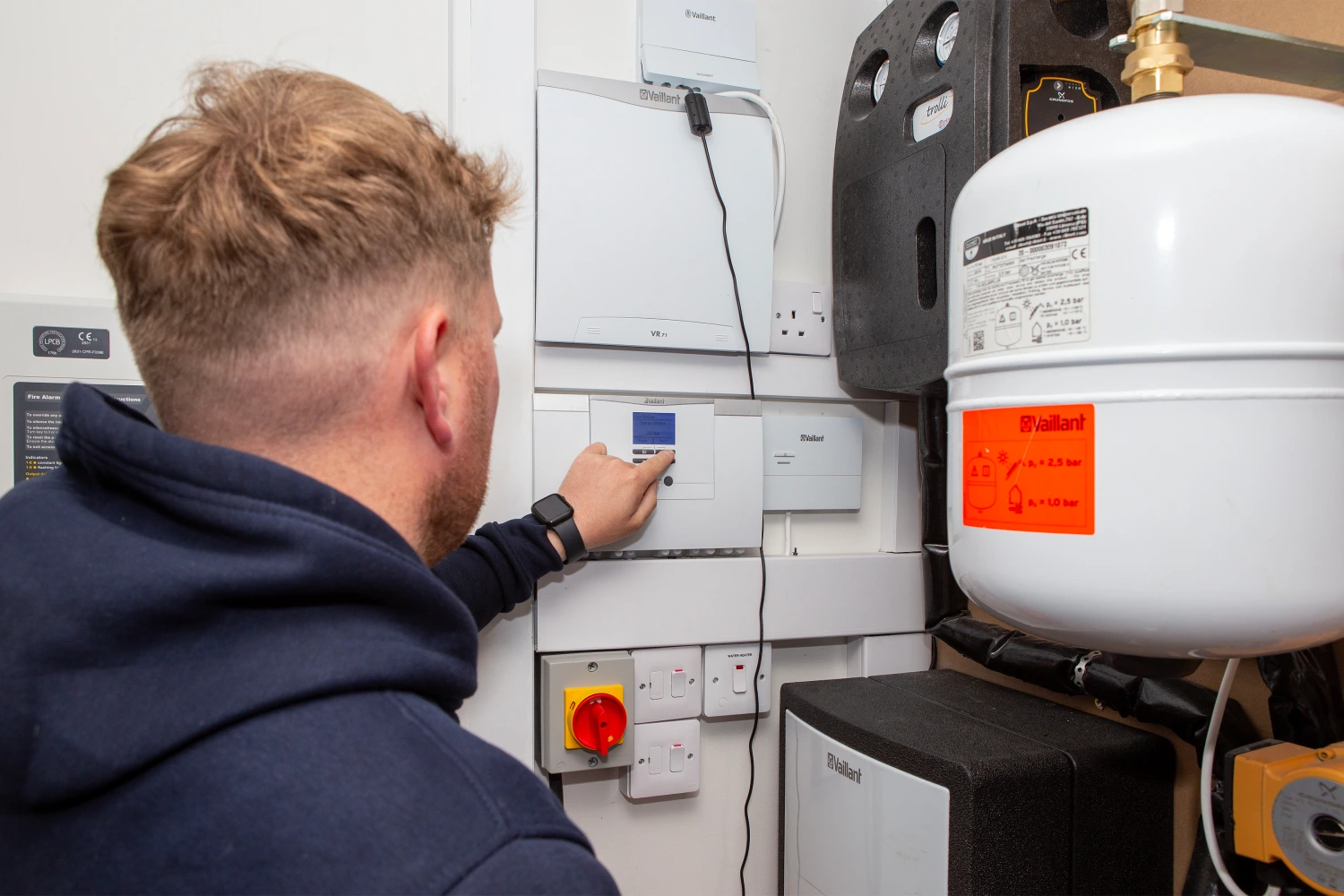
How do heating settings affect ongoing costs?
The way a heat pump is operated can influence how efficiently it provides heat.
Heat pumps are generally designed to work differently from traditional boilers. Rather than rapidly heating a cold home to a high temperature, they can work effectively when maintaining a steady indoor temperature.
The most appropriate settings depend on the property and system.
During handover, the installer should explain:
- Heating schedules
- Hot water settings
- Room temperature controls
- Operating modes
- Weather compensation, where applicable
- Holiday settings
- Basic fault indicators
Understanding these controls can help you operate the system confidently.
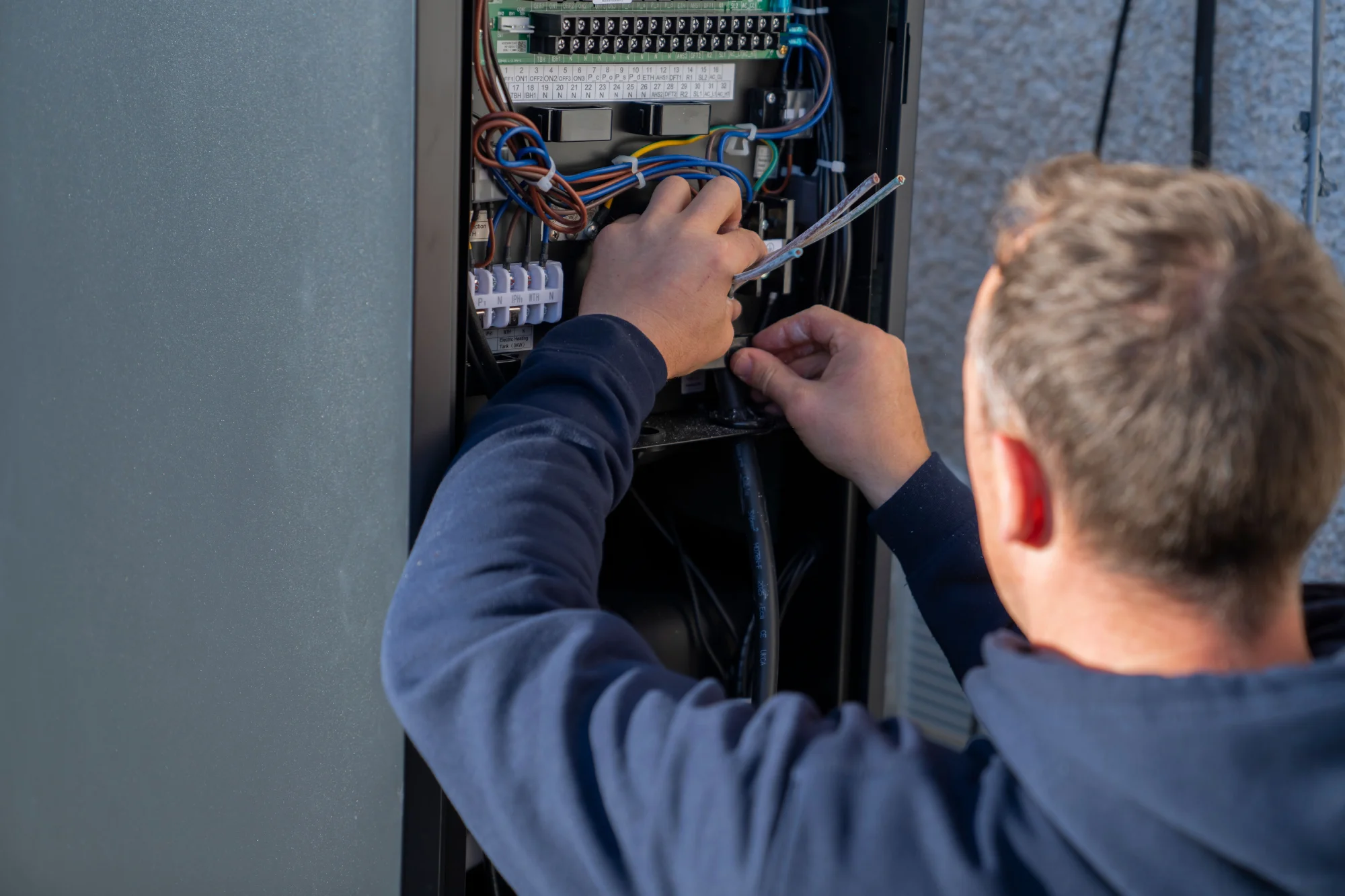
Do heat pump owners need regular servicing?
Maintenance requirements depend on the equipment and manufacturer.
Your installer should explain what checks are recommended and how frequently they should be carried out.
Routine servicing can provide an opportunity to identify developing issues before they become larger problems.
Depending on the system, relevant checks may include:
- System operation
- Components and connections
- Filters
- Controls
- Pressure where applicable
- Outdoor unit condition
- General performance
Always follow the manufacturer’s requirements and any conditions attached to your warranty.
Which option best describes your home?
It just takes 2 minutes
And then you can book a free consultation
What are future heat pump callouts likely to involve?
Not every problem means that the heat pump itself has failed.
A callout may be required because of:
- A warning message
- Control problems
- Unusual system behaviour
- Loss of heating or hot water
- Component failure
- Electrical issues
- Water or pressure problems
- Changes to system performance
Before arranging an engineer visit, check whether the issue can be resolved through the troubleshooting guidance provided at handover.
If the problem continues, contact the installer or appropriate service provider.
Should you budget for repairs?
It is sensible to recognise that any heating system can eventually require repairs.
A newer system may benefit from manufacturer warranty protection, but warranty terms vary.
When reviewing your installation documentation, identify:
| Ownership area | What to check |
| Equipment warranty | Length and coverage |
| Workmanship | What installation work is covered |
| Servicing | Recommended frequency |
| Callouts | Potential charges |
| Parts | Warranty and replacement terms |
| Controls | Repair or replacement arrangements |
| Manufacturer | Support contact |
| Installer | Local aftercare route |
Keeping these details together can make future problems easier to deal with.
How much should you budget for ownership?
There is no universal annual figure because each home is different.
The cost of air source heat pump Elgin homeowners experience over time can depend on the property, electricity tariff, system efficiency, heating demand, maintenance and any repairs required.
A useful approach is to separate predictable costs from potential costs.
Predictable costs may include:
- Electricity
- Planned servicing
- Any agreed maintenance
Potential costs may include:
- Engineer callouts
- Replacement components
- Control upgrades
- Repairs outside warranty
This gives you a more realistic way to think about long-term budgeting.
If you are reviewing heat pump prices and want to understand what ownership may involve beyond the initial installation, speak to Plumbing & Renewables before making your decision.
Does the original installer matter after installation?
It can be useful to retain contact with the company that designed and installed the system.
The original installer should have information about:
- Equipment installed
- System configuration
- Pipework
- Controls
- Commissioning
- Installation documentation
If a problem develops later, this information can help an engineer understand the system more quickly.
That is one reason aftercare should form part of your installer comparison.
Can settings be adjusted after installation?
Yes, settings may sometimes need refinement.
A homeowner may find that their preferred heating schedule changes between seasons, or that they want to understand how to adjust hot water settings.
However, homeowners should avoid making significant technical changes without understanding the consequences.
If you are unsure about a setting, contact the installer or another suitably qualified professional for advice.
Small adjustments to normal user controls are different from changing technical system parameters.
What happens if your home changes?
Your heating requirements can change over the lifetime of a system.
For example, you might:
- Add an extension
- Improve insulation
- Replace windows
- Alter room layouts
- Upgrade radiators
- Increase hot water demand
These changes could affect how the heating system operates.
If significant changes are planned, speak to an appropriate heating professional before the work is completed.
The original system may be able to accommodate the change, but this should be assessed rather than assumed.
How should you compare heat pump prices with long-term value?
The cheapest installation price does not necessarily represent the lowest overall ownership cost.
When comparing heat pump prices, consider:
- Equipment quality
- System design
- Installation workmanship
- Warranty
- Commissioning
- Controls
- Handover
- Servicing
- Aftercare
- Future support
A properly designed system with clear support arrangements can provide greater confidence than a cheaper installation with limited information.
The initial price is important, but it is only one part of the decision.
A typical ownership scenario
Imagine a homeowner has had an air source heat pump installed in a typical property.
During the first year, they learn how the heating schedule works and make small adjustments to suit their daily routine. They then arrange the recommended maintenance and keep their warranty and commissioning documentation safely stored.
Several years later, they need advice about a control issue.
Because they know who installed the system and have retained the relevant paperwork, they have a clear starting point for getting assistance.
Good ownership is not about expecting the system never to need attention. It is about understanding how to operate it and knowing where to turn when support is needed.
What should you keep after installation?
Create a simple folder containing:
- Final quotation
- Installation documentation
- Commissioning information
- Equipment manuals
- Warranty details
- Certification
- Installer contact information
- Servicing records
- Any repair invoices
- Details of significant system changes
Keeping these documents together can save considerable time if you need warranty support or future engineering work.
If you want to discuss the cost of air source heat pump Elgin homeowners should consider beyond installation, contact Plumbing & Renewables for advice on system requirements, ownership and ongoing support.
Final thoughts
Finding suitable heat pump installation companies near me is only the beginning of the decision. The more important question is what support you can expect once the installation has been completed.
A reliable installer should be able to explain the system, provide a proper handover and give you a clear route for future questions, servicing and warranty matters.
When comparing an air source heat pump company Elgin, consider the complete ownership experience rather than focusing only on the installation day. Plumbing & Renewables provides renewable heating expertise with a practical focus on helping homeowners understand and manage their systems over the long term.
Related articles

Which option best describes your home?
At a glance
That does not mean a heat pump should be viewed as an expensive system to maintain. Rather, understanding the different ownership costs makes it easier to budget realistically and avoid surprises.
For anyone researching the cost of air source heat pump Elgin properties may face, it is useful to look at the entire ownership period rather than concentrating solely on the original installation figure.
If you are considering a heat pump and want to understand both installation and longer-term ownership considerations, contact Plumbing & Renewables for practical guidance based on your property.
What costs should you expect after a heat pump is installed?
Post-installation costs can vary depending on the system, property and how the equipment is used.
Potential costs include:
- Electricity for heating and hot water
- Routine servicing
- Replacement components
- Repairs outside warranty
- Engineer callouts
- Control upgrades
- Additional heating work
- Future system adjustments
Some of these costs are predictable, while others are occasional.
A sensible ownership plan therefore combines routine budgeting with an allowance for unexpected work.
How do heating settings affect ongoing costs?
The way a heat pump is operated can influence how efficiently it provides heat.
Heat pumps are generally designed to work differently from traditional boilers. Rather than rapidly heating a cold home to a high temperature, they can work effectively when maintaining a steady indoor temperature.
The most appropriate settings depend on the property and system.
During handover, the installer should explain:
- Heating schedules
- Hot water settings
- Room temperature controls
- Operating modes
- Weather compensation, where applicable
- Holiday settings
- Basic fault indicators
Understanding these controls can help you operate the system confidently.
Do heat pump owners need regular servicing?
Maintenance requirements depend on the equipment and manufacturer.
Your installer should explain what checks are recommended and how frequently they should be carried out.
Routine servicing can provide an opportunity to identify developing issues before they become larger problems.
Depending on the system, relevant checks may include:
- System operation
- Components and connections
- Filters
- Controls
- Pressure where applicable
- Outdoor unit condition
- General performance
Always follow the manufacturer’s requirements and any conditions attached to your warranty.
Which option best describes your home?
It just takes 2 minutes
And then you can book a free consultation
What are future heat pump callouts likely to involve?
Not every problem means that the heat pump itself has failed.
A callout may be required because of:
- A warning message
- Control problems
- Unusual system behaviour
- Loss of heating or hot water
- Component failure
- Electrical issues
- Water or pressure problems
- Changes to system performance
Before arranging an engineer visit, check whether the issue can be resolved through the troubleshooting guidance provided at handover.
If the problem continues, contact the installer or appropriate service provider.
Should you budget for repairs?
It is sensible to recognise that any heating system can eventually require repairs.
A newer system may benefit from manufacturer warranty protection, but warranty terms vary.
When reviewing your installation documentation, identify:
| Ownership area | What to check |
| Equipment warranty | Length and coverage |
| Workmanship | What installation work is covered |
| Servicing | Recommended frequency |
| Callouts | Potential charges |
| Parts | Warranty and replacement terms |
| Controls | Repair or replacement arrangements |
| Manufacturer | Support contact |
| Installer | Local aftercare route |
Keeping these details together can make future problems easier to deal with.
How much should you budget for ownership?
There is no universal annual figure because each home is different.
The cost of air source heat pump Elgin homeowners experience over time can depend on the property, electricity tariff, system efficiency, heating demand, maintenance and any repairs required.
A useful approach is to separate predictable costs from potential costs.
Predictable costs may include:
- Electricity
- Planned servicing
- Any agreed maintenance
Potential costs may include:
- Engineer callouts
- Replacement components
- Control upgrades
- Repairs outside warranty
This gives you a more realistic way to think about long-term budgeting.
If you are reviewing heat pump prices and want to understand what ownership may involve beyond the initial installation, speak to Plumbing & Renewables before making your decision.
Does the original installer matter after installation?
It can be useful to retain contact with the company that designed and installed the system.
The original installer should have information about:
- Equipment installed
- System configuration
- Pipework
- Controls
- Commissioning
- Installation documentation
If a problem develops later, this information can help an engineer understand the system more quickly.
That is one reason aftercare should form part of your installer comparison.
Can settings be adjusted after installation?
Yes, settings may sometimes need refinement.
A homeowner may find that their preferred heating schedule changes between seasons, or that they want to understand how to adjust hot water settings.
However, homeowners should avoid making significant technical changes without understanding the consequences.
If you are unsure about a setting, contact the installer or another suitably qualified professional for advice.
Small adjustments to normal user controls are different from changing technical system parameters.
What happens if your home changes?
Your heating requirements can change over the lifetime of a system.
For example, you might:
- Add an extension
- Improve insulation
- Replace windows
- Alter room layouts
- Upgrade radiators
- Increase hot water demand
These changes could affect how the heating system operates.
If significant changes are planned, speak to an appropriate heating professional before the work is completed.
The original system may be able to accommodate the change, but this should be assessed rather than assumed.
How should you compare heat pump prices with long-term value?
The cheapest installation price does not necessarily represent the lowest overall ownership cost.
When comparing heat pump prices, consider:
- Equipment quality
- System design
- Installation workmanship
- Warranty
- Commissioning
- Controls
- Handover
- Servicing
- Aftercare
- Future support
A properly designed system with clear support arrangements can provide greater confidence than a cheaper installation with limited information.
The initial price is important, but it is only one part of the decision.
A typical ownership scenario
Imagine a homeowner has had an air source heat pump installed in a typical property.
During the first year, they learn how the heating schedule works and make small adjustments to suit their daily routine. They then arrange the recommended maintenance and keep their warranty and commissioning documentation safely stored.
Several years later, they need advice about a control issue.
Because they know who installed the system and have retained the relevant paperwork, they have a clear starting point for getting assistance.
Good ownership is not about expecting the system never to need attention. It is about understanding how to operate it and knowing where to turn when support is needed.
What should you keep after installation?
Create a simple folder containing:
- Final quotation
- Installation documentation
- Commissioning information
- Equipment manuals
- Warranty details
- Certification
- Installer contact information
- Servicing records
- Any repair invoices
- Details of significant system changes
Keeping these documents together can save considerable time if you need warranty support or future engineering work.
If you want to discuss the cost of air source heat pump Elgin homeowners should consider beyond installation, contact Plumbing & Renewables for advice on system requirements, ownership and ongoing support.
Final thoughts
Finding suitable heat pump installation companies near me is only the beginning of the decision. The more important question is what support you can expect once the installation has been completed.
A reliable installer should be able to explain the system, provide a proper handover and give you a clear route for future questions, servicing and warranty matters.
When comparing an air source heat pump company Elgin, consider the complete ownership experience rather than focusing only on the installation day. Plumbing & Renewables provides renewable heating expertise with a practical focus on helping homeowners understand and manage their systems over the long term.


